The Silent Killer

image1 (1)

Dear Readers,

I’ve taken a few weeks off from writing or blogging for my own peace of mind. I have summer courses starting on Monday, so I wanted to enjoy a bit of my summer. It does put me behind a little in where I’d like to be with Molly’s Song, but I’m close enough. What’s on tap for today isn’t writing related or history related, but its an important one.

This morning I read a post shared on Facebook. It was from the wife of a firefighter who’d recently lost her husband, not in a fire or a roof collapse, but from the culmination of a thousand fires. He was lost to our most dangerous enemy in the fire service; cancer. It stalks firefighters, both active and retired, and it can kill with surprising rapidity.

When I was a young man, new on the job some two decades ago, I thought it looked salty as hell to have a scorched helmet and gear. We rarely cleaned any of  our gear. When arriving at a house fire, we’d take the time to mask up right at the door, taking in some carcinogens in the process. There was no ventilation system for the exhaust on our trucks back at the station. Later, as an arson investigator, I never once, not a single time, wore a respirator while digging through fire scenes. It’s little wonder that today I suffer from breathing difficulties and I do know from my twice a year chest x-rays that I have scarring on my lungs.

Back in the day, we didn’t know better. No one gave much thought to cancer, yet it seemed like every retired firefighter I knew died of either cancer or a heart attack (our other killer). Today, there is a much greater awareness of the dangers of job related cancer and also steps that can be taken to lessen (but not remove) the risk. The fire service as an organization can be, at times, resistant to change. But this isn’t something to play around with. There’s nothing “cool” about salty gear if that gear increases the odds that you might die of cancer in your 30s or 40s. Take the proper measures to ensure that you’ll be around to enjoy your whole career and to be with your family when they need you.

I’m a lot more aware now myself, but I’d be lying if I said I never worry about it, late at night when I’m lying in bed staring at the ceiling. But I’m retired. And that’s why I worry that maybe, for me, it might be too late. That’s a worry you don’t want.

L.H.

Diaries of the Great War

7143YZfUuRL._SY445_

“We had traveled from the Atlantic to the Bosphorus in just a few days. The railway brought together the most distant pieces of Europe. Distance didn’t matter anymore. Anything seemed possible. All we had to do was just wish for it enough. As children, we were thrilled by the rush of speed the new technologies gave us. The future was within our grasp. It seemed so bright, but we had no idea just how shaky the foundations of that future were. Not until the summer of 1914.” (From 14: Diaries of the Great War)

Dear Readers,

105 years ago today, a sickly teenager fired two bullets on a street in Sarajevo and in doing so, changed the world. That summer, Europe found itself swept up in an enthusiastic embrace of a coming conflict, one that would usher in a new and more terrifying age. To understand the modern world, one must understand this great calamity of the early 20th Century and the peace which followed. So how does one do that? You can spend a lifetime reading, of course, and you should read as many books about the Great War as you can. You can also enjoy a splendid documentary series.

14: Diaries of the Great War is hands down the best documentary series I’ve ever seen on any subject. It is done in a docudrama style, wherein you have a narrator, but also actors who play historical roles and voice their own lines in their own languages. (It is subtitled/dubbed for the non_English parts). This is not a story about kings, prime ministers, and generals. It is the story of everyday people rather like ourselves caught up in the war. All statements attributed to them are directly from letters or diaries they left  behind. It covers the Western and Eastern Fronts and also the Russian Revolution. Sadly, the campaigns in Sub-Saharan Africa are not included but that is the only criticism I can levy. Some of the characters are soldiers. Others are civilians. They range in age from children to the middle aged. This is nine hours of your life that you won’t mind spending with a documentary. I assure you that.

Now the bad news. It was on Netflix for a few years, but they pulled it a while back. It has never been released on DVD in the United States, and is unavailable on Amazon. If you have an all region DVD player as I do, you can find it on Ebay. My copy is an Australian DVD release if memory serves me. So why I am telling you about it if it is so hard to find. Well, Dear Reader, you can watch it here, though for how long I cannot say. Why not take the time to give it a watch this weekend? You’ll be spellbound, amazed even. That I can tell you.

If you prefer books to television (and honestly, who doesn’t?), many of the people quoted in this documentary can be found in what is one of my favorite World War One books, The Beauty and the Sorrow: An Intimate History of the First World War by Peter Englund.

So there you have it, Dear Reader.

L.H.


Firefighting in a Doomed City

sl001_battle_berlin_1

Dear Readers,

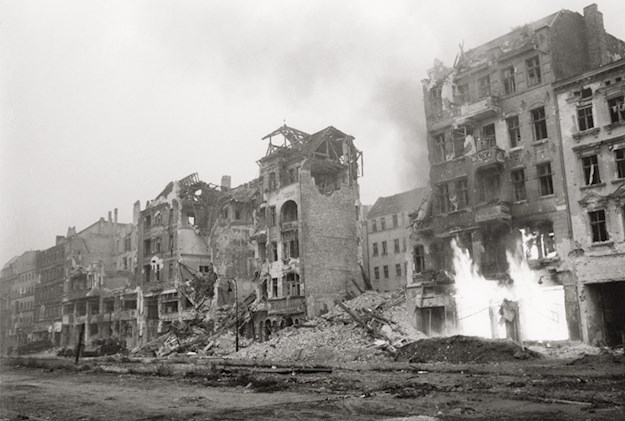
This week I had the opportunity to binge watch a six episode series on Netflix called Charité at War which focuses on the lives of the staff at the famed Berlin hospital during the Second World War. The final episode stood out to me the most, as it dealt with how the hospital coped, and indeed continued to operate, despite the Battle of Berlin raging around them.

As my novel So Others May Live touches on the fire brigade in the city during the months in which the areal Battle of Berlin brought a nightly rain of fire to the city, seeing how a civilian hospital functioned despite shortages of almost everything was interesting to say the least. During the research for my own novel, I learned that the fire protection police in Berlin continued to operate up until the absolute end. Even while Soviet troops battered their way into the city, firefighters still answered calls.

On April 22, General Goldbach, the commander of the fire protection units in the city, ordered their evacuation. For this, he would be executed just a few days before the war ended. Over 100 firefighting vehicles and their crews made it out before the Russians cut the last road out of the city. However, some companies remained behind and continued to work in an increasingly deadly environment, as evidenced by their casualty lists. Others turned into soldiers, and defended their stations from the Soviet forces until they were overrun.

What follows are the Berlin firefighters killed in action during the last month of the war, though the list is not complete as record keeping was difficult to say the least, given the circumstances.

21 April 1945

Erich Malodystach and Werner Böhm drove into a Soviet ambush while returning to quarters after a responding to an emergency and were mortally wounded by machinegun fire.

24 April 1945

Herbert Wiesenthall was in a tow truck attempting to recover a stalled fire engine when he was caught in an artillery barrage and killed.

25 April 1945

Wilhelm Brand was in a column of fire protection police vehicles which came under areal attack and was mortally wounded.

Karl Pohlmann was killed while attempting to remove traffic obstructions near the Brandenburg Gate in either an artillery or an air strike.

General Walter Goldbach, the commander of the firefighter forces in Berlin, was executed by the government for previously ordering all fire protection units to evacuate the city on 22 April. Some did, but others remained behind and continued to work.

26 April 1945

Arthur Nieber was killed while attempting to re-locate some vehicles from Spandau.

27 April 1945

Gustav Merta was struck and mortally wounded by shrapnel from an artillery shell. He died later that day in the hospital.

28 April 1945

Herbert Zimmermann was killed by enemy fire while fighting a building fire.

30 April 1945

Otto Doerks was struck in the back by grenade fragments while fighting a fire in the city.

Richard Hackbarth and Otto Hall were killed by an artillery shell while returning from a call, along with a third, unknown firefighter.

The following are members of the Berlin Feuerschutzpolizei who were killed in action in April 1945, though the circumstances are unknown.

4 April 1945

Hermann Schinkinger

10 April 1945

Max-Joachim Baumgarten

23 April 1945

Kazimir Nawrotski

26 April 1945

Heinz Hamann

30 April 1945

Richard Raufeisen

Otto Streich

When you add the two lists, including the unknown firefighter on 30 April, then we can see that at least 17 firefighters were killed in action during the final few weeks of the war in Berlin. Technically you could say 16 since General Goldbach was the commander but not actually a firefighter. It is quite likely that the true number is higher, since many of the firefighter deaths in Berlin during the height of the war due to air raids or later street fighting went unrecorded.

One of these days, I’ll revisit the fire station I wrote about in So Others May Live and we will see what happened to the crews during the final two weeks of the war.

The Best Laid Plans

5734748155_4532237c25_b

Dear Readers,

Yesterday, 15 June, should have been the day that I celebrated finishing the first draft of Molly’s Song. The operative word in that sentence is should. The writing gods, however, had other plans. And as they hold me captive, I must do as they direct.

When I reached the 75K word mark, I was excited because I was only five days away from being finished, and plugging along at my 3K word a day quota. It was close! SO CLOSE! Then it happened. I realized, while looking over what I’d done so far, that there were major issues with parts of the plot and that the timeline was blown all to hell. The problem wasn’t with the story itself, but rather the way in which I was telling it. Some key points were overwritten, and others underwritten. Normally, I take care of this kind of thing at the editing stage, but two major issues proved fatal.

So I decided that the only thing to do was to go back to square one. I scrapped the second viewpoint, and decided to focus only on Molly’s point of view. (This is a challenge because, as a male writer, I do not want to fall into the various tropes that many male authors use when they write female characters). I decided to tell ALL of her story, not just one piece of it, as originally intended. In the scope of a single day, I managed to write a 1500 word synopsis of where I wanted the story to go, and also sketched out my chapter outline. I’m pretty minimal with the outlining. It just contains the chapter number and a one sentence statement about what needs to happen in that chapter. This new version has it coming in at 32 chapters and 96K words, as opposed to the original 30/90K split.

I can still finish it by July 15th, which I absolutely must do because that’s when my summer classes start, and they lead right into the fall. I can edit during the semesters, but I cannot write, as I do not have the time during the day and I’m in so much pain by the time I get home that all I can do is lay on ice packs and stare at the TV while Anastasia licks my face. (For the record, she’s my cat.)

Molly, and the whole way I came to write about her, is too important to let slide. I MUST tell her story, but I must tell it the right way. I owe it to her, though she’s fictional, and through her, to all the women in history who have suffered as she did, yet managed to persevere. But it doesn’t change the fact that rather than being finished, I’m six chapters into this new version. Chapter 6 has a major turning point, a dark one, and after writing it today, I feel kind of sick. It’s a dark book, but it contains a message of hope.

And the best part? Molly is too big a character for a single book. So as I work, I’m sketching out the rest of the series (another two books). But before I write another book about her, I have to tackle my planned epic set during the Russian Revolution. A writer’s job is never over.

Until next time, Dear Readers, stay cool this summer.

L.H.

Lancaster Skies: A Review

lancskies

Dear Readers,

It’s a statistic that bears repeating. Nearly half of all Bomber Command aircrew died during World War Two. Most were in their late teens or early 20s. Their’s was a war fought in darkness over occupied Europe, with the night sky occasionally illuminated by searchlights, flak, or tracer rounds. Men from all over the Commonwealth, and indeed, the world, took to the night skies to deal death each night, while other young men, in different uniforms, did their best to kill them in return. The indie film Lancaster Skies manages to capture a slice of their world, and it is a film you should add to your watch list.

I will preface this by saying that I was able to watch in courtesy of my all region DVD player. It will be out in the United States later this year, but if you have a DVD player like mine, you can get it and enjoy it now. Follow the official website here for updates as to the specific US release date, though I’ll be sure to announce it here as well. Now on to the review…

I will not detail the plot, as that information is available on the film website other than to say it concerns a pilot who transfers from Fighter Command to Bomber Command and takes over a crew whose pilot was killed on their last operation. He has to win their respect, but doesn’t have much time to do it, as they are due for another mission soon.

The first thing to really strike me about this film was the cinematography. The lighting and camera angles are incredible. It gives the film an intimate feel, as though you are taking part in the events rather than merely watching them on screen. This helps you build a connection with the characters. It had an almost claustrophobic quality to it (similar to Das Boot), which is a good thing in a film like this as it recreates the tight quarters of a Lancaster, but also the lives of the men in Bomber Command as they were eternally squeezed between life and death.

The dialogue is lean and sparse, which suits the subject. Most American and British aircrew I’ve met in my life tended to be men of few words. There is an appropriate amount of banter as well, but not so much as to be over the top. (Think the novel and TV series Piece of Cake). Right away I appreciated the fact that the cast, at least visually, looked the right age. Wars are fought by young men, but the actors that play them usually aren’t. In this movie, the actors and actresses look the part. It was great to see the inclusion of some WAAF characters.

The aerial combat scenes both at the beginning and the ending of the film were both well filmed and well acted. It’s difficult to show nocturnal activities in a film sometimes because if it is too dark, the audience can’t see what they need to see, but if it is too light, then you lose the night setting. Thankfully, Lancaster Skies was able to find a happy medium. As a boxing fan, I appreciated the inclusion of a crewman who boxed and the scene of him engaging in the puglistic arts.

The remarkable thing about this film is that it was filmed on a shoestring budget. The fact that the filmmakers were able to produce such a quality movie is really a testament to their skills, as well as those of the actors. It just goes to show you that a small budget doesn’t always mean a small film. So my final verdict is to give Lancaster Skies two thumbs up. Stay tuned to the film website and to my blog for announcements about the upcoming US release, or spend $40 like I did and get an all region DVD player and get the movie now.

If read my novel So Others May Live and enjoyed the scenes which take place in a Lancaster over Berlin, then you will absolutely love this film. So get you hands on a copy as soon as you can. Though it would be staggeringly expensive, I think a film focusing on the Berlin firefighters in my novel would be pretty cool. Then again, movies about firefighters can either be good (Ladder 49) or absolute garbage (Backdraft, Backdraft 2). And, as a reminder, there is a great sale on World War 2 fiction taking place from June 5 through June 9 to celebrate the 75th Anniversary of the D-Day landings. Numerous books listed for a mere 99 cents. You can see that list here.

Until next time, Dear Readers, here’s to hoping you don’t prang your kite and catch a rocket from your CO. He’s a right bastard.

L.H.

Lee Hutch is a retired firefighter/arson investigator. He is a history professor at a small college in Southeast Texas. His first novel, So Others May Live, was published in 2019 and tells the story of a Lancaster crew over Berlin and a group of firefighters on the ground. 


D-Day 75th Anniversary Sale

promo

Dear Readers,

In honor of the 75th Anniversary of the Normandy Landings, there is a special ebook sale! Several authors are offering their World War 2 novels at the low price of 99 cents! From action/adventure to romance, there is something for everyone in this sale. All of the books are set either during or just before the Second World War. The sale runs from June 5th through June 9th. Don’t miss out! Spend the summer with some great books.

You can see a list of the books with their purchase links here.

Happy Reading,

L.H.

The Photo That Launched 90,000 Words

censored

Dear Readers,

It is said that Helen of Troy had a face that launched 1,000 ships. My current work in progress, tentatively titled Molly’s Song was launched by a face as well. Or, to be more accurate, by a black and white photograph of a young woman. As the image is copyrighted, I cannot include the picture itself in this post, but you may visit the article here and see it for yourself. Scroll all the way to the end of the article, as it is the last photograph, though check out the others and read the article too. It’s quite interesting. Then return to my humble page and read on. Note that the photo is risque, but it is not lewd. It was taken in the 19th Century, so view it in that light.

It’s a fairly straightforward photograph. A young woman is seated in a chair (or possibly a stool) and looking at a photograph. But it is anything but simple, Dear Reader, for you see, the woman is a woman of ill repute (harlot, scarlet woman, woman of ill fame, hooker, whore, ceiling expert, fallen woman, prostitute, or whatever term people use), though today we use the word sex worker. Granted, the photo was taken about twenty-five years or so after the time period I decided to write about in my novel. (Civil War as opposed to late Gilded Age), but while looking at the photograph, I wanted to know the answers to several questions, and the answers I dreamed up formed the basis of my novel.

  1. What was her name?
  2. Where was she from originally?
  3. What color was her hair? (Red, of course!!!!)
  4. What circumstances led to her employment in a bordello?
  5. How old was she?
  6. Who is in that picture she is looking at?
  7. Who gave her the locket she wears around her neck?
  8. What does she dream of at night?
  9. What are her fears?
  10. What does she do in her down time? Does she have any?
  11. Does she ever wonder how her life might have been different?
  12. Is she comfortable with her circumstances? Or does she want out of sex work?
  13. Where is she? City? State? Country?
  14. Does she ever think of slipping off into the night and starting a new life elsewhere?
  15. If she does, will she actually do it? Or merely think about it?
  16. Is she religious?
  17. Does she have friends? Enemies? Regular customers? Customers she hates?
  18. What does she do when she gets angry? Sad? Happy?
  19. When was the last time she cried? Laughed?
  20. Has she ever been in love? When? With Who? What happened?

So there you have it, Dear Readers. I wanted to know the answers to these questions, and so I set out to figure these things out and thus I got a novel out of it. Or will have one once all the steps have been completed.

For the record, I named her Molly O’Sullivan, of County Galway, residing on Mott Street in Manhattan in the Summer and Fall of 1864.

A Writer’s Schedule

Blog-more-and-stress-less-image1

Dear Readers,

My semester ended with my last two finals on Thursday last. I entered grades and submitted all my paperwork. Friday morning I was up bright and early for a doctor’s appointment followed by a visit to the used bookstore I frequent. But this week starts my summer writing schedule, though I’m breaking it a bit to post this. Given the demands on my time during the semesters, I lack much time to write other than the occasional weekend, but only if I don’t have grading to do. So I must take advantage of the eight weeks I have off before the start of the Summer 2 session when I’ll be teaching two classes. So, Dear Readers, here is how my days go, no matter if it is a weekday or a weekend. I guess it gives me a glimpse into the life of a full time writer.

0730: Wake up and build up the strength to actually get out of bed while checking my social media accounts.

0800: Up for breakfast, either Reese’s Peanut Butter cereal or Wheaties.

0815-0900: Sit on the porch and drink my coffee with my feral cat buddy Cravat Cat while planning the day’s social media posts and waiting for my morning medicine to kick in.

0900-0915: Paying attention to Anastasia so that she will let me write in peace.

0915-1100: Write. With a break around 1030 or so.

1100-1130: Write

1130-1230: Break. I usually have a bit of a lie down to rest my back at this point and watch an episode of something….it varies as to what I watch.

1230-1245: Lunch

1245-1315: Sit on the porch and enjoy a Dr. Pepper.

1315-1500: Write. If I managed to hit my 3K word a day quote in the morning, then I use this time for marketing related things for my novel.

1500-1600: Break

1600-1615: Supper

1615-1730: Write, work on marketing items, or plan the next day’s writing.

1730-1800: My wife is home by 1730 and I sit outside on the porch and talk to her.

1800-1830: Shower, take nighttime medication, figure out what I’m going to watch on TV.

1830-1945: Lie in bed with ice packs on my back and watch TV with Anastasia.

1945-2045: Sit on front porch with my wife and listen to a baseball game on the radio.

2045-2200: Back in bed on ice packs. (20 minutes on, 20 minutes off)

2200-2245: Sit on the porch and listen to an Old Time Radio program.

2300: Lights out.

I’m usually up at least twice in the middle of the night for anywhere from 30 minutes to an hour at a time. Pain and bad dreams rob me of sleep. If I manage 6 hours in a night (though the are non-consecutive hours), I feel like I’ve won the lottery.

So there you have it, Dear Readers. This is my schedule from this week through mid July when I’m back to the campus for classes.

L.H.


Chosen Men to Me!

sMApyR1m83uhedZDC3vBSmnmicP

“Now you and I know you can fire three rounds a minute. But can you stand?”

Dear Readers,

As another semester draws to a close, I am preparing for my usual end of the semester tradition (each fall and spring). That is, a Sharpe’s Rifles marathon usually followed by a Hornblower marathon. I’ve seen all the films in both series numerous times, too numerous to even count. But they never get old. I enjoy watching Sharpe and the lads give Boney a damn good thrashing every time. And I do enjoy the Age of Sail and nautical fiction, so the exploits of Hornblower are always entertaining as well. I do wish they’d make a crossover episode with both Hornblower and Sharpe. Maybe they team up to rescue a kidnapped Austrian princess from a Turkish harem. Or something like that.

Alas, my marathon cannot start until Friday. I have one final Monday, two on Wednesday, and two on Thursday. And then I have to enter grades and respond to usually 20-25 emails begging, cajoling, or demanding higher grades than those earned. Once all that is over, I can begin the films and enjoy my two months off before I start classes in the Summer 2 session.

Pleasant Notes

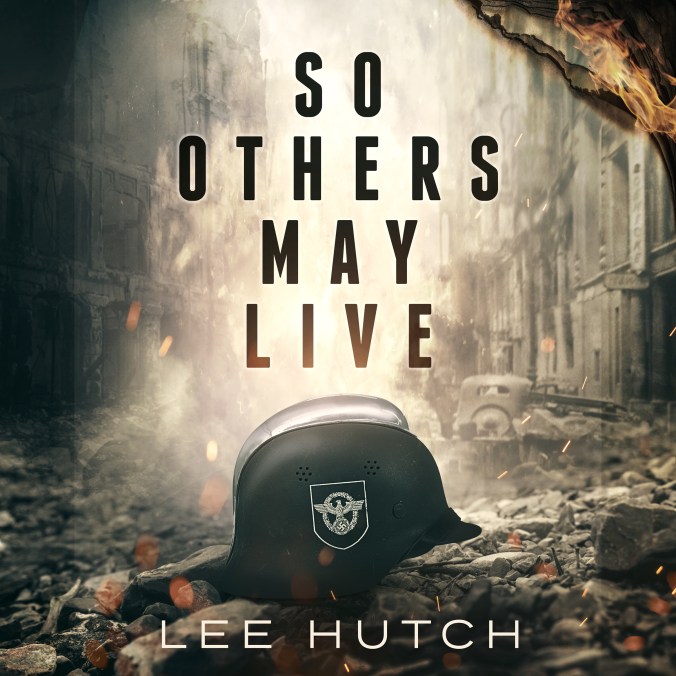
So Others May Live

Novel by Lee Hutch

Dear Readers,

My apologies for the slight delay in my usual posting schedule. This is my busy time of the semester as it winds down and we get ready for final exams. Then I get a couple of months off! I’m writing this from my office on campus that looks out over a parking lot and the train tracks. I get excited when a train comes by, since very few students stop in to see me. But I digress. For today’s post, I thought I would give you the play list that I listened to while writing So Others May Live.

I know that some writers need silence to work, but I need music. As I do not really watch much modern television (I’m the rare Gen X kid that hasn’t seen Friends, I’ve never seen Pulp Fiction, and laugh at me if you must, but I don’t watch Game of Thrones), I spend a lot of time listening to the radio. Often times this involves listening to old time radio dramas, as I have mentioned here before. But I love music too. Nothing can capture emotion quite like a song. In fact, my favorite assignment I give my students in class is to create a personal playlist for a historical figure. On my phone, I have playlists divided by subject or mood. For example, I have a playlist of songs that remind me of various things that happened during my time in the fire service. I have a Civil War music playlist. A World War 1 playlist. A World War 2 playlist. A 90s playlist. Etc.

So whenever I start writing a book, I create a playlist for that book. Since most of what I do is historical fiction, it obviously includes popular songs from that time period. However, it also includes songs that remind me of or I equate with certain characters in the book. So Others May Live was no different than other things I’ve written, so here is the playlist I wrote the book to, and why each song was included.

Closing Time by Semisonic: The line in the song “Every new beginning comes from some other beginnings end” reminds me of Grace and the way the novel ends. (No spoilers!)

Only God Knows Why by Kid Rock: This is my personal theme song. “People don’t know about the things I say and do. They don’t understand about the shit that I’ve been through.” That sums up my life post retirement as I deal with physical and mental scars. But it also could fit Karl’s character as he is haunted by his own experiences.

Bombers Moon by Mike Harding. This could very well be Michael’s story in musical form. The funny thing is that I had never actually heard this song before until after the book was finished. But if they make it into a movie…..it would be a great theme song.

Lambeth Walk: Obviously the characters in England would have known this song as it was popular during the War. In fact, I remember my grandfather humming it to himself sometimes when I was a kid. It is indeed a catchy tune. It’s a nice dance too.

I Don’t Want to Wait Paula Cole: Move over Dawson and Pacy, I like the line in this song that says “And the war he saw lives inside him still”. That’s true of all of the characters in the book, not just Karl and Michael. It is sort of like how when you retire from public safety, you have images from calls running through your head on a continuous loop….or rather I do. I can’t speak for anyone else.

Mein Kleines Herz by Katharina Schutter. Proof that German isn’t necessarily a harsh language! This is not a World War Two song, but rather a World War 2 style song. It is from the excellent series Generation War. The actor Volker Bruch played one of the lead roles and he is who I’d like to see play Karl if they make mine into a series.

We’ll Meet Again by Vera Lynn. Actually, most of the versions of WW2 songs I listen to are Vera Lynn versions, because, well, she’s Vera Lynn. My grandfather liked this one. Grace and Michael would have no doubt known this song, as would his crew.

I’ll be Seeing You also by Vera Lynn. This was my grandfather’s favorite World War 2 song. I remember listening to it with him many, many times. I think it reminded him of my grandmother. Now when I hear it, I think of him.

Lili Marlene by Lale Anderson. The classic German song of the war. It was played on the radio regularly and was quite popular with German soldiers at the front, but also with allied soldiers. Karl and his comrades would’ve known this song well. In fact, I vaguely recall a reference to either the song or the singer in the book, but I may be confusing my book with something else.

Ich hatt’ einen Kameraden by various. I know for a fact this song is mentioned in the novel. It’s a military funeral song which predates the Nazis by several decades. It was played on the radio in Germany during the War, and often times, as in my book, it was played following air raids which does strike one as a bit morbid.

Keep the Home Fires Burning by various. Though normally associated with World War One, this song was also popular during World War Two. “And though your heart is breaking, make it sing this cheery song.” That can sum up the feelings of many young women, like Grace, who must put on a brave face while their loved ones serve in harms way.

A Long December by the Counting Crows. Though the novel takes place in November, it is still close to December, or rather close enough for this song to make sense. “It’s been a long December and there’s reason to believe maybe this year will be better than the last.” Would 1944 see the end of the war? Or would it drag on longer? In November of 1943, no one knew the answer to that question.

There are a few others too, but these are the main ones.

Happy Reading!

L.H.