Teaching US History Through Disasters

hqdefault

My favorite restaurant after Hurricane Ike. I took my wife here on our first date and later proposed to her here. They were closed for six months after the storm.

Dear Readers,

Yet another long delay in between posts. I just finished teaching two five week summer classes this past week which took up quite a bit of my time. Also, my novel So Others May Live has gone to the editor. I realized today that I had not written a teaching related post in a long time. As it so happens, I’ve been working on creating a thematic US History course and so I decided to pen a few lines, or rather type a few lines, about it.

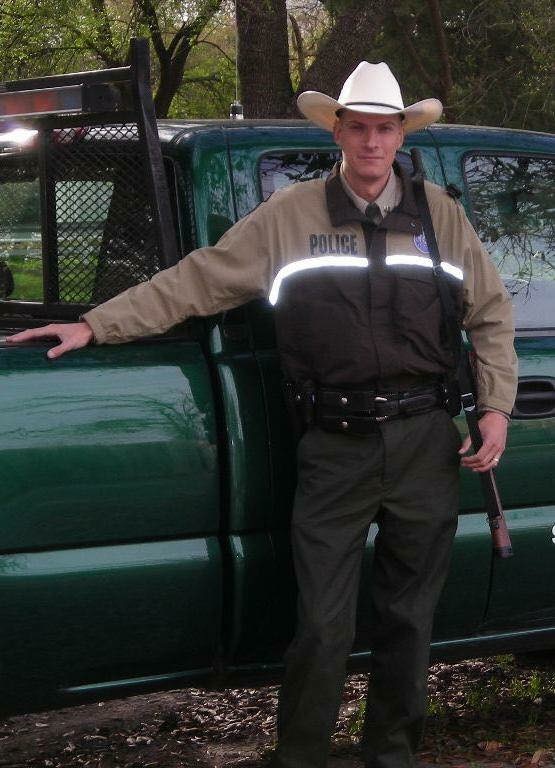
I’m no stranger to emergencies. With all the time I spent in public safety responding to calls as a firefighter/EMT and later as a police officer and arson investigator, I’ve built up quite the emergency resume. Fires, car accidents, hurricanes, and various and sundry medical calls still haunt the recesses of my brain. As a student and later professor of history, I’m also well aware of the role disasters have played in the American past. From the Triangle Fire to the Beverly Hills Supper Club Fire to the Station Nightclub and from the 1900 Storm to the Tri-State Tornado to the Texas City Disaster, I can still recall all the photographs or videos I’ve looked at over the years. I’ve seen hurricane damage and felt the winds firsthand. Hurricane Ike was my 13th Storm to live through or work during and I experienced the eye from the front seat of my city issued SUV. We are coming up on the one year anniversary of Hurricane Harvey which caused widespread flooding in my area, though I escaped without any significant damage.

Disasters can serve as great catalysts for change. When one considers the historical significance of disasters, we can learn social history, the history of science/technology, study human behavior, and draw lessons for the future. Since I teach at a community college, I only teach US History Survey courses. 1301 is US History to 1877 and 1302 is US History Since 1877. What I’m looking at doing is creating a thematic 1302 class where I still cover the usual items, but view it through the lens of disasters, both natural and manmade.

The first issue to tackle was which disasters. Obviously there are plenty to choose from, but I wanted a cross section of different types of disasters which struck at different times but with a focus on disasters close to home (Southeast Texas). After much internal debate, I came up with the following list:

  1. 1900 Galveston Hurricane (Galveston, TX)
  2. 1911 Triangle Shirtwaist Fire (NYC)
  3. 1935 Labor Day Hurricane (FL)
  4. 1947 Texas City Disaster (Texas City, TX)

I’m including two hurricanes since they are the most frequent disaster in our area. Plus, the Labor Day Hurricane ties in with my existing discussion of the Depression and the Bonus Army. I wanted to stay away from more modern disasters (Katrina, Ike, Harvey, etc) and I also wanted to focus on non-intentional acts (ie: not terrorism). We will discuss these disasters with an towards how they illustrate the history of science at the time, technology, race, class, labor relations, etc. I cannot assign a book on each one of these disasters, so instead I will have my students read a few articles about each one, there will be a lecture on the topic (I already do one on the Triangle Fire), and finally a discussion following the lecture. To tie it all together, I’m probably going to have them give a presentation on a disaster not covered here (as a group). I may instead assign a paper in which they trace a common theme among all four of these disasters. I’m still a bit on the fence about that one.

Have a disaster free day!

L.H.

“Where Do You Get Your Ideas?”

Dear Readers,

Forgive me for yet another long delay in posting. I’m still recovering from my surgery whilst also trying to teach two five week courses at the college. I rather doubt that is much of an excuse, but it is the only one I have. Anyway, on to today’s topic. I’ve watched a lot of author interviews and been to a few author readings in my day. One question that comes up quite frequently is “Where do you get your ideas?” Whilst I cannot answer for anyone else, I shall endeavor to explain where the idea for So Others May Live sprang from.

The genesis of my novel came from two places. Back in 2003, I interviewed a man who, from 1944-45, had been a Hitler Youth Auxiliary firefighter. He related a story to me of falling through the floor of a building and landing in the basement in a liquified pool of human fat which was all that remained of the occupants who burned alive as liquid phosphorus from an incendiary ran down into the basement. He was 14 years old when this happened and I asked him “How do you get over something like that?” He looked me dead in the eye and said “You don’t.” I never really forgot this story but it wasn’t one I dwelt on either, at least not until one night eighteen months ago.

I awoke with a start from a dream. In my dream, I saw a crippled Lancaster limping towards the airfield. Three crew members dead. The pilot at the controls, and the remaining three crewmen seated in their crash positions. As the plane inched closer to the ground for a belly landing, the crew began to sing “Nearer My God To Thee.” When I awoke, I lay in bed for several minutes pondering the dream, and then I remembered what the German firefighter told me all those years before. The dream and the interview collided in my head.

I got up and jotted down a few brief things in my notebook so I’d remember it the next day. As I went about my business that morning, I continued to think things over. Slowly, the rough ideas of a plot began to come together in my mind. A firefighter trying to save lives for a regime bent on destroying them. A Lancaster pilot on his last mission before he gets to transfer out of an operational squadron. A fiancé trying to plan for a future that may not pan out. And a woman playing a dangerous game with the Gestapo.

I’m neither an plotter (one who writes out a detailed plot outline) or a pantser (one who just starts writing). I guess you could call me a plantser. I sketched out the format of the book and listed out the order in which each chapter would be written by character name. All I had to go on was a one sentence description of what I wanted in each chapter, and the rest came from the seat of my pants. 96,000 words and one year later I had a finished novel. As to what will come from that, well, time will tell.

L.H.

Follow D-Day As It Happened

Dear Readers,

For those of you who are interested, I’ll be posting live updates from June 6, 1944 as they were reported by CBS radio beginning at 0250 CST on Wednesday, June 6, 2018. I’ll be doing it from my Facebook page which you can find here.

They will run for the first twelve hours of so of the invasion, or until the Facebook Nazis put my page in jail for too many posts.

L.H.

Two Classics Express the Human Condition

doctor_zhivago_cover_1682

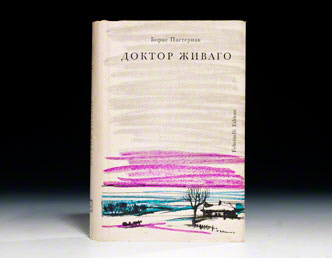
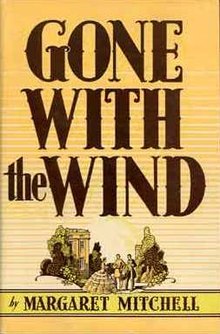
A woman loves two men and loses them both amidst a catastrophic war which sweeps away an entire way of life. A man loves two women and loses them both amidst a war and ensuring revolution which ushers in a world unlike that which existed before. Sound familiar? The first is the basic plot (boiled down for simplicity) of Gone With the Wind while the second is the main plot (also boiled down) of Dr. Zhivago. The films are classics, of course, but the novels are as well. Russian literature in particular has great depth to it. I’ve been able to read Zhivago in the original language, as well as the English translation. And I am proud to own a first edition of Gone With the Wind which belonged to my great-grandmother’s sister.

What interests me about these books when compared to one another is that they explore similar themes, though they were written in different times and places. Gone With the Wind was published first, in 1936, but it is nearly impossible that Pasternak could have read it because it was not published in the Soviet Union until 1982 and the movie was not released there until 1990. The fact that love and loss amidst the backdrop of war serves both books so well speaks to universal human condition and emotion. Just as the Civil War transformed the American South, so too did World War One, the Russian Revolution (really a Civil War of its own), followed by the Red Terror transformed Russia. In both books, you have people trying their best to survive amidst terrible hardships.
220px-Gone_with_the_Wind_cover

I love epics, be they of screen or page. There’s something about a sweeping story which catches you up and brings you along for the ride which appeals to me. Sadly, not everyone feels this way. When I was a young single man, I invited a girl to my apartment to watch a movie and popped in Dr. Zhivago. That was our third date. She declined a fourth. 😊

If you want to take this one step further, Sholokov’s masterpiece Quiet Flows the Don can be compared to the two as well. It is a magnificent epic of Cossack life starting in 1912 and ending in the early 1920s. It also involves the story of a man in love with two women who loses them both. Forbidden love. War. Revolution. Death. They are all present. Whereas Mitchell probably never read Sholokov before she wrote Gone With the Wind (though it is remotely possible as the first English translation was in 1934), it is highly likely that Pasternak read it at some point. But how much it influenced his own work is anyone’s guess.

Dramatic times make for dramatic fiction which is why I think historical fiction will always appeal to people. Not only is it escapism into the past, but it can flesh out the traditional history that you get in school where you may only be served up a litany of names, dates, and facts but without any life. You can learn as much from a good historical novel (by that I mean well written and researched) as you can from an academic book.

Of course there are differences between the books as well, but the purpose of this was to mention what they had in common. Also, as a final note, in 2015 Russian television filmed a 14 part masterpiece based on Quiet Flows the Don. You can find it free on YouTube here Be warned that it is not subtitled, but you don’t have to be a Russian speaker to enjoy the breathtaking scenery and you can pick up on the basic plot line too.

And there you have my thoughts, Dear Reader.

L.H.

What’s In A Name


Dear Readers,

I’ve finished with a full set of revisions to my novel. It is presently in the hands of some Beta Readers whom I am waiting to hear back from (hint, hint) which will then spark more revisions. After that, it goes to the editor in mid August. My target date for the ready to submit version is November 1, 2018. At that point, I’m not sure precisely what I’m going to do submission wise as I have a few options. Self publishing is an option, of course, but I’m holding on to that as my backup plan. I could always submit it to agents, secure one, and then try to land a traditional publishing arrangement with one of the big houses. This option doesn’t really appeal to me too much for several reasons. First of all, I know that this book isn’t really something a traditional publisher would like. It doesn’t have bestseller stamped all over it. Second, the process to land an agent first would slow down publication by at least a year, if not more and that’s assuming I could get an agent interested in the first place. So what is my plan? I think I’m going to approach some small independent presses. There are some positives, but there are also some negatives (no marketing budget, etc). But overall I think it is worth giving it a shot.

Today, I thought I’d write a short note and explain how I came by my title. I’ve read some cool stories about how some authors came up with the names of their book. I do not have a cool story, but what I do have is the reason for the novel. To get there, I first have to tell you how I came up with the idea for the book in the first place. I awoke one morning with an image in my head of a Lancaster pilot trying to land a crippled plane while the surviving crew huddled on the floor behind him and sang Nearer My God to Thee. This image merged in my mind with a conversation I had with a man who’d served as a Hitler Youth Auxiliary Firefighter during World War Two. This got me thinking about the strange juxtaposition of an occupation in which your job is to save lives in the midst of a destructive war and on behalf of a regime bent on destroying them. As a retired firefighter myself, I know the demands the job puts on those who do it in peacetime. So imagine doing that same job in the middle of a war.

So Others May Live sums up the reasons why firefighters do the job today, just as it sums up the reasons why they have done the job for hundreds of years. Sometimes, the job requires you sacrifice your life on behalf of the greater good. In wartime or peacetime, firefighters stand ready to answer the call. I hope my title captures this and conveys it to the reader. If it does, then I’ve done my job.

Lee Hutch

Just the Facts, Ma’am….

detect

Just the facts, ma’am. 

Dear Readers,

I am re-listening to the radio version of Dragnet which ran from 1949-1957. Along with Gunsmoke and Tales of the Texas Rangers, it is my favorite OTR program. I picked up something with this listen that I actually missed the first time I listened to it. In the first season, each episode was dedicated to the memory of a fallen officer. Most of them were killed in 40s with a few from the late 30s. I made a point to look up the names on the Officer Down Memorial Page and found out the circumstances. The dedications were to officers who were feloniously killed in the line of duty (as opposed to accidental deaths) for the most part.

If you look at every decade from the 1920s through the 2010s, the 40s were the second safest (with only the 50s being safer) while the 20s followed by the 30s were the deadliest. This makes sense, if you know your history. With Prohibition and then the Depression, it was open season for organized crime and consequently open season on law enforcement. During World War Two, with so many people away in the military, law enforcement deaths declined, however, they did tick upwards slightly in 1946 and 1947.

In my own career, I personally knew two officers who were shot and killed in the line of duty, but we tend to think of crime as a recent thing, it seems. The idea that law enforcement deaths were double in the 1920s what they are today is shocking to most people. But crime never takes a holiday, nor did it suddenly emerge in the 1970s. (The third deadliest decade, by the way.) As time permits, I plan on sharing some of the stories of officers who were killed during the 40s, particularly those who were murdered during the War years. So stay tuned for further information.

Hutch

firstday

Don’t Forget Your Old Shipmate

Robert

Safe and sound at home again, let the waters roar Jack

Safe and sound at home again, let the waters roar Jack

Long we’ve tossed on the rolling main, now we’re safe ashore Jack

Faldee raldee raldee raldee rye eye ‘O

We are coming up on the end of another semester, a particularly trying one at that as I spent the first three weeks in the hospital after an emergency surgery, another week in the hospital in March, and I face another larger surgery as soon as it ends, but it is nearly over. I close my 1301 classes covering the Civil War which is something I sincerely enjoy teaching about, but it always makes me a bit melancholy now. In 2014 I lost one of my oldest and best friends unexpectedly. You can read what I wrote an hour or so after learning of his death here. I miss him quite a bit, more so when I’m covering our favorite subject in class.

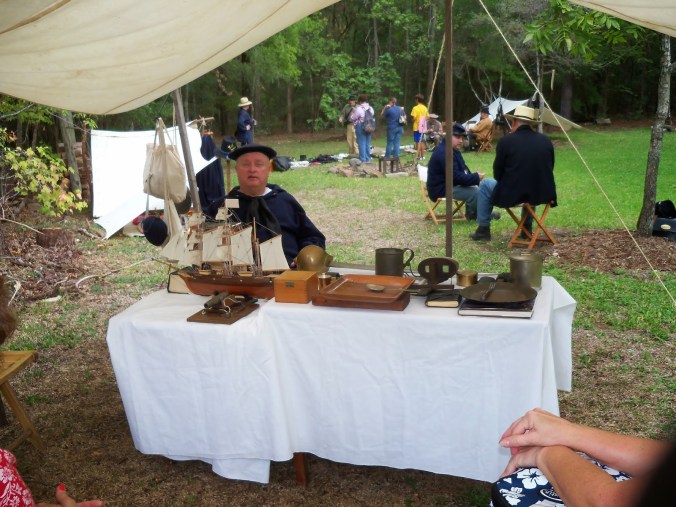
Robert was my friend and comrade for neigh on 17 years. We met when I was in college and I became a Civil War reenactor. We served in the same unit during all that time and for a good chunk of it, we were the entire unit. Our impression was that of Union sailors during the War. He portrayed a grizzled petty officer and I the Master at Arms and later Ship’s Surgeon. (I also doubled dipped as an Army surgeon.) We traveled thousands of miles together, marched God only knows how many more, stood side by side in the ranks, worked artillery pieces, and shivered in tents while a cold rain fell outside. I never got much sleep as Robert snored loud enough to summon the dead.

But the best of friends must part, fair or foul the weather

Hand your flipper for a shake, now a drink together

Long we’ve tossed on the rolling main, now we’re safe ashore Jack

Faldee raldee raldee raldee rye eye ‘O

I know he’s up there in Valhalla right now, no doubt enjoying a tin cup of grog around the campfire. I suppose I’ll join him when it’s my time, which is seemingly going to be sooner rather than later at the rate my body is falling apart. Last Monday when I received a phone call offering me a regular full time position as a professor, my first thought was “I can’t wait to call Robert.” And then it hit me. He isn’t here. But he knows, that I’m sure of. Time doesn’t heal the hurt that comes with the loss of a family member or friend, but it does make it more manageable. By teaching, I am helping keep his legacy alive as he touched thousands of lives over the years by sharing his knowledge and damaged a few ears playing the concertina.

So I won’t forget my old shipmate. Not ever.

L.H.

The Learning Curve

SoOthersMayLive

Dear Readers,

Today I finished the first round of edits to my novel. Technically, I think it is the second round since my wife reads each chapter and marks it up as I finish. What I’ve really been doing is going back through it and mixing her suggestions with a few of my own and also putting it together in one file. Normally when I am working on a project, I make a folder with the project name and each chapter gets its own sub folder. When it is complete, I merge them all into one. I’m sending it out to Beta readers now. Some are reading it for subject matter content (ie: any historical anachronisms, etc) while others are reading it for general flow, characterization, and overall story. Once I receive their feedback, I’ll incorporate it into the next draft. I hope to pass it off to the professional editor in August. Then will come more changes and more drafts. Hopefully it will be ready to submit to agents by the first of the year.

After I finished today’s work, I began to ponder what I’d learned in the year that has gone by between the first typed word and the finished draft. This isn’t my first completed novel, but it is the first that I feel somewhat comfortable with though I know it still needs quite a bit of work. I’m not qualified to give writing advice to anyone, but here are the lessons I’ve learned while I devoted myself to this book. Some of it might be of use to you.

1. Your first draft isn’t going to be perfect! And do you know what? That’s perfectly fine. The trick is to get it down on paper. When I took creative writing courses in college, my instructors always said that good books are not written, they are re-written. Your first draft simply provides the bones. Sure, good bones are important, but you can flesh them out when you start working on revisions.

2. Good research is essential for historical fiction, but don’t get bogged down. I love research. I love diving into the archives, reading old newspapers, interviewing people, and watching old films. This book has its genesis in an interview I conducted in graduate school. The elderly man I spoke with had been a teenage firefighter in Germany during World War Two. After he described a horrific experience to me, I asked him how one gets over something like that. He looked me dead in the eye and said “You don’t.” The dozens of interviews and hundreds of books prepared me to write, but I still found things I didn’t know as I was writing. Rather than stop and go back to the books, I just made a note to myself to fact check the items and kept on getting the draft pounded out. If I had stopped each time to do more research, I’d still be researching and would have no completed novel.

3. Immersion helps with historical fiction. What do I mean? My book is set during World War Two. While I worked on it, I only listened to 1940s music, watched movies from the 1940s, and even listened to baseball games from the 40s. I turned my bedroom into what looks like a squadron ready room (I write in the bedroom). Since I wear 1940s clothes anyway, I got inside the time period as best I could. I do know that this would not work for every historical time period, but for the more recent ones, it is a way to get caught up in the world inhabited by your characters.

4. Bounce ideas off of people. The internet is a wonderful place for writers to meet and exchange ideas and support. There are some excellent Facebook groups for writers in general, writers of historical fiction, and even writers of World War Two fiction specifically. What you’ll find is that other writers will be quick to offer help, encouragement, or ideas. The only person who knows what struggles you go through both internally and externally as a writer is another writer! Writing does not have to be a solitary task. Certainly you are the one putting finger to keyboard, but let others cheer you on. I’ve written stories since I was in elementary school and up until a few years ago, only my closest relatives (and by that I pretty much just mean my wife and cats) knew that I liked to write. I don’t think I was ashamed of it, I just didn’t want people thinking I was…..I don’t know…..weird or something. Well, I got over that and now have no problem “coming out” of the writing closet.

5. But Social Media can be a double edged sword. It is nice to make new friends and interact with other writers, but take care lest social media consume your world. I once lived on Facebook. Now I visit a few times a day, but I take time out for other things too. In fact, when I set out to finish the last 40K words of my novel, I did it in November. To aid me in that endeavor, I took a social media vacation wherein I did not post for the month. I did keep up my cat Anastasia’s page (since she has more followers than I do), but I made no personal posts. The withdrawal ended after the first week or so and rather than spending my time reading stuff, I spent it writing stuff. I met my goal of finishing the book in the nick of time, as it turned out.

6. Life happens, so be prepared. Write what you can while you can. The day after I finished my first draft was Thanksgiving. That evening I ended up in the Emergency Room with a bowel obstruction and spent the next six days in the hospital. I got out, only to return on January 15th with the same problem. This next trip, I had an emergency surgery and spent 19 days in a hospital bed. As it turns out, the surgery didn’t work and I was once again in the hospital for a week in early March. I need a second surgery, a much bigger one this time. Right now it is planned for May when my semester ends, but the problem could reoccur at any time and necessitate an immediate surgery. This is why I was pushing so hard to finish my revisions and ship it off to the Beta Readers. Now I don’t have to worry about that while I worry about my surgery. So my advice is to take advantage of good writing days/times whenever you can. They won’t always be there.

7. Take time for yourself too. Even though you are hard at work trying to write a book, you need some “me” time. Don’t become so wrapped up in your project that you forgo food or human companionship. Step away from the keyboard every now and then. Go for a walk. Go to the library. Play with your kids or pets. The exercise will do you good and help clear your head. Since I’m a college professor, my lecture days provide me with an outlet to move around and interact with others. Writing is important, but so is your family. I’m fortunate that my redheaded wife supports my creative endeavors, but that doesn’t mean I can lock myself in my room 24 hours a day. No matter how many words I’d written that day, each evening at around 6pm, we’d sit on the front porch of our 1932 bungalow a few blocks from Galveston Bay and discuss our day. Sometimes we’d discuss my writing, but more often we talked about anything but writing.

8. Try to limit the self doubt. Easier said than done, I know. I’m the world’s worst at laying in bed at night and thinking of all the things I suck at and replaying every negative event in my life. It is tempting when reading a well written to novel to think “I’ll never write as good as this. I should just give it up.” If you have a sliver of talent, you’ll get better every day. Writing, like anything else, takes practice to master. If you read authors who write numerous books, often you can chart their own development across the years. As a writer, all you have to fear is your own mind. Don’t engage in negative self talk and pull yourself down. That doesn’t mean you should travel with an admiring entourage either. Be realistic but be realistic. If you are just starting out, don’t assume that because you don’t write like [insert your favorite author here] that you’ll never amount to anything. I’d be willing to be that your favorite author probably felt the same when they started out.

9. Finishing the book is a success. Am I working towards getting my novel published? Absolutely. Will I cry in my beer if it doesn’t? No, for two reasons. First, I don’t drink alcohol. Second, by finishing the book I’ve already accomplished more than most who start out to write a novel. If it never leaves the binder I place the printed pages in on my bookshelf, I’ve still done something worthwhile. I don’t write for fame, money, or adoring fans. I’m actually a fairly private person. I write because I don’t know how to not write. The urge to write/tell stories comes from deep within my psyche and has been there as long as I can remember. I finished the novel, anything that comes after that is simply a bonus.

10. When you finish one, start a new one! I finished So Others May Live in November and set it aside for several months. I wanted to be able to look at it with fresh eyes for the editing round. That doesn’t meant I twiddled my thumbs. I had already plotted out another novel and so I started on that one. It is also historical fiction, though not WW2 era. When that one ends, I have a mystery novel plotted. I’ll keep writing as long as I have the strength to tap the keys. Someone out there in this big old world is waiting to read your story, so don’t let them down.

So that’s it, Dear Readers. I hope that you might find what I learned to be useful. Good luck and happy writing.

L.H.


Opening Day, 2018

Boston Baseball CO

Dear Readers,

I had a bit of an usual experience this Opening Day as I was off. The college is closed Thursday and Friday for the Easter Holiday, so I set out to follow a few games in addition to the Red Sox game to have a full first day of the season experience.

The Cubs and Marlins started off the season. Armed with my trusty SiriusXM app on my phone, I tuned in to listen to the Cubs radio feed. I don’t much care for all of the pre-game radio talk, so when I tuned in, the Marlins had just taken the field along with the umpires. A few minutes later, on the very first pitch of the entire MLB season, Ian Happ knocked it over the right field fence. More chaos followed in the top of the first. Two players walked. Two more hit by pitches. The Cubs were up 3-0. In the bottom of the first, Anderson singled to right and scored a run for the Marlins. In the top of the second, Rizzo hit a dinger of his own and just like that, the Cubbies were up 4-1 and cruising. Or so I thought. The Marlins tied the game with three runs in the bottom of the third and that is when I had to quit watching to run an errand.

On the way to Wal Marts, I tuned in to listen to the Cardinals play the Mets. As I was focused a bit more on driving than listening, I don’t recall much of what I heard other than the fact that the Mets weren’t having much trouble with the Red Birds. When I reached the store, I noticed a large number of people wearing Astros gear which made me chuckle. I was in my lucky Red Sox shirt and hat and I remember just a few years ago when the Astros were losing 100 games a season and you saw nary a shirt or hat in H-Town. Hell, they gave away tickets and couldn’t get people to go the games. But I digress.

When I got home, I laid down to rest for a while given the myriad of health issues I’m currently battling. At 3pm, I made a cup of coffee and went to sit on the front porch to listen to the game I had been waiting for, the Red Sox and the Rays. Betts hit a hard fly ball to deep center field on the first pitch. Would he match what Happ did for the Cubs? No. The center fielder made a great catch. Benitendi grounded out and Ramirez struck out. Three up. Three down. Still, it’s a long game and a longer season, so I saw no need to get nervous. Sale had the kind of game you’ve come to expect from him. By the end of the 2nd, the Red Sox were up 3-0 after Martinez scored on a Devers ground out and Nunez and Bogaerts scored after Nunez hit an unlikely inside the park home run. When Sale left after 6, with only one hit and nine strikeouts, I thought we were home free.

I’m not quite sure why I thought that, given the Red Sox bullpen’s ability to snatch defeat from the jaws of victory. Alas, this is what happened in the bottom of the 8th. Four batters walked. A few hits. And the next thing you know, the Rays, who typically have a somewhat anemic offense, were up 6-4. Oh well, we still had the top of the 9th, right? Nunez managed a double to left field, but Bradley, Jr. grounded out to end the game. I admit to being in a certain state of shock. A four run lead gone in a matter of minutes. Thankfully it is a long season, though I fear if the bullpen can’t get it together, it’s going to seem like a positively eternal season.

After the debacle in Florida, I tuned in to watch the Dodgers play the Giants. The typically outstanding Kershaw pitched relatively well, other than the solo home run he gave up which gave the Giants a 1-0 victory. When he left after six, he’d managed to toss 7 Ks, though he gave up 8 hits. Still, he only let one run score, though that proved to be the difference in the game. Interestingly, Kershaw also went 2-2 at the plate, which the Dodgers were not able to capitalize on.

By this point, I was tired, my back hurt, and my intestines hurt (which I’ll need surgery on before too long). I fell asleep listening to the Indians play the Mariners in Seattle. I traveled to the land of nod shortly after Cruz hit a two run homer in the bottom of the first, which, I noticed after I got up this morning, were the only two runs the Mariners scored. It was enough, as they topped the Indians 2-1.

So what’s on tap for today? I won’t be watching/listening to as many games today, though I’ll be tuning in to the Red Sox game this evening and hoping they can manage a win. With Price on the mound, it’s possible, but they are going to have to have a 10 run lead before I feel comfortable with the bullpen’s ability to get a save.

L.H.

A Reader’s Life

RRWW2

Dear Readers,

As I was contemplating my personal library today, I began to ponder the influential books I’ve read in my life; books that have changed the way I see the world around me. Now, my own books number around 2,000 physical volumes with several hundred more on the Kindle. I’ve read them all, and I’ve read many more that I don’t have personal copies of. Some have been good, some have been bad, some have been ugly, and some have been in between. That said, a select handful have had such an impact on me that I still think of them and the lessons they taught me.

NapAfSports

The first great book I remember reading when I was in 4th grade was the award winning young adult classic Rifles For Watie by Harold Keith. It is an excellent Civil War story set in the Trans-Mississippi Theater. Though I was already a Civil War enthusiast by this point in my life, this was the first Civil War novel that I remember reading. It taught me how a novelist can teach you as much as a historian can. I found myself drawn into the story and though I’ve read the book many times since then, I’ll never forget the first reading.

MystPolRel

When I was in tenth grade, I came across a copy of Piece of Cake by Derek Robinson in my high school library. In my opinion, it is one of the greatest World War Two novels ever written. What I like about it is how he manages to capture but the humorous and the tragic scenes that war brings. The back and forth banter between the young RAF pilots is so skillfully done that you don’t catch all of it the first time you read the book. It takes a second or even third reading to pick up on all the one liners. If I had to pick a writer who has influenced my own writing the most, I’d probably say it is Derek Robinson, not just because of this book, which I consider his best, but because of all the books in his RAF and also his RFC series.

IrWW1BioLGenFictR

In college, I first read the three volume Civil War: A Narrative by Shelby Foote. Yes, I know that Civil War historians take great issue with much of what you can find inside these volumes, but as a freshman in college, that was far from my mind as I read through Foote’s weighty tomes. Foote was a novelist writing history, and in his hands, the lives, loves, tragedies, and triumphs of those who lived through this tumultuous era in American history leapt from the pages and came to live within my head. Foote once said that historians can learn a lot from novelists. I took this to heart. Yes, I have a graduate degree in history and I guess technically I’m a historian (though I consider myself first and foremost to be a storyteller), I am first and foremost, a writer. As such, Foote’s ability to bring these long dead individuals to life had an impact not just on my own writing, but on my teaching as well.

FictLPoliceFireR

Several years ago, I came across Bomber by Len Deighton. I was already familiar with both he and his work, but I had not read this particular book. It takes place in a 24 hour time frame as pilots prepare to bomb a German town. The town and its inhabitants also factor into the story and it builds to a terrifying crescendo. This novel taught me quite a bit about pacing and how to create and build suspense, even in novels that are not mysteries or thrillers. It also taught me the importance of careful research. Deighton made sure to get his facts right, and as a writer of historical fiction, I strive to do the same in my own work.

CWTXMISCUS

I first read Lonesome Dove by Larry McMurtry when I was in junior high. This book taught me how to create characters that appear real. When we think of Augustus McRae and Woodrow F. Call, we think of them as real people, not fictional characters. McMurtry was a master of creating a world and inhabiting it with realistic, believable characters. Far from being “just a western”, as my creative writing professor dismissed it as being, this Pulitzer Prize winner shows us that a book about a simple journey from Point A to Point B can be a masterpiece, which Lonesome Dove definitely is.

ClassText

The Beauty and the Sorrow: An Intimate History of the First World War by Peter Englund serves as a vivid reminder that history happens to real people, just like us. Also like us, they share all of the same emotions that we do. Though times may chance, human emotions do not and they are the link between us and those who came before. This book paints a portrait of ordinary lives disrupted by the Great War and does so on a broad canvas. The author also uses, whenever possible, the words of the individuals themselves to tell their stories. From this book, I learned the importance of letting the participants speak for themselves as they saw the events, I did not.

WW2LatAm

Payback by Gert Ledig is a long out of print novel by a German veteran of the Second World War. The book begins like this: “When the first bomb fell, the blast hurled the dead children against the wall.” It takes place over the space of an hour in a nameless German town and consists of very short chapters, each a vignette, of how a resident experiences an Allied air attack. It is at times humorous, but more often tragic and stomach churning. This book taught me the importance of not shying away from the more horrific aspects of writing about warfare. By sanitizing our history or cleaning it up, we do absolutely no justice to those who lived through the events.

WestWrit

Antietam: The Soldier’s Battle by John Michael Priest is, in my humble opinion, the best book written about a Civil War battle. The author delved deep into many an archive and though the book may appear disjointed to those who are not already familiar with the ebb and flow of the fighting around Antietam Creek, the reader experiences the battle in “real time” from the standpoint of the soldiers on both sides. If it is confusing at times, well, so was the battle. This book provides a valuable view from the ground, as it were. It is chock full of great quotes such as the Confederate artillery officer who, while under heavy fire, said to his aid “If I am killed, tell my wife I’ve never been happier in my life!” With this book, you really get a glimpse at the chaos and carnage of the Civil War battlefield.

This is not an all inclusive list, Dear Reader, as there are many others, but the above list are the best of the best. As you can see, some are fiction and some are not. So I ask you this: What books have influenced you as a writer, a reader, or as a person?

L.H.