What If You Don’t Know?

article-1342305-0c6d3218000005dc-785_634x401

Dear Readers,

I took my first creative writing course as an undergraduate student at Sam Houston State University way back in the spring of 1998. That’s twenty years ago this semester, though I prefer not to dwell on the amount of time that has passed. On the first evening of class, the professor stood in front of us and repeated the words that all aspiring writers have no doubt heard repeatedly. Said he, “Write what you know.” “Cool!”, said I. “I’ll write about what I know.” But how do you write what you know when you don’t know?

The class went downhill from there. Of course, you are going to be more comfortable writing about topics that you have some personal knowledge of, be it fiction or non. I write historical fiction. I have not lived in any time period but my own, at least not that I’m aware of. I’ve never been through a bombing raid. I did not take part in the Civil War. So how well do I truly know these subjects if my knowledge was all derived from books?

I can’t really answer that. It’s true, as my last post indicated, that I spent an immense amount of time researching my most recent novel, but that research isn’t the same as living through it. Still, as I began work on my book on 10 MAR 2017, I found myself drawing from some of my own experiences. As a firefighter, I know what burning buildings look like. I’ve smelled roasted flesh. I’ve heard the screams of injured people. And I guess in my own way, these experiences made their way into my novel and I hope will make it a stronger one.

I would say that you don’t have to have in depth personal knowledge of something in order to write about it so long as you are willing to spend the necessary time to get to know the subject or to get to know people who do have that knowledge. Though I’m loathe to call myself a historian, though technically I am, I have conducted numerous interviews over the years doing that very thing. When approached respectfully and in a non-judgmental manner, people may be more willing to talk than you might think. You don’t have to be a detective yourself to write a mystery novel. You don’t have to be a reincarnated Civil War soldier to write a Civil War novel. Just ask the right questions. Read the right books. And talk to the right people. How do you know which of these are the right ones? Well, you’ll know. Have faith in yourself.

Hutch

The Job That Never Ends

untitled.png

Dear Readers,

Please allow a brief explanation of my lengthy absence. As you may know if you follow the blog regularly, in November I was hospitalized with a bowel obstruction for around 6 days or so. In January, I was set to start my new gig as a temporary full time history professor. I did the new hire orientation and in-service week with no problems, but then the Sunday night before the semester started, my obstruction returned with a vengeance. I had an emergency surgery and spent 19 days in the hospital. I got out and had to get caught up on a missed 2 1/2 weeks of class all while still recovering from my surgery. I have a nice six inch incision in my abdomen (which I will spare you pictures of). I had just started to feel myself again when on March 2nd, my anniversary no less, the obstruction came back again! That day just happened to be my tenth anniversary. My wife and I spent it in the E.R. I need another, much bigger operation now, but the doctor says I can try and wait to have it when the semester ends. Here’s hoping my small intestine cooperates.

Now on to today’s subject. As you know, I finished my novel So Others May Live in November. I set it aside for several months. Now is the time to sally forth to do battle with the written word. I’m going through the revisions process, after which it will go to some beta readers. After I incorporate their feedback, it will be time for a professional editor to take a crack at it. I wouldn’t say it’s a great book, but I do think it is, or at least has the potential to be, a good one. It’s sort of like I say that I am not a historian, I’m just a halfway decent storyteller.

In a previous post, I discussed sources I found particularly useful while doing the research. As part of my revisions, I’m chasing down some information that I need to nail down, things I didn’t stop to look up while I was involved in writing. These are all questions that came up once I began to write. What you see in the above photo is around 1/4 of the print sources I consulted during the research process. It does not include official documents, maps, navigational charts, notes from two dozen interviews, photographs consulted, documentaries watched, and, for fun, period movies and music. I go full on immerse when writing historical fiction. When writing about World War 2, I only watch wartime era movies and listen to wartime era music while working in my bedroom which is decorated something like a squadron ready room (complete with the famous Betty Grable pinup photo).

How much research is too much? I don’t quite know how to answer that. You have to do enough to get it right. I owe it to those who lived through the events I describe to get things as close to accurate as I possibly can, for all its beauty and horror. At my writing station, I have the following excerpt from the Randall Jarrell poem Losses taped to my desk as a reminder of the importance of doing right by those who died.

In our bombers named for girls, we burned the cities we had learned about in school

Till our lives we out and our bodies lay among those we had killed but never seen

When we lasted long enough, they gave us medals. When we died, they said “Our casualties were low.”

After much consideration, I have decided to dedicate my book in the following way:

This book is dedicated to all those who seek humanity in the midst of inhumanity; and to the men and women of the fire services of the world who still give their all So Others May Live.

Lee Hutch

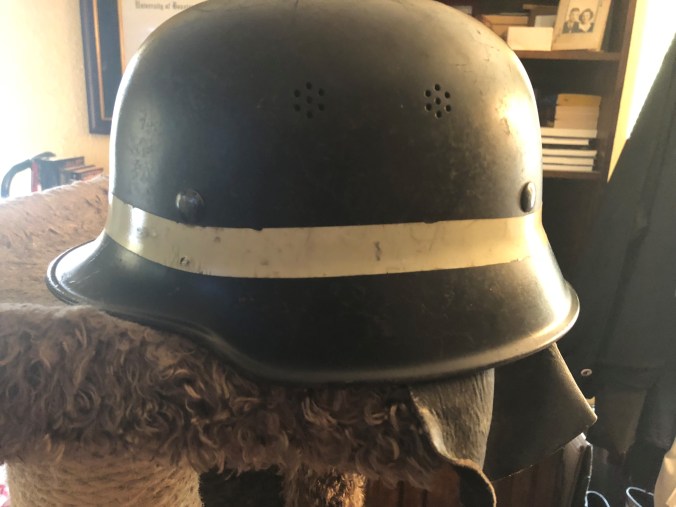
helmet

So Others May Live

image1

Dear Readers,

As most of you know, I completed my World War Two novel tentatively titled So Others May Live in November. In the nick of time, as it turned out, as I ended up in the hospital for six days over Thanksgiving Break. If you are new to this blog, I wrote a whole series of posts called Reaping the Whirlwind which details the writing process and you may read an excerpt from said novel here, but be warned, it is graphic. Anyway, I thought I’d give you a list of some of the sources I utilized during the writing of said novel. This is not an exhaustive list by any means and I’m leaving some stuff out, but here is your World War Two reading list, particularly relating to the air war and the German Civil Defense system.

General Histories

These are general World War Two histories.

Burleigh, The Third Reich: A New History

Allen, The Nazi Seizure of Power

Shirer, The Rise and Fall of the Third Reich

Hastings, Inferno

Hastings, Armageddon: The End of the War in Europe

Weitz, Weimar Germany: Promise and Tragedy

The Air War and It’s Impact

Knell, To Destroy a City

Friedrich, The Fire

Friedrich, Brandstatten

Hastings, Bomber Command

Crayling, Among the Dead Cities

Wilson, Bomber Boys

Wilson, Men of Air

Lowe, Inferno: The Fiery Destruction of Hamburg

Middlebrook, The Berlin Raids

Everitt & Middlebrook, The Bomber Command War Diaries

Wartime Berlin/German Home Front

Read & Fischer, The Fall of Berlin

Beck, Under the Bombs: The German Home Front 1942-1945

Grunberger, The Twelve Year Reich

Johnson, What We Knew

Moorhouse, Berlin At War

Mayer & Evans, They Thought They Were Free

Selby, A Serial Killer in Nazi Berlin

German Military

Since the firefighter character spent time in the Germany Army before being returned to his pre-war occupation due to wounds, it was important to bone up on German military attitudes, etc.

Knappe, Soldat

Neitzel & Welzer, Soldaten 

Koscherrek, Blood Red Snow

Bellamy, Absolute War

Reese, A Stranger to Myself

Cooper, The German Army 1933-1945

Fritz, Frontsoldaten

Beevor, Stalingrad

Sajer, The Forgotten Soldier

Wartime London

Gaskin, The Blitz

Gardiner, The Blitz: The British Under Attack

Longmate. How We Lived Then

Todman, Britain’s War

Ingham, Fire and Water: The London Firefighter’s Blitz, 1940-42

Novels

Why novels for research? There are a couple of reasons. First, from a professional standpoint, they teach be about plotting, creating characters, etc. Second, they often include historical nuggets that I can follow up on in non-fiction books.

Ledig, Payback

Remarque, All Quiet on the Western Front

Remarque, A Time to Love and a Time to Die

Deighton, Bomber

Bird, London’s Burning

Frei, Berlin

Gillham, City of Women

Misc

Thankfully I was able to view several pieces of film footage shot of German firefighters during the war, including a “how to put out an incendiary fire” video. In addition, there are tons of documentaries on YouTube about the London Blitz, life in Nazi Germany, the Bomber War, etc. Far too many to list here, but I probably watched 50-60 hours worth of them and took notes.

In graduate school, I had the opportunity to interview some individuals who had worked in the German Civil Defense system during the war, either with the Luftschutz or as auxiliary firefighters/rescue workers. My notes from those conversations helped me craft a logical response from the Berlin fire brigade to air raids. Or at least I hope it did.

I also made use of some maps of wartime London and Berlin to help give me a handy reference when dealing with directions, etc.

Again, this list is not comprehensive. My World War Two library alone includes 500 volumes (it totals a little over 2,000 when you add all the other books). If any of you are interested in this subject, the list above provides a good place to start.

L.H.


Happy New Year From Harvey Land


13775537_531936087009348_816874218142920268_n

The Redhead and I.


Dear Readers,

I wish all of you a Happy New Year. In Berlin in December of 1944, Berliners parted company by saying “Survive” instead of goodbye. A popular toast was “1944 had twelve months. Maybe 1945 won’t bring us quite so many”. Given the year that I’ve had, I can kind of see where they were coming from.

When I was still on the job, I loved working New Year’s Eve. It usually brought a working fire and a myriad of other interesting calls, such as an unconscious Batman, but I digress. Since I’m retired, I now spend New Year’s Eve/Day watching the Twilight Zone marathon on the ScyFy Channel. It is a time for reflection as well, though I don’t do the New Year New Me bullsh!t. A time to think back on the friendships made and the people met over the previous year. And also of the friends lost. 2017 saw cancer claim two friends, one like a brother to me and another like a father. The Angel of Death stalked me as well, as I nearly ended up dead after a bowel obstruction nearly caused my stomach to rupture. Yea tho I walk through the Valley of the Shadow of Death, I shall fear no evil. For I am the baddest motherf—-r in the Valley.


17523214_647455022124120_1069136765705493390_n

RIP Mr. Pat. Gone but not forgotten.


pic

RIP Chris. We had some good times and caused some trouble! 


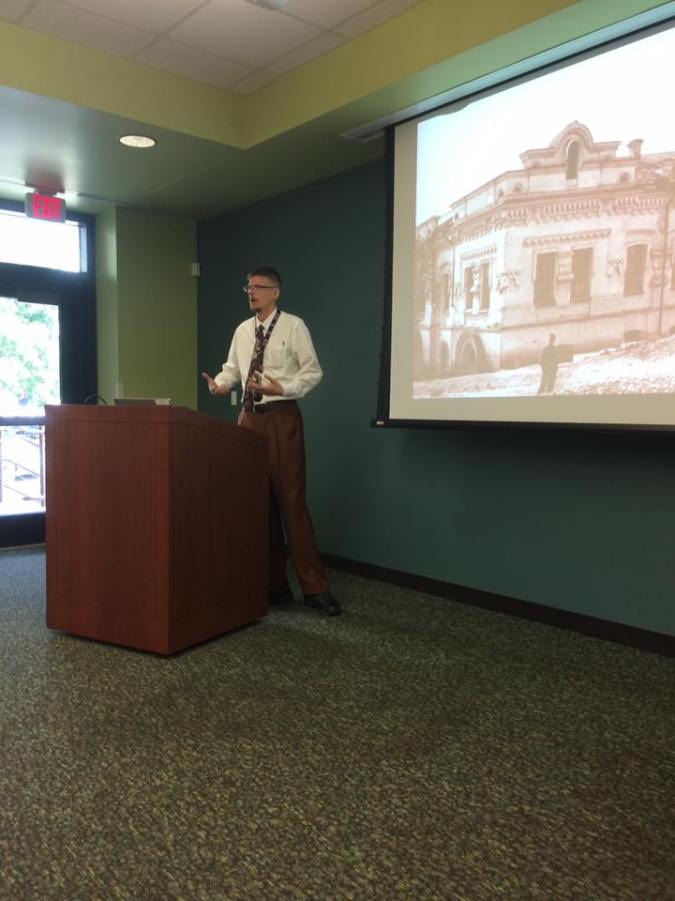
In July, I had the distinctly pleasant experience of giving a public lecture as part of a summer lecture series to the largest crowd they’d ever had, or so they told me. (They might say that to all the lecturers.) My topic was “The Fall of the Romanovs: Murder, Mystery, and the Twilight of Imperial Russia”. It was a lot of fun and quite a few of my former students turned up which was a huge surprise. I also finished writing a novel (my second completed novel), which was a lot of hard work and it took a long, long time, but as Jesus said “It is finished.”


19756843_698662673670021_925639750439079305_n

Never thought a Port Arthur boy would make it this far. 


And then came Harvey. I escaped with minor damage, but I have friends and family who lost everything. I don’t really have the words, so here is something I wrote on Facebook right afterwards:

I wanted to write about Harvey, but I can’t. To properly do it justice requires the skill of Remarque to talk about the battle against wind and water, of Homer to illustrate the long journey faced by those displaced by the storm, of Brinkley to place it within the proper historical context, and of Tolstoy to capture the massive scale of the events which unfolded.
My home in La Porte escaped damage other than a small roof leak, but so many friends and family did not. My hometown of Port Arthur and the surrounding communities have been devastated by yet another storm. It breaks my heart and robs me of the ability to say anything of value. We will get back to normal, but it will be a new normal.
God help us.


21105879_718282728374682_6647889061179749248_n

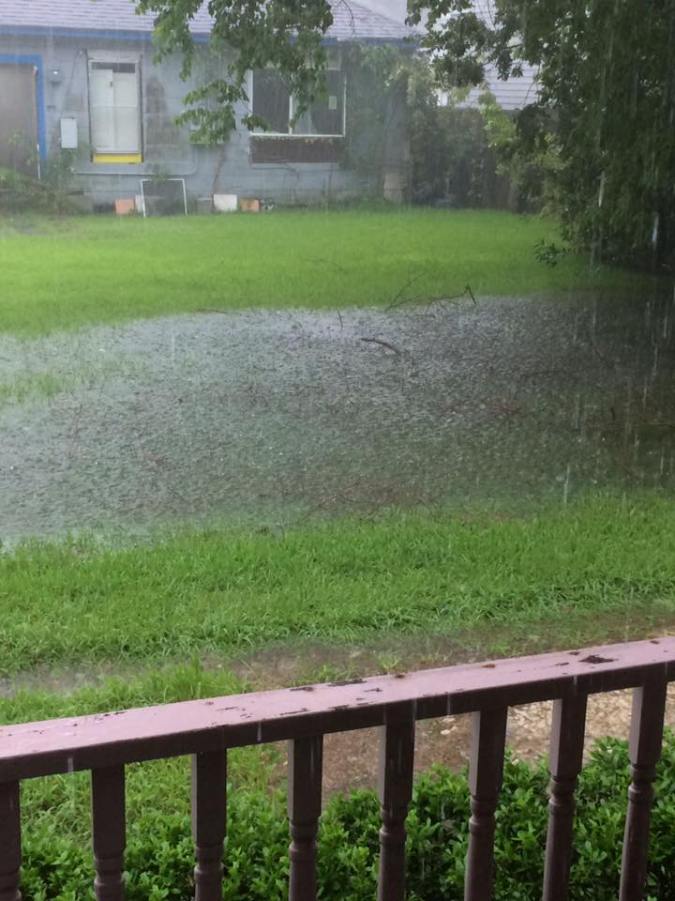
The rain just wouldn’t quit!


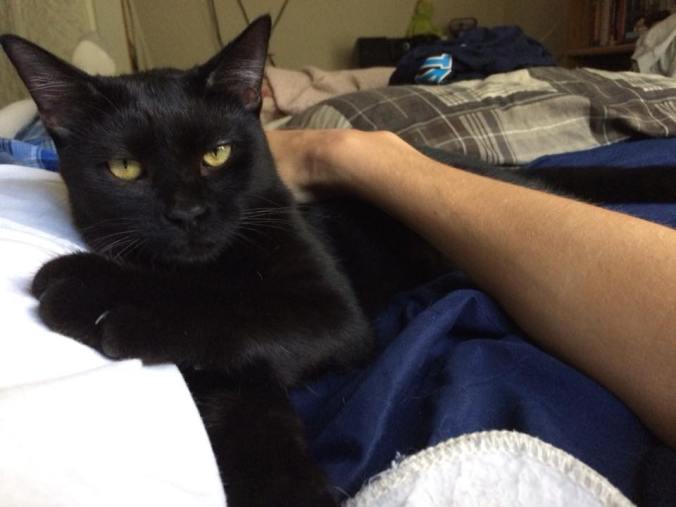
But joy is often mixed with sorrow. During the storm, I found an abandoned black kitten. I brought him in and added him to my brood (which now stands at six). Naturally, since I found him during the storm, I thought Harvey was an appropriate name. And his personality definitely suits being named after a hurricane as he tears through the house in the wee hours of the morning. I think he likes it here and the other cats are very tolerant of him, especially Anastasia who thinks that he is her kitten.


23659189_748748698661418_7613155992058316779_n

Harvey the Hurricane Kitten.


23658605_1954564491535492_3377455168385129765_n

He does a fair impression of me. 


I taught a class the second half of the summer and had a pretty good time with it as it was an “adult” class rather than a dual credit class like I’ve been teaching the past few years. The fall started with Harvey, but once the semester got started, it seemed as the storm and ensuing delay through my timing off a little bit. Plus, I was teaching 8 classes between three school as opposed to my usual five classes between two schools. I had some very long days which were physically quite taxing on me, given my limitations, but I made it through just fine.

Thanksgiving saw me in the hospital for six days starting on Thanksgiving night. I was treated really well, and half my nurses were hot, so there is that. However, for three of those days I had a tube stuck down my throat via my nose to keep my stomach empty. That sucked big time. The doctors don’t know what caused the bowel obstruction which means there is no word on how to prevent it, which means I’m left to panic ever time I get the slightest twinge of stomach pain in fear that it is returning. Here’s to hoping that it doesn’t.


23795666_751939821675639_5518149381892744819_n

If anyone comes near me with an NG tube again, I’ll kick them in the testicles. If they have any.


I saved the biggest news for last, which is okay because it happened in November too. After many years of trying, I was finally offered a full time position as a professor at a community college, something I’ve been trying for now for quite a while. I was 0/20 on job applications. Sure, it’s a temporary appointment, but it may turn into something permanent and at least it is a start. So the year ended on a good note, or at least an upswing. I’m hoping that will carry over into 2018.


Unicorn

You may be cool, but you’ll never be a history professor in a unicorn mask cool.


My injuries still cause me pain, a little more with each passing year. My other health issues continue to cause complications and I am still unable to eat solid food, and haven’t been able to for two and a half years now. I’m forty pounds less than I weighed two years ago which means my epic wardrobe of three piece suits no longer fit, so I’m having to rebuild it piece by piece. This is important because in two more years it will be the Roaring 20s again and I want to make sure I look the part!


24991155_1969048093420465_4754151019517016250_n

Anastasia is my New Year’s date!


Here’s to wishing you all have fair winds and calm seas in 2018. And if things get rough, just remember the order General Taylor gave to Captain Bragg at the Battle of Buena Vista: “Double canister and give em hell!”

Hutch


21762096_726813584188263_7843427977512329755_n

#NewYearsResolution


Graveyard of Empires: Britain’s First Afghan War


Remnants_of_an_army2

Remnants of on Army by Elizabeth Butler


If your officer’s dead and the sergeants look white

Remember it’s ruin to run from a fight

Just keep open order, lie down, and sit tight

And wait for supports like a soldier

Friends,

In the mid 19th Century, both the British Empire and the Russian Empire vied for control in Central Asia. With their base in India, the British pushed their imperialist banner northward towards Afghanistan in an attempt to keep the Russians out. The Russians, in the meantime, had a handy alliance with Persia and backed an anti-British ruler in Afghanistan. The British decide to oust him. Their cover story was that they were not invading, but merely aiding the legitimate ruler. Typical British Imperialist nonsense.

European countries, and the United States, held imperialist ambitions for a couple of reasons. First, they sought raw materials to feed their growing economies. Second, they needed new markets for finished products. Finally, there was a racial component that we cannot deny. Europeans felt that they had a right to any territory formerly held by people who were black, brown, yellow, or red. Consider, for example, Rudyard Kipling’s “White Man’s Burden”. At the same time the British were fighting their First Afghan War, they were also fighting the Opium War with China in an attempt to force the Chinese to trade with them. Hell, if you’re gonna fight a war, opium is as good a cause as anything else! To the victor belongs the………pipe.

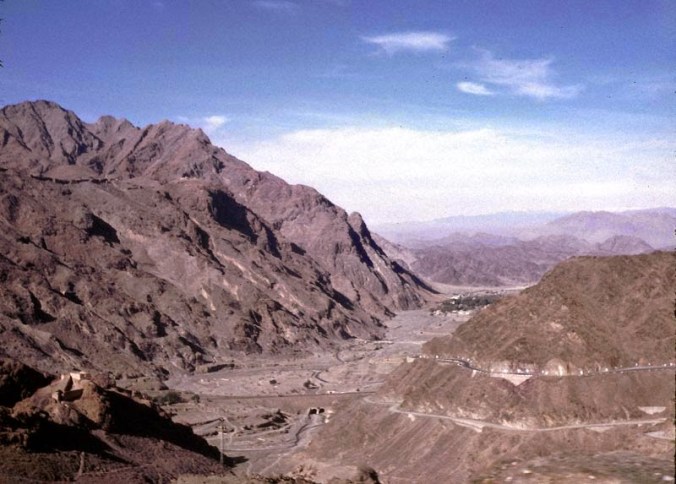
In 1839 a large force of around 16,000 British and Sepoy (Indian) troops marched through the Khyber Pass and into Afghanistan. They brought a staggering 35,000 or so camp followers with them. They included merchants, journalists, cobblers, blacksmiths, and, of course, prostitutes. I believe it was General Sherman who said a soldier who won’t f–k won’t fight! They reached Kabul and deposed the pro-Russian ruler and replaced him with one more friendly to the British government, or at least one who was under their control. The British wisely decided not to attempt to pacify Afghanistan since that would be impossible. Instead, they just used their puppet ruler to keep Russian influence to a minimum. But they made a tragic mistake. Custom dictated that the local ruler in Kabul pay monthly tribute to the Pashtuns who controlled the mountain passes. The ruler cut the tribute in half with no warning. Angered by this insult, the Ghilazis closed the Khyber Pass and cut Afghanistan off from India. This dilemma was made worse by the fact that the British sent the majority of their troops home the previous year since they didn’t think they would need them anymore. I believe we call that an “Oops”.

khyber

Khyber Pass


At around 9am on January 6, 1842, the Kabul garrison consisting of 4,500 British and Sepoy troops and around 16,000 camp followers set out from the city, marching through deep snow. Along the way, Afghan snipers took shots at the column whenever the opportunity presented itself. Given the difficult terrain which favored irregular warfare, the British were unprepared for what they faced. 3,000 of them died in the Khurd-Kabul Pass. At one point, their commander ventured out to meet with the Afghan commander and was taken hostage. The Afghan’s offered to take all of the married officers and their wives into their camp for “protection” which they did, but they became hostages instead. The column marched on, or tried to, and was slaughtered. Near Gandamak, the 44th Regiment of Foot mounted a desperate last stand. With only a handful of men with a few rounds each, they responded to a demand to surrender with “Not bloody likely”.  Only one man, Dr. William Bryden, reached Jalalabad with the scene immortalized in the painting at the top of the post. Later, around 150 other survivors would be rescued or would straggle in to British outposts. All told, this was a disaster of epic proportions and not a very good day for the British Empire.

800px-THE_RETREAT_FROM_AFGHANISTAN,_1842.

The Retreat From Afghanistan by A.D. McCromick


The British rarely respond well to getting their asses kicked by people they consider to be inferior, and this is certainly the case here. The raised a new army in India, calling it the Army of Retribution. They set out for Kabul to bring vengeance upon the heathen who had so thoroughly trounced them before. When they arrived in Kabul, they destroyed the city’s Great Bazaar and the soldiers went on a rampage of looting, murder, and rapine, all done with the sanction of the British commanders. Things settled down for a while as the British were again content to simply control enough to keep the Russians out. This allowed them to meet their objective and also to grant the Afghans a nominal amount of independence. A little over one hundred years later, the Russians would enter Afghanistan on their own and find the Afghans to be just as fierce fighters as the British had during the 19th Century.

When your wounded and left on Afghanistan’s plains

And the women come out to cut up what remains

Jest roll to your rifle and blow out your brains

And go to your God like a soldier

–“The Young British Soldier” by Rudyard Kipling

L.H.

Some Other Beginning’s End


Unicorn

Dear Readers,

In 1999, my senior year of college, the band Semisonic recorded a song entitled “Closing Time”. There is a line in the song that says Every new beginning comes from some other beginning’s end. This is, of course, quite true. I have one new beginning that is ending this week and another new one which will start in January.

In early August of 2013, two weeks removed from my final day on the job after my injury, I was offered the opportunity to teach dual credit college courses at an early college high school that was just about to open its doors to students for the first time. (To explain, I’m a college professor. The only difference between this class and one on the college campus is that I’d be teaching a class full of 16 year olds.) I agreed to do it, though not without some trepidation. I’d taught dual credit courses before in the past, as I’ve been teaching part time since 2004. But in the past, the kids always came to the college campus. Now I’d be going onto their turf. I know full well I’m not cut out to be a high school teacher, so facing a class full of high school kids in a high school campus on the first day of school made me as nervous as a fully involved multi alarm apartment fire.

My trepidation vanished as the first class began, and it’s never come back. I feel like I’ve found a home there. Each semester I teach two or three courses and the nice thing is, I generally get to have the same students all year which is different than it would be in an “adult” class on the college campus. I’ve had the time of my life at this school. Seeing students walk across the stage and accept their Associate’s Degree and then later, their high school diploma is a feeling I cannot describe.

I have stacks of cards, photographs, and even a signed poster board that I’ve been given by students over the years. Every professor or teacher struggles with self doubt, at least if they are a good one or want to be a good one. On those days, I need only look at what I’ve been given and know that at least for someone out there, I made a difference. Since I deal with chronic pain from my injuries along with an incurable autoimmune disease, my weeks are filled with some really rough days. But when I walk through those doors on Monday and Wednesday mornings, all the pain vanishes to the deep recesses of my brain as I look forward to spending the day with my kids. Sure, I enjoy my regular college classes too, but there is something special, perhaps even magical, about this place.

Over the past five school years, I’ve shared a ton of laughs with my students, sometimes at my own expense, and even shared a tear or two. I’ve spent a good chunk of my life on one hallway it seems, and the thought of leaving for a full time position, while obviously a no brainer financially, still tears me up inside to think about it. Wednesday will be an emotional day for me. I’m not going to lie and say it won’t be. My students mean the world to me and no words I can say or type can fully express that to them. I see my students as my own children. I care about them. I worry about them. And I try to look out for them, just as I do my own son who is around their age.

So when I walk out those doors for the last time on Wednesday, it will be with a heavy heart. I’m excited for my new beginning, but I mourn the beginning that is now coming to an end. I’ll take away a lot of good memories, like coaching the junior girls in the powder puff game this year. I can only hope and pray that I did enough for my students so that they know that no matter where they (or I) end up, they’ll always have me in their corner.

Hutch

Last Harvest of the Death Angel: 5 Hours of Horror, Franklin, TN

history1

Dear Readers,

November 30 marked the anniversary of one of the most horrific battles ever fought in North America. Some call the Battle of Franklin the Pickett’s Charge of the West. That is incorrect. Pickett’s Charge was the Franklin of the East. At Gettysburg, 14,000 men crossed a mile of open ground after a two hour artillery bombardment. The charge lasted around 50-55 minutes. At Franklin, 19,000 men crossed two miles of open ground straight into three levels of entrenchments. And it wasn’t just one charge, it was more like 15-17 and it lasted four five brutal hours.

Over night on November 29/30, 1991 when I was thirteen years old, I had a very graphic dream about the battle of Franklin from the point of view of one of the soldiers. In the dream, I knew it was Franklin because of what someone said. At that point in my life, I was a student of the Civil War, but my knowledge, though more than most 13 year olds (or adults for that matter) was still very general in nature. I started reading Bruce Catton when I was 8, for example. I’d never heard of the battle before this dream. Dear Readers, I’ve had the dream every year on the night before the battle since 1991. I’m 39 now and just a few days ago, I had the dream yet again. You can read my written description of it here

I have visited Franklin and when I close my eyes, I see the whole thing played out in front of me again. I do not know why I have this dream. I had several brave ancestors who fought in this battle. Do they have the ability to pass on their memories to us via DNA? Or is it something else? One thing it is not, Dear Reader, is a figment of an overactive imagination because I wrote down the dream at age 13 and it has never changed. And remember, I didn’t know a d–n thing about this battle when I had the dream. But I digress. On my Facebook page on November 30th, I posted firsthand quotes from participants in the battle and probably drove my non-history friends crazy. I set out to do that again here, for those who know me not on Facebook. I’ll also throw in some more that I did not put on Facebook as I didn’t have to time post non-stop all afternoon, though I really wanted to.

I do not propose to describe the tactical decisions, etc, that led up to this battle. I only want you to read the words of the participants and understand this battle for what it was…..obscene and vile. No words of mine could EVER do justice to those brave souls who bled and died here.

CottonGin+(4)

The Carter Cotton Gin. The Confederate attack in this sector was described as “Glorified suicide”. 

“The men seemed to realize that our charge on the enemy’s works would be attended with heavy slaughter, and several of them came to me bringing watches, jewelry, letters, and photographs, asking me to take charge of them and send them to their families if they were killed. I had to decline as I was going with them and would be exposed to the same danger.” Chaplain M’Neilly, Quarles’ Brigade

“It is ominous, and I fear our men are going to be annihilated. Our bands played ‘Dixie’, ‘The Bonnie Blue Flag’, and ‘The Girl I Left Behind Me’. This was the first and only time I ever heard our bands playing on the battlefield and at the beginning of a charge.” — Dr. Phillips, Surgeon, 22nd MS Infantry

“Then the order rings out against the din ‘Fire left oblique boys! Fire left oblique! They are bearing down on our left!There is now a wall of blazing guns all along our front. Men are dropping all along the line. Every second someone is killed. We are loading and firing until the gun barrels burn our hands.” — W.A Keesy, 64th Ohio, Conrad’s Brigade

“My color bearer was shot and the flag dropped. Colonel V.P. Greene grasped the flag staff and said ‘Damn! I’ll carry the flag. Look to your own company.’ Colonel Greene carried the flag through the fight without a scratch. They were killing and wounding our men so fast the order ‘Charge!’ was given. We raised the Rebel Yell and moved in double quick time.” — Lt. Mintz, 5th Arkansas Infantry, Govan’s Brigade

“We ran about 50 yards back and were reforming when a cannon ball took off my right foot. The same ball passed through two other men and wounded Beaumont and myself. We were in a very exposed place and could not move, the dead and wounded were all around us.” Joseph Thompson, 35th Alabama Infantry, Scott’s Brigade

“The ditch was full of men…..dead, dying, and wounded. If I ever prayed earnestly in my life, it was then.” Capt. Rea, 29th Alabama Infantry, Sears’ Brigade

“Go back and tell them to fight! Fight like hell!” General Wagner, 2nd Division 4th Corps, US. (Reported to be “vaingloriously drunk at the battle)

“The force and wind of the grape and canister would lift us clear off the ground at every discharge. As the great clouds of smoke had to some extent vanished, I could look around me and saw to my surprise, I was left alone in the ditch within a few feet of the battery which was still pouring forth it’s messenger of death, and not a living man could be seen standing on my right, nor could one be seen for some distance on my left. They had all been swept away by that mighty tempest of grape, canister, and rolling waves of lead and fire.” John M. Copley, 49th TN Infantry, Quarles’ Brigade

“The ravings of the maimed and mangled were heart rending. Crazed with pain, many knew not what they said or did. Some pleadingly cried out ‘Cease fire! Cease fire!’ while others agonizingly were shouting ‘We surrender! We surrender!'” Sgt. Banks, 29th AL Infantry, Shelly’s Brigade

“We charged up to the works. We used bayonets, butts of guns, axes, picks, shovels, and even…. [Colonel] Opdycke picked up a gun and clubbed with it.’ J.K. Merrifield, 88th IL Infantry, Opdycke’s Brigade

“About 9pm, a large body of the enemy in our front who were lying low and did not dare to go back begged for quarter and were allowed to come in. The only instance when I heard Johnnies beg for mercy.” Lt. Mohrmann, 72nd IL Infantry, Strickland’s Brigade

“Kind reader, right here my pen and courage and ability fail me. I shrink from the butchery.” Sam Watkins, 1st TN Infantry (writing in his 1882 memoir Co. Aytch.

“Call it glorious to die a horrible death, surrounded by an awful butchery, a scanty burial by enemy hands, and then total oblivion, name blotted out and forever forgotten—where is the glory?” Capt. James A. Sexton, Illinois Infantry

So there you have it, Dear Readers, a few quotes from a few brave men from both sides who fought at Franklin, only to have their memory and sacrifices largely forgotten as the battle faded into memory, known only today by true Civil War enthusiasts. Part of that is because the veterans, especially the Confederate veterans, did not wish to speak of the horrors they witnessed here. My great-grandmother’s grandfather fought at Franklin. He lived well into his 80s and so she knew him quite well as a girl. She said he could talk about “stacking Yankees up like cordwood” at Kennesaw Mountain and the first day at Shiloh where they overran Federal positions and “smote them hip and thigh.” But when asked about Franklin, which lay only about twelve miles from his home, all he could do was weep.

I’ll stop there, Dear Reader. I do not know why I have such a strong, visceral connection to this battle. Or why I can see it unfold in my head. Or why each year on the eve of the anniversary, my mind dredges it up in the wee hours of the morning. Bruce Catton once said that “We are the people for whom the past is forever speaking.” Mr. Catton is right on that point. The quotes above come from a few places, Eyewitnesses to the Battle of FranklinThe Confederacy’s Last Hurrah, and Co. Aytch. Though I close here, below I will list my family’s Roll of Honor from this battle.

Hutch

Roll of Honor

19th TN Cavalry

Buford Hanks Fitzgerald

48th TN Infantry

Daniel Fitzgerald

Francis Marion Fitzgerald

Uriah Galloway

Aaron Thomas Vestal

Charles W. Vestal

James Vestal

Josiah Franklin Dugger

William L. Dugger

1st TN Infantry

Haywood Taylor

John L. Jacobs

Thomas Henry Jacobs

33rd AL Infantry

Elisha Potts

George W. Potts

14th TX Cavalry (Dismounted)

Hewitt Rather

Nathaniel Houston Rather

2nd TN Infantry

Thomas Fleming


The Sound of Distant Cannons


Reenact1

“Are you hot in that uniform?” “Well, some women think so…..”

Dear Readers,

Whenever I teach about the Civil War in class, it makes me a bit nostalgic. Not for the war, but of the sixteen years I spent as a Civil War reenactor. Yes, I spent four times as long reenacting the war than the war itself was. I guess my reason for getting this way is because I was younger then, of course. And it was before I suffered a serious injury which ended my public safety career and left me in constant pain. Also, I miss my friend and comrade of all those years, Robert, who passed away unexpectedly a few years ago. The laughs we shared, the funny incidents we witnessed, the people we met and the places we saw are just as fresh in my mind today as they were back then. You can see the post I wrote upon learning of his passing here.

Since I now dwell in an academic world and not one filled with fires and arsonists, I have come to understand that many (I dare say, most) academic historians look on living historians (my preferred term for what I did) with barely disguised and often open disdain. I’ve heard them claim that all reenactors are racist, Lost Cause types. I’ve heard them claim that reenactors are all gun freaks or super right wing nut jobs. People who proudly boast of how “open” and “tolerant” they are quickly lump all reenactors into one category. Are there people within the ranks who are all those things? Of course! But most are not. They are men and women who love what they do and try to bring history to a wider audience.

Reenact2

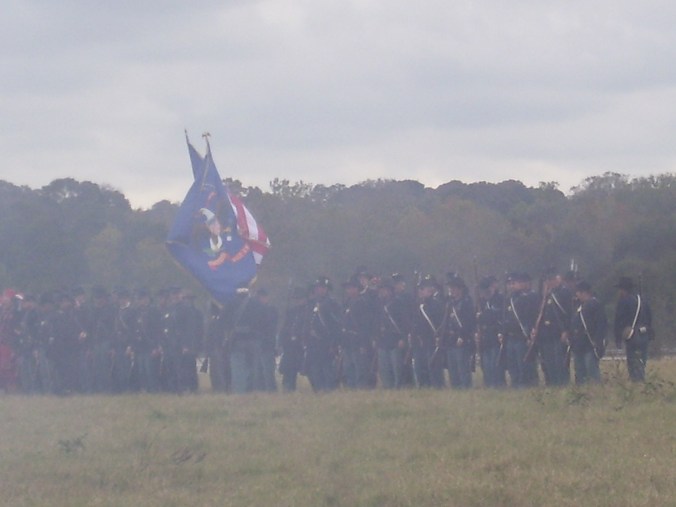
The 13th US Infantry on the field at Liendo. 

Apart from those criticisms, the other major one I’ve heard over the years is that “Reenactors get too bogged down in details and don’t care enough about the big picture.” Maybe that is a valid criticism. However, the majority of them portray humble privates in the ranks and NEWSFLASH: they didn’t know much about the big picture either. Grant and Lee were not in the habit of discussing grand strategy with enlisted men. Does it really matter in the grand scheme of things what the specific thread count of a Union sack coat was? Probably not. Another criticism is that reenactors don’t care enough about the cause of the war. Honestly, I’m not quite sure why professional historians often fixate on this. Reenactors are not reenacting the secession crisis. I think this might touch on why it seems like over the past several years, academic historians have all but removed the battlefield from the teaching of the Civil War, preferring to talk of other things. Which, by the way, need to be discussed, but the question of slavery was decided ON THE BATTLEFIELD.

How did my time as a reenactor help me become a better teacher? At most events, there would be a school day on the Friday before the reenactment opened to the public. Schools would bus in students who frequently had to complete a scavenger hunt. They’d come by in groups of 10-15 or so and we’d talk to them and answer their questions. Some reenactors looked on this as a bit of a bother and would show up after the kids left, but I came to enjoy it. I was talking to students long before I ever thought of being a teacher myself. It gave me better insight which helped explain the decision making process on Civil War battlefields. I’ve marched ten miles (which was nothing for a Civil War soldier) as part of a preservation march and did it barefoot and on an empty stomach just to try and see what it was like for the men who did it for real. Yes, I can load and fire a rifle, work a cannon, and explain how to perform “by files right into line”. None of that really helps in the classroom, but one of the things my students enjoy the most is when I teach them how to move from a column of fours to a line of battle and back. I’m enthusiastic when teaching about the Civil War and I hope that transfers over to my performance in the classroom.

Reenact3

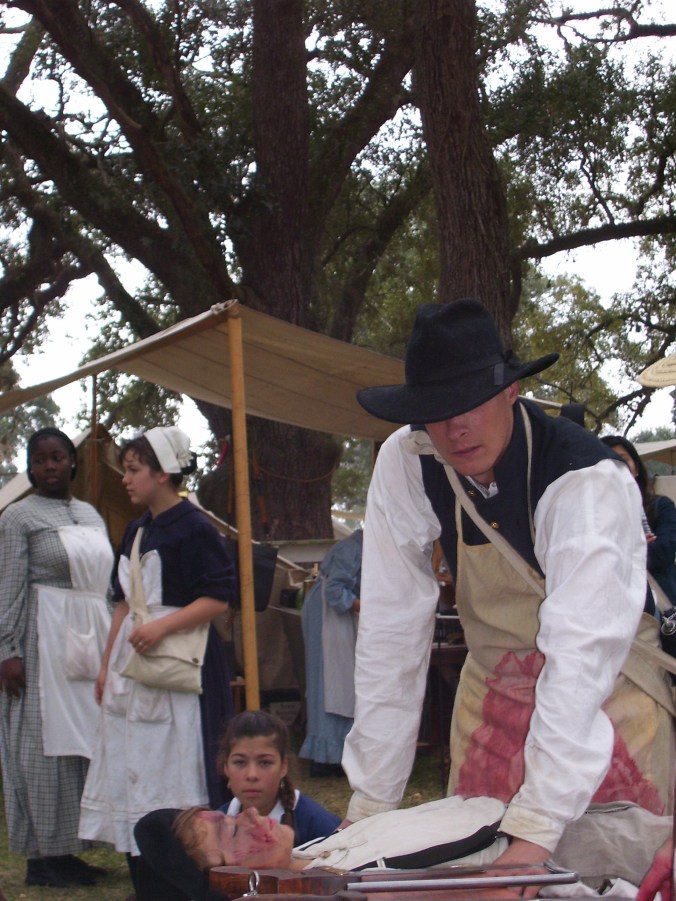
We ran a Civil War “boot camp” for high school and junior high teachers. Here I am performing a cursory examination to declare them medically fit for service.

Now, I want to tackle one subject which was kind of the reason for my post to being with. As a Southern boy who wore “the blue suit”, I want to address a statement that people (other reenactors too) frequently made. Yes, most (though not all) of my family who was in the United States at the time fought in the Confederate Army. I don’t apologize for that, nor do I feel the need to. I’m proud of the bravery they exhibited on many a field. I’m also glad they lost. Anyway, the one thing that people said to me all the time was “Your ancestors are turning over in their graves seeing you dressed as a Damn Yankee.” Here is my answer to that. First of all, I think our ancestors would be a little amused that we dress up like them and reenact something as horrific as the Civil War. Second, assuming our ancestors approved of what we do, I would think they’d want us to get it right and in the South, Rebel reenactors outnumber Yanks by 4-5 to one at most events. Since when did the odds ever favor the Confederacy that way? Third, I would occasionally switch over and portray a Confederate surgeon rather than a Union surgeon every now and then. Fourth, and most important, if you don’t like my choice of impressions, you can kiss my Irish a$$. Truthfully though, at events in the South, the Yankees are the “bad guys” and sometimes people boo as you march out to the battlefield. To be honest, it was kind of nice to be the bad guy.

So there you have it. My humble musings on my time as a reenactor. Here are some of the regiments that my ancestors served in (all Irish immigrants, by the way).

8th Ohio Infantry

160th New York Infantry

1st Tennessee Infantry (CSA)

48th Tennessee Infantry (CSA)

6th Louisiana Infantry (CSA)

4th Texas Infantry (CSA)

Hutch

Reenact4

A Union Surgeon treats a wounded Confederate drummer boy.


Of Box Alarms and Phrases: The Historical Origins of Some Fire Service Terms

image1 (1)

Friends,

With my previous post about a historically significant fire in Houston, Texas, I thought I’d revisit the subject of fire service history. Fire departments are big on tradition, and a lot of the terms in use in some areas today have very old origins and harken back to the days of wooden ladders and leather lungs. Helmets, for example, are usually a firefighter’s most iconic piece of equipment, especially the traditional style (as opposed to the salad bowl type). When I was a humble fireman, my department issued us the “modern” style helmets but allowed us to purchase our own, so long as we stuck to the department color requirements. (Yellow for firefighter, red for captain, white for chiefs). Most of us purchased our own. Mine was a Morning Pride traditional helmet called the Ben Franklin. Why? Because Franklin was once the chief of a volunteer fire company! I went through a couple of different helmets, all the same style. When I was an arson investigator, I wore a leather Cairns New Yorker which has, other than a few modifications, been the same helmet for 168 years. Cairns began to make helmets in the 1850s and prior to that, made leather helmet shields going back to the 1830s. Ah yes……tradition! Thankfully I still have my arson helmet and one of my firefighter helmets. They make for nice conversation pieces.

Keep in mind that what I discuss below may vary from department to department. Some use all of the terms, others may use none of them. Not only that, but the meaning of the terms may vary as well. The meanings and origins I give are the originals, rather than how they’ve morphed over time. Though the fire service is strong on tradition, things do change no matter how resistant some may be. Change comes slowly, but it does come. So without further ado here are some historical terms still in use.

74a0864e60b1e973c32135f1d2892ad4--fire-apparatus-vending-machines

Box Alarm/Assignment: This is a holdover term from the days of telegraph fire alarm systems which existed in most major cities. Alarm boxes like the above stood on street corners. Should a citizen witness a fire emergency, they could hurry to the nearest box and pull the lever. This transmitted a coded series of numbers by telegraph to the central alarm system. The dispatcher reviewed the box number (which corresponded to an intersection), and then selected a punch card which had the apparatus assignments for that intersection. The punch card was fed into a second telegraph which sent the box number to the stations assigned to that intersection. Meanwhile, at the station, the alarm bell would ring to notify the station where to go. Let’s say it was box 427. The bell rang four times, pause, two times, pause, followed by seven times. It may sound complicated, but alarms could be transmitted from alarm box to station in seconds and, believe it or not, horse drawn apparatus often cleared the floor in less than 30 seconds! Though the FDNY doesn’t use fire alarm boxes (thanks to things like cell phones), they do use box numbers. Boston, however, maintains their fire alarm boxes as a redundancy should their 911 system fail. In my hose dragger days, I typically heard the term Box Alarm to denote a working residential fire with a Heavy Box used for commercial buildings or multifamily dwellings.

(Note also, however, that ambulances are commonly referred to as “the box”, not to be confused with “box alarm”.)

Antique Wooden Telephone

Still Alarm: As telephones became more commonplace, fire departments began to receive calls by phone, along with calls from alarm boxes. If a call came in by phone, it was called a “still alarm” because it didn’t ring the bells at the station. In other words, the bells were still. Though not as commonly used today as “box” is, it is sometimes and by some departments used to refer to fire alarms, medical calls, etc, in other words, anything not a box alarm.

Ready to be confused? You can still a box and you can box a still. If a still alarm turns out to be a working fire, then an officer may box a still, in other words, convert it to a box alarm assignment. Conversely, if a box alarm turns out to be a fire alarm, an officer can still the box, ie: downgrade it to a still alarm assignment.

StP_fat_old

Tap this location out: This one is still very common in my area. When an assignment is complete, or nearly complete, the ranking officer will radio the communications center and say “Tap this location our holding units on scene (or a specific unit).” Again, this harkens back to the good old days of the aforementioned fire alarm boxes. Fire department officers carried keys to the boxes and when an assignment ended, they would open the fire alarm box and use the telegraph inside to tap out a message to Central Dispatch, hence the “tap this location out”. I cannot state this as a fact, but apparently the keys were shaped like a “J” and might be the origin of the nickname “jakes” for firefighters. Part of me wonders how many officers, especially the younger ones, know the origin of this phrase since they have mostly likely used, or at least heard it, before. I guess I can say the same for all these phrases.

3-horse-team-pulls-steam-powered-pumper

I’m sure that there are some other terms or phrases that I’m forgetting or that even I don’t know the origins of, though I try to stay up on my fire service history. When I was in graduate school, my favorite paper to write was the one about firefighting in Colonial America. I learned a lot of interesting things, though when I shared them at the fire station, the guys were underwhelmed by it all. Their loss, not mine. When it comes to firefighting, I think you can truly say that the more things change, the more they really do stay the same. Assuming that the world is still here in 100 years, I imagine some fire service historian will write an article on all the quaint terms from today that will still be in use.

Hutch

Houston’s Forgotten Tragedy

GulfHotel001q
Friends,
Houston and indeed all of the Texas coast and part of Louisiana has seen a great tragedy this week. I do not have the words to adequately describe it. I just can’t. I live in the affected area and though I was spared by the flooding, so many friends and family were not. So I took pen in hand today to talk about another tragedy which struck Houston in the midst of World War Two. A tragedy which has been sadly forgotten by all but a few who live in the area. I was a firefighter and then a fire marshal, the law enforcement arm of the fire service. In that capacity, I enforced fire code regulations and investigated fires. If we ruled a fire arson, we pursued those responsible. (In Texas, arson investigators are fully sworn peace officers with the same authority as any other peace officer, though that may differ in different states.) When I was a young fireman in the late 90s, a grizzled old 35 year veteran of battling the flames mentioned that Houston had experienced one of the deadliest hotel fires in US History. I’d never heard that before and it peaked my curiosity which is how I came to learn about the Gulf Hotel Fire, the subject of today’s sad tale.
Houston during World War Two was a happening place. It was nowhere near as large a city as it is today, with a population of just under 400,000. The city added 100,000 people between 1930 and 1940 and would add another 200,000 by the end of the 40s, partially due to the growth brought about by the War. Americans were lucky in the sense that here in the Continental United States, we did not face bombing raids as did our allies and our enemies. Houston, with its port and oil, played an integral role in the allied war effort. The downtown area was booming with restaurants, movie theaters, and dancing at the Rice Hotel. But there was an underside too. Cheap hotels and boarding houses dotted the landscape filled to the brim with transient workers who traveled to Houston seeking employment. The war gutted the Houston Fire Department with many members enlisting right after Pearl Harbor. The City of Houston created an Auxiliary Fire Department to supplement their missing manpower. This created the perfect storm which broke over the downtown skyline on the night of September 7, 1943.
The Gulf Hotel was located at 615 Preston which was the corner of Preston and Louisiana in the Downtown District. As you can see from the photo, it was probably a nice looking building when not on fire. As was often the case in downtown buildings at the time, the hotel only occupied the second and third floors. The Gulf Hotel would be happy to rent you a bed for forty cents a night. Or if you were down on your luck, you could get a cot for 20 cents! Though the hotel register listed 133 guests that night (all male), in reality there were probably many more than that. The 87 beds were often divided by thin wooden partitions and two men often shared a bed and split the price. Fifty cots were also crammed into the building. Every bed was occupied by at least one person and so were all of the cots. The hotel was located one block from the city’s major bus depot which meant that many of the guests arrived and booked a “room” with little familiarity with the layout of the building or the surrounding area.
While making his rounds in the middle of the night, a clerk noticed a smoldering mattress on the second floor, most likely due to a carelessly discarded cigarette. This was the 1940s and non-smokers were a rarity and you could smoke just about anywhere. The clerk and some guests dumped water on the mattress and thought that the fire was out. Rather than tossing the mattress outside, they stuck it in a closet. Bad idea. A few minutes later, other guests noticed heavy smoke pouring out of the closet and you began to hear shouts of “Fire!” There were only two exits from the building, an interior stairwell which led to the street and another which was a rickety fire escape. The fire quickly moved to cut off most of the guests from the interior stairwell, fueled by the wooden partitions used to separate the rooms. This left the fire escape as the only option, but just days earlier a Fire Department Inspector cited the Gulf Hotel for not installing a red safety light to point the way to the fire escape.
Around 12:50 am, the officers and men at Houston’s Central Fire Station received the alarm. The station was only six blocks away. After the fire, Deputy Chief Grover Cleveland Adams (what a name!) said “As we started out of the station, we could see the reflection of the fire against the sky.” That always signifies a big job. As they pulled up, the sole fire escape was already crowded with men. Some of them were on crutches and making slow progress which backed up the rest of the men trying desperately to get out. Then people started jumping out of the third story windows as that was the only means of escape left. With bodies thudding on the sidewalk, the fire department tried to rescue as many men as possible while the flames continued to light the downtown sky. The body of one victim, unable to escape from the third floor, hung limply out the window for the duration of the fire as a gruesome reminder of a fire’s deadly power.
Houston TX Gulf Hotel Fire 9-7-1943
Victims were transported to the two nearby hospitals, Saint Joseph and the old Jefferson Davis Hospital, many of them by private auto or police car. Doctors arrived and provided what first aid their could on the scene. Two victims died at the scene and another fifteen died after arrival at the hospital. The city was already dealing with a major tragedy. It took two hours for the fire department to battle their way inside and extinguish the fire. What they found was far worse. Thirty-eight bodies were inside the hotel, overcome by smoke and flames as they tried in vain to reach safety. The fifty-five men who died that night were victims of the deadliest fire in Houston history. Indeed, it is one of the five deadliest hotel fires in 20th Century American History. The 40s saw many deadly hotel fires, unfortunately, and this was just one.
Given that this happened during the midst of World War Two, it did not receive much coverage. Fire disasters like this were not unheard of at the time. Indeed, not even a year earlier, the City of Boston experienced the Coconut Grove Nightclub fire which killed 492 people, the second deadliest fire in American History. The post war brought era brought two other mass fatality fires when the Winecoff (Atlanta) and the La Salle (Chicago) hotels burned. Today, few Houstonians know anything about the Gulf Hotel tragedy. Part of this is because so many of the people who live in Houston today are part of the boom in population that happened after the War. Also, the City of Houston is partially to blame. They gleefully bulldoze any building more than thirty years old. The city has totally lost touch with its past, both good and bad. That is a tragedy of a different sort.
Twenty-three of the victims from this fire were never identified. They were buried in a mass grave at Houston’s South Park Cemetery, where they remain just as forgotten today as they were in 1943. The Houston Chronicle summed it up best at the time when it said the following:
“Who were these men? What strange, pathetic, colorful,
or drab histories led to a fate that sent them unrecognized
to this tragic grave?
Histories that shall be forever unwritten, unknown.
Some of them had good jobs, as shipyard workers,
defense plant workers. Some perhaps were newspaper vendors
peddlers, or clerks in hideaway stores.
Or they were beggars and crippled derelicts wandering
in the city streets with nothing to do, no place to go but
their cots in the crowded hotel.
What kind of homes did they come from? Where?
No one will ever know?”
Perhaps the finest words ever written by the Houston Chronicle. Sadly, we still do not know.
My name is Lee Hutch and I am a Half A$$ Historian.
Source Notes: In my college years I wrote a paper about this tragedy and had the opportunity to speak with a few people who witnessed the fire. (None of them were inside the hotel at the time.) I also collected newspaper articles, etc, and had a pretty nice file on it. I also consulted a publication available at the Houston Fire Museum called Houston Fire Department: 2000 Traditions & Innovations. There is some debate as to the number of remains buried in the mass grave with some sources saying 23, 31, or even 38. Most of the sources say 23 and so that is what I am going with.