Another Semester in the Books

de28c86ee373630454fa15c6d92d07d5492ac35f.0

Dear Readers,

Another semester has come to a close. I haven’t had much time to blog over the past few months. I taught seven courses this semester (my contracted 5 and 2 overloads). On top of that, there were meetings, office hours, and working on revised drafts of my novel (now in the copy editing phase).  Now I have a month off, and I plan to spend it playing Red Dead Redemption 2 and wrapping up my novel copy edits. I think I can manage to do both.

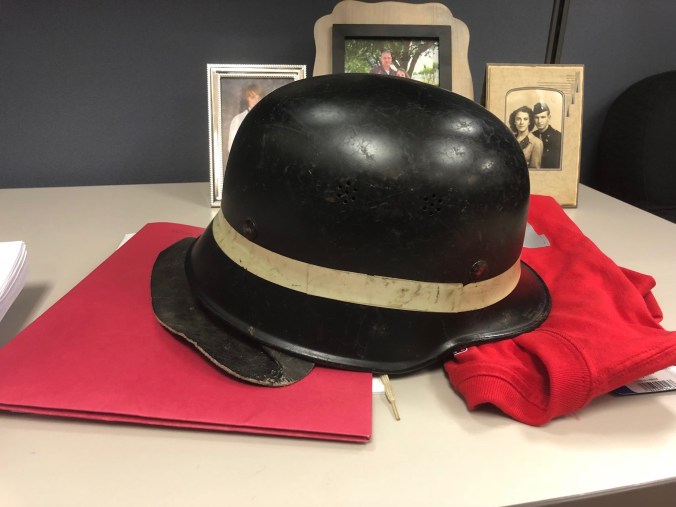
In other news, I moved into a new office at the college this week. When I got hired full time, there wasn’t any available office space, and so I had a cubicle. It was a nice, big cubicle, and I had it all to myself. But when they told me that I could have a real office after a professor retired, well, I leapt at the chance. I got set up yesterday, and now it resembles a museum of fire helmets. Some mine and some antique ones. Students don’t generally make use of office hours though, and I spend ten hours a week staring at the phone waiting for it to ring, or gazing at the door waiting for a student to appear. When neither happens, I wander around the office suite and pester my co-workers.

image1

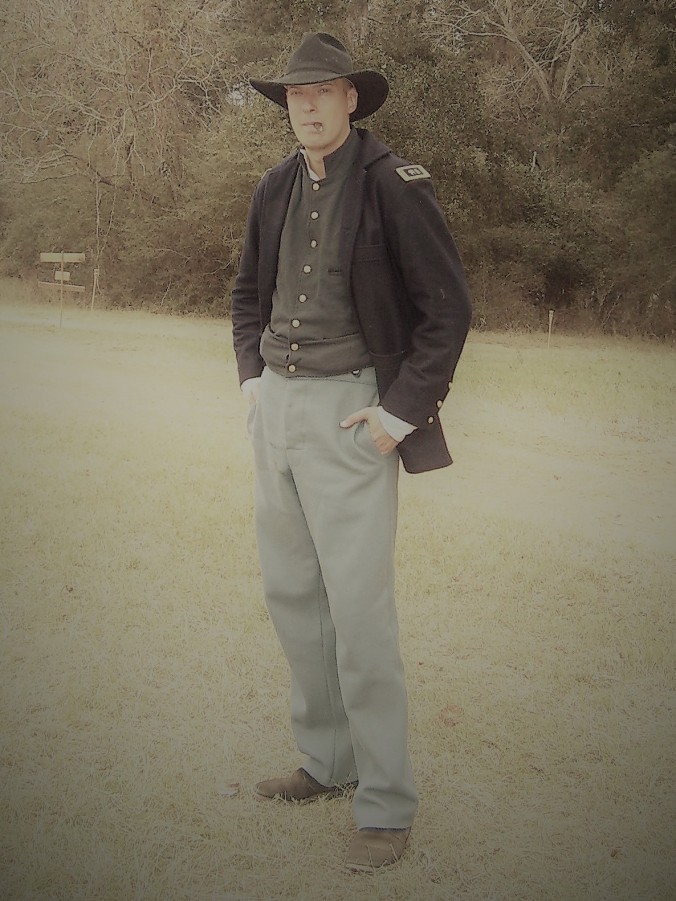
A couple of weeks ago, we (myself, my wife, and a friend) went down to Galveston for Dickens on the Strand, an annual Victorian Era festival. My friend and I donned Yankee blue for the trip. We had a lot of fun. So much fun, in fact, that my wife had to drive us home! There were lots of people dressed in Victorian clothing. We even got our picture taken with a suffragette! The food was great, as was the beer. Next year, I’m planning on going as a 19th Century firefighter.

Apologies for the short post, but the Old West beckons. I’ll see you on the trail, pilgrim. And look forward to another post within a few days about my favorite Western fiction.

L.H.

Dickens on the Strand

Dear Readers,

Yesterday I made the drive down to Galveston for the 45th Annual Dickens on the Strand event. Growing up, my parents would take us every year, rain or shine, and some of my fondest childhood memories are of spending the day walking around The Strand and looking at all the people in Victorian Era Costumes. Later, as an adult, I would go with my late friend Robert and we would set up a table and talk to people about Civil War Galveston whilst dressed in Union Navy uniforms. (One year a group of Victorian “working girls” came up to us and said “We love seamen!”)

But I haven’t been down there since Robert passed away as I thought the memories would be too difficult for me. I decided to break my ten year long absence and sally forth to occupy the city in the name of the United States Navy, circa 1862. With me on this trip were my wife and my friend Mike. I wore my US Naval surgeon uniform and with me I had licenses to pass out to women of the town. The US military establishment during the Civil War required working girls to have a health certificate and a license to operate in occupied areas, so I was only doing my part to ensure the health and well being of our soldiers and sailors.

The weather was perfect and the crowd was one of the largest I’ve seen attend. Also, I was particularly happy to see so many young people dressed up. There were tons of pirates there (which isn’t really a Victorian thing, so I’m not sure what is up with that). I also liked all the suffragettes who wore sashes which said “Votes for Women”. A particularly attractive one even asked if she could get a picture with us, which we readily agreed to! Words do not exist to describe the all the wonderful foods available! We had lunch at a German beer garden (at my German wife’s insistence). I’ve never had sauerkraut balls before and Holy Crap they were good! And funnel cakes……how I love thee.

It was a great day and I had a ton of fun. So much fun that my wife had to drive us home….

L.H.

Once More Into the Breach


Anastasia

Dear Readers,

It’s been several years since my retirement from the Fire Service, but I’m still not used to being off on holidays. For many, many years, holidays were just another work day. My Thanksgiving Break started yesterday (Tuesday) afternoon. I’m not much of a turkey eater, so I have no plans to stuff myself on Thursday. Indeed, my only real Thanksgiving tradition is watching the Macy’s Thanksgiving Day Parade. And even then I must avert my eyes whenever they show the clowns. No, Reader Mine, this Thanksgiving I will be tackling yet another round of revisions as I prepare to send my manuscript out for the copy edit. This will be my last substantive edit. The remaining ones will focus on grammar, word usage, etc.

This has made me look back and consider all the editing rounds I’ve done to see how many drafts I’ve gone through and which changes were made to each. I save each draft as a separate file, so I can actually track my own progress across the drafts. So here is what I’ve done so far (and this has stretched over many months).

Draft One: Took about a year to write. Afterwards, I put it aside for several months before giving it a full read through and marked changes, mostly to character, story, plot, etc.

Draft Two: Incorporated those changes, plus the changes my wife suggested after reading the first draft. After completing Draft Two, I again put it aside for a couple of months before giving it a fresh read to prepare a third draft, which is what would go to my content editor.

Draft Three: Most of the changes here were to language, dialogue, and cleaning up “Americanisms” as my characters are not American. In between Draft Two and Three, I also chased down some lingering research issues and incorporated that into this book. And then came the content edit!

Draft Four: This is the first draft to incorporate editorial feedback from someone other than myself or my wife. I received excellent feedback from my editor and during my first pass through the draft, I added in the suggested big picture changes which were easier to include. Then I set the book aside for a few weeks while I made copious notes based on the more detailed feedback.

Draft Five: This was probably the most substantive of all the drafts. Whole chunks were slashed or re-written. I delved deeper into the psychology of the characters, based on suggestions from the editor. This helped bring them into sharper focus, I think. Or rather, I hope. I tweaked the timeline of the book as well. I also printed out a full copy so that the next reading could be a physical one. I then let another six weeks pass before having another go.

Draft Six: My wife read Draft Five, her first reading since the original draft, and made notes on the pages. Once she was done, I gave it a read through and made my own notes. Most of the changes going into Draft Six involve fixing typos, removing redundant words or unclear/awkward phrasing. I’m trying to clean up as much as I can so to maximize the benefit of the copy edit.

So how many more drafts will there be? Two. Draft Seven will be the first round of the copy edit and Draft Eight will be the second round. By mid January, it should be submission ready. I’ve identified seven presses which accept historical fiction submissions without needing an agent. If I strike out there, I will self publish the book. But that’s still quite a ways down the road.

I’ll get there eventually. Sooner, in fact, than it appears.

L.H.

Mightier Than the Sword: My Favorite Civil War Novels

Dear Readers,

To sort of piggyback off of yesterday’s post, today I shall endeavor to discuss my favorite works of Civil War fiction. Keep in mind, that all I am saying is that these are my favorites. I am not saying that they are the best. Whether or not a person likes a book or not is a personal thing. I’ve read bestsellers that I did not like and I’ve read obscure books with only a few hundred copies published that I think are, or should be, classics. My personal collection of books is well over 2,000 volumes and around 500 of them are Civil War specific, so I’ve read every standard work and a whole lot of non-standard works, fiction and non, on the subject. I shall endeavor to tell you a little bit about why I like each of the books described below and where I was in life when I read them, as that may have something to do with why I enjoy them so much.

51yqbkylTEL._SX294_BO1,204,203,200_

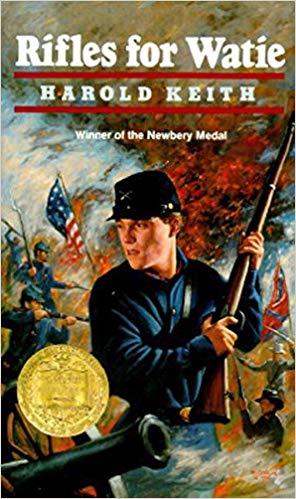
Rifles for Watie by Harold Keith was the first Civil War novel I read. The winner of the 1958 Newbery Medal was published the previous year. As I remember, I read the book when I was in third grade which would put it around 1985. This is a young adult novel and the protagonist is sixteen years old. What I enjoyed about this book is that you got to meet a large cross section of people; from Union soldiers to Cherokee Confederates, to civilians caught in the middle. Since the novel involves action in and around the Indian Territory, it covers something left out of the vast body of Civil War literature which tends to focus on things further east. I can longer recall what brought me to read Rifles for Watie. I have a vague memory of doing a book report on it, but I don’t know why I selected it. If I had to guess, it was probably a combination of the cover and the fact that it was about the Civil War.

51AXMKZ9ATL._SX315_BO1,204,203,200_

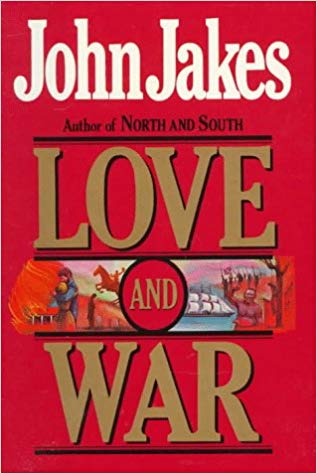
Love and War by John Jakes. This is book two of his North and South trilogy and this is the volume that covers the actual war itself. (North and South covers the Mexican War through the Secession Crisis while Heaven and Hell covers Reconstruction.) Though to be honest, you should really read all three in order. Jakes paints on a vast canvas. Too vast, I think, for me to truly capture the essence of it. The novels provide an in depth look at the events of the day through the eyes of two families, the Hazards and the Mains. There are a few differences between the mini-series (which was good in an 80s miniseries sort of way) and the novels. But honestly, they are so significant as to detract from the story. My introduction to these books came from television. I remember when the first miniseries aired in 85 and the second in 86. My grandfather recorded them on the VCR, and I watched them quite a few times. I did not read the books until I was in high school in the early 90s. I found them at a library book sale for a quarter apiece. It was pocket change well spent. As I mentioned yesterday, this book taught me that when writing about the Civil War, try to go for the lesser told tale rather than rehashing the same things that have been written about a million times. I also learned that well written historical fiction can be as educational as it is entertaining. Finally, Jakes taught me how to write complex characters that accurately reflect the temperament and mindset of the era in which your books is set. Jakes wrote quite a few other books. I have copies of all of his historical novels and I cannot recommend them enough. He is my biggest inspiration as a writer of historical fiction.

cvr9781451661927_9781451661927_hr

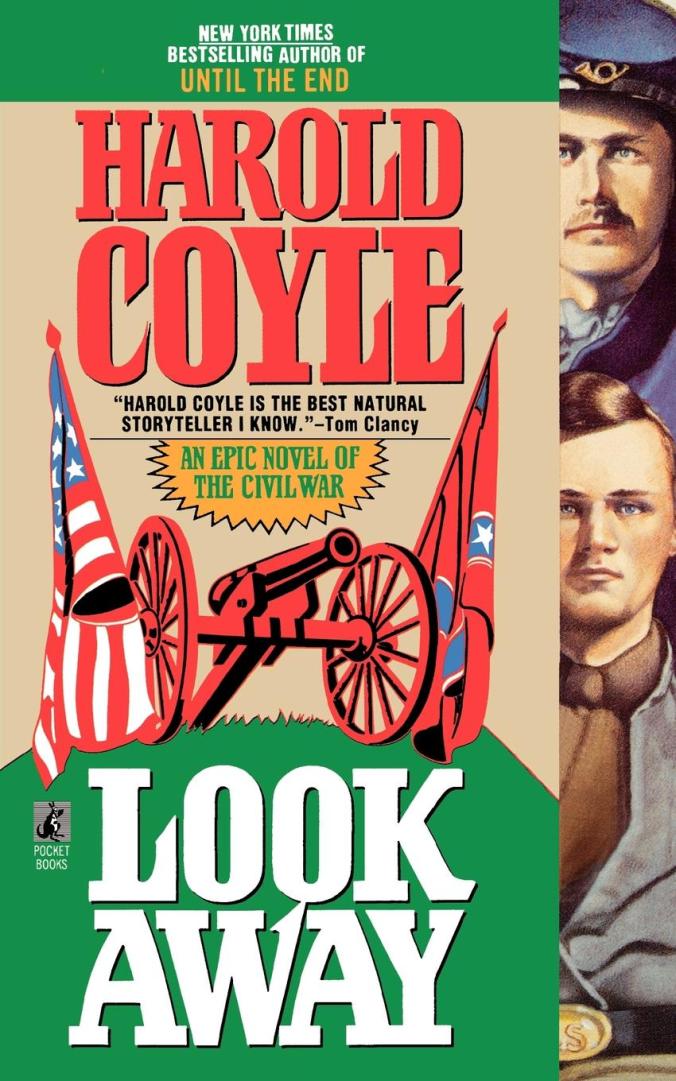
Look Away & Until the End by Harold Coyle tell the story of two brothers separated by war and forced onto opposite sides by circumstances largely outside their control. Coyle was an Army officer and is best known for his World War Three novel Team Yankee. I read his Civil War novels when I was in high school and identified with the main characters, largely because they were of similar age to me. One common theme you might see here is that I read a lot of books in high school. I rarely read things that were assigned for a class, preferring to find my own books instead. My teachers, thankfully, largely tolerated this since I read a whole lot more than most of my classmates. Though these books do contain the usual Civil War clichés, the action sequences are well written and the characters are believable. The situation which separates the brothers and sets them down the path to end up opposing one another in the war is plausible as well. These are not dense, heavy reads. In fact, if you are a fast reader, you could probably finish one of them in a night. I would also suggest that if there is a young person in your family who likes to read, and who you would like to get interested in the Civil War, give them both of these books. They will no doubt find them interesting. Who knows, said young person might become the next great Civil War historian or novelist.

514cpPl0AWL._SX321_BO1,204,203,200_

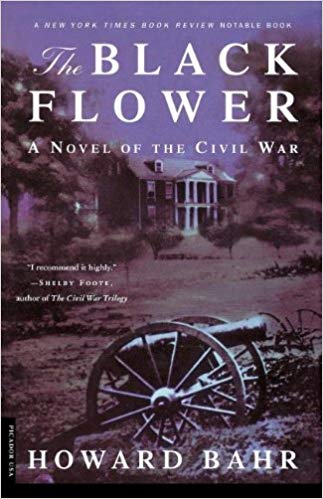
The Black Flower by Howard Bahr tells the tale of the Battle of Franklin and its aftermath. This was among the most horrendous engagements of the entire war, though it is largely forgotten outside of enthusiasts of the Western Theater. Bahr was an English professor, and this novel is, what I would classify, as a literary novel. It’s written in a way that I could never dream of doing myself. It won the WY Boyd Award for military fiction in 1998. The funny thing is that it came out around the same time as Cold Mountain. While Cold Mountain won the National Book Award and was eventually made into a movie, not to mention being mentioned on national television programs, The Black Flower got no major media coverage at all, despite being (in my opinion) a much better book. I will admit to a certain bias though. As I’ve written about before, I’ve had a reoccurring dream of the Battle of Franklin for most of my life and so I am pre-disposed to like ANY book written about the battle, fiction or non. Lastly, the one thing that I enjoyed the most about this book is that it manages to show both the horrific and the absurd, both present on Civil War battlefields. You can find the account of my recurring dream about the Battle of Franklin here.

61+CyWA7CtL._SX329_BO1,204,203,200_

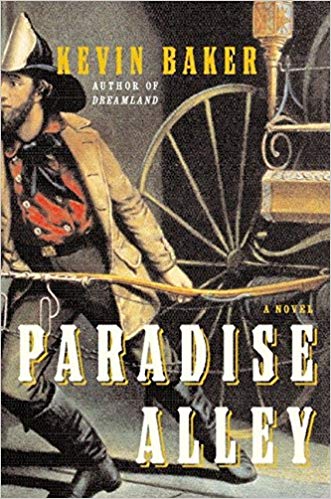
I saved the best for last. Paradise Alley (2002) by Kevin Baker is one of the finest Civil War novels ever written, though the events on the battlefield are somewhat removed from the story itself. Instead, it tells the story of the worst instance of urban unrest in American History. It has entered our lexicon as the “New York City Draft Riots” though, as I discuss here, it was really a full scale urban insurrection. To call it a mere riot does not do it justice. It seems as if the Draft Riots are known outside of Civil War circles merely because of the movie Gangs of New York. While the movie nails the setting and costumes of 1863 Manhattan, it falls flat on the history itself. Still, some knowledge is better than no knowledge. Back to the novel. Baker does an incredible job describing the environs of lower Manhattan in the summer of 1863, along with those who inhabit it. We see a cross section of people, so the reader is exposed to various viewpoints both political and social, all accurate for the time period. His descriptions of the Great Hunger in Ireland are among the best I’ve ever read in a novel. One of the ways this book inspired me is that the author goes for all of the senses. He describes how things look, feel, and smell. (Smell often gets left out of fictional descriptions.) For this reason, it my own writing, I try and make sure the nose is duly assaulted by the odors of the past. As an Irish-American, I feel that Baker does justice to both our triumphs and our tragedies. Though discriminated against themselves, the Irish in this country could be quite racist in the 19th Century, though no more so than society at large. Paradise Alley is a book I have recommended to people time and time again. I’ll continue to do so in the future. If you’d like to read a post I wrote about the Draft Riots, you can do so here.

Reenact1

I am aware, Dear Readers, that I have left The Red Badge of Courage, The Killer Angels, and Gone With the Wind off the list. Yes, I have read them all. Yes, I own copies of them all. In fact, I have a first edition Gone With the Wind. These books are classics and I do not seek to diminish them in the slightest. They are simply not my favorite Civil War novels. As this list describes my favorites, those three do not make the cut. I’d be happy to hear what your favorites are, especially if they are lesser known titles. I’m always on the hunt for more things to read. In fact, I’m presently reading This Scorched Earth by William Gear. I’m enjoying it because one of the characters is a Civil War era doctor and during my time as a reenactor, I portrayed, among other things, a Civil War surgeon (both Army and Navy). His novel doesn’t shy away from the more brutal aspects of the war either. So add that one to your list if you enjoy Civil War fiction.

Happy Reading!

L.H.

An UnCivil War

storyboard

My “trick” for multiple viewpoint novels is to make a storyboard. This one is part one of my novel.

Dear Readers,

As my World War Two novel goes through the final edits and I decide whether to publish traditionally or not, I have been working on the background for my next novel. The research for it was done years ago, so I’m lucky in that regard. So Others May Live did not start out as a National Novel Writing Month project, but I did finish it during November of 2017. Going into NaNoWriMo 2018, I thought it might be nice to start a novel and we’ll see where it leads. I have my character sketches and I have made my storyboards for the novel. I gained enough confidence in writing So Others May Live to attempt another multi-viewpoint novel. It is set in Canada and New York in the summer and fall of 1864. The outline is done. The first chapter written. Character sketches drawn up. And I have my music playlist to go along with my writing, so I’m about as ready as one can be.

I’ll not say too much else about the plot at the moment, but I will say that it is a Civil War novel that does not take place on the battlefield, or at least not on the traditional battlefields. You’ll find no tales of battlefields and brigades, but rather of men and women torn by conflicting ideals, shifting loyalties, and uncertain futures. There are no bands, bugles, and bags of glory. Instead, you get a glimpse of the “dirty war”; a war fought in the shadows by men of questionable repute pursued by lawmen who in another time might have been criminals themselves. You’ll find no Gettysburgs or Shilohs within its pages.

I’m a HUGE fan of the writer John Jakes. He is the Godfather of historical fiction. His North and South trilogy is masterful as is his American Bicentennial series. Not only can he craft a good story, but you can learn quite a bit of history from him too. In the Author’s Note at the end of Love and War, the second book of the North and South trilogy, he said that he kept a sign over his writing desk whilst working on it which said “Not Gettysburg Again!” Though his characters are, of course, involved in the war, the book focuses on little known or little written about aspects of it like the Confederate Torpedo Bureau. I took this to heart myself and strove to do the same.

notes

This is how I organize the research.

The Civil War is my first love, it was only later that I developed my affinity for redheads. I’ve always known that I would write a Civil War novel. It’s as inevitable as sunrise tomorrow. My love of the Civil War comes from one of my great-grandmothers. She was born in 1898, a mere thirty-three years after the end of the War. Incidentally, I was born in 1978, thirty-three years after the end of World War Two. Just as I spent my childhood around World War Two veterans like my grandfathers, she spent hers surrounded by Civil War veterans. Both of her grandfathers, their brothers, and her grandmothers’ brothers all fought in the War. She was very interested in it as a child and they told her their stories, which she then passed on to me. As a teenager, she danced with elderly veterans at reunions. Hearing about the Civil War from a person who talked to veterans herself is an experience I’ll never forget. When you think about it, the 1860s weren’t really all that long ago. We are only a few generations removed from it.

The Civil War was the American Iliad. Perhaps that is why it still captivates so many people. I studied the War in college and graduate school. I spent 16 years as a Civil War reenactor. I even helped edit a published volume of correspondence from Jefferson Davis. I could, if I desired, call myself a Civil War expert. But I do not like terms like “expert” because, though my Civil War knowledge could fill many volumes, there is always more for me to learn. And there is always more for me to write.

As a child, I looked on the Civil War as a time of glory and great feats of heroism. Sure, the war did create many a hero. But there is no glory in seeing a friend decapitated by a cannonball, or listening to the screams of wounded comrades. There is no glory in dying from dysentery or undergoing an amputation. To write or talk about the war, we must tell it as it was, not as we wish it was. That is the obligation of both the historian and the novelist.

So until next time, Dear Readers, double canister and give them hell!

L.H.


Florian’s Own: A Night Under the Bombs


Berlin, Aufräumungsarbeiten nach Luftangriff

In war torn Berlin, the city relies on a mix of grizzled veterans of hundreds of fires and inexperienced kids fresh from training. This is the story of a single station on a single night as bombs fall and fires burn. 

As darkness descended upon the city, I made my way towards the fire station. It was an imposing three story stone building a few blocks west of the Tiergarten. Had it not been for three massive red doors, it could have been an apartment or office building. Rows of windows on the second and third floors faced the street. They glowed slightly in the fading light of the sun. I stood for a moment and took in the building before I knocked on the middle door.

It took a few minutes and three knocks, but eventually the door began to raise with a creaking noise. I found myself staring at the cab of a green Mercedes fire engine. Footsteps echoed on the concrete floor and a firefighter appeared from behind the engine.

“You must be the journalist,” he said, making the word journalist sound a touch profane. I replied in the affirmative and he said, “Name’s Frei. I drive the ladder truck.”

My eyes followed the direction of the thumb he used to point towards a shiny green truck with a turntable ladder.

Oberwachtmeister Weber is upstairs,” Frei said, “Follow me.”

We walked across the apparatus floor. The station smelled of smoke, mold, sweat, and diesel exhaust. Four brass poles along the far wall ascend upwards and disappeared into the floor above. The stairway in the back of the station rose so steeply that, for a moment, I felt as if I were climbing the Swiss Alps. The second floor consisted mainly of one large room with iron cots along both walls. A few sparse decorations hung on the walls, mostly pin-up girls and a few official posters. One was of a grinning skeleton hurling a bomb earthward. Large block letters proclaimed “The enemy sees your light! Blackout!” The cots were all made up in regulation military fashion with the sheets and blankets folded with precision. A large picture of Saint Florian, the patron saint of firefighters the world over hung next to the fire poles.

“The washroom’s over there,” Frei said as he indicated a hallway. “So’s the kitchen. Or what passes for one. Our water pressure isn’t great these days.”

We found Obermachtmeister Karl Weber sitting behind a cluttered desk in a small office just off the main room. The stirring sound of a military march drifted from a radio atop a metal file cabinet in the corner. He stood to shake my hand, insisting I call him Karl as he motioned me to sit.

“So,” he said as he lit a cigarette, “You are writing a story about the fire brigade. Why?”

I gave him my rehearsed response about wanting to showcase the heroism of those who labor under the bombs, attempting to save lives. Karl silenced me with a wave of the hand.

“We’re not heroes,” he said as he exhaled a cloud of blue smoke which formed a halo over his head, “We’re firemen.”

image2

The war weighs heavily on Obermachtmeister Karl Weber, station commander. “We’re not heroes,” he said, “We are firemen.” 

+++

Karl Weber is a man of medium height and the build of a middleweight boxer a few years past his prime. His brown eyes, with dark bags underneath, managed to look both amused and exhausted at the same time. Permanent creases line the corners of his mouth. A few flecks of gray around the temple made him look older than his thirty-three years. Karl grew up in the Charlottenburg part of Berlin, not too far from the fire station he now runs. From an early age, he found himself drawn to the fire service, more from the excitement and the nice uniform than anything else. In 1929 at the age of 19, he joined the Berlin Fire Brigade as an apprentice fireman.

In 1935, Karl enlisted in the army as a reservist. He has seen action in Poland, Belgium, France, and Russia. It was in the frozen hell of Stalingrad that a few pieces of shrapnel buried themselves deep into his hip, thigh, and knee. Doctors removed most of it, but the remaining shards of metal cause him to walk with a slight limp. After a long, difficult recover, Karl received a discharge from the Army and orders to return to Berlin, where a new war was being waged.

+++

After a few minutes of small talk, Karl and I walked out to the main room and joined the others around a table. A stack of magazines under one table leg kept it steady. I’d met Frei earlier. The other two, Baumann and Fischer, nodded as Karl made introductions. They eyed me warily as I sat across from them.

Just a few short years ago, in the relative calm before the war, this station had twelve men assigned to it, six per truck. Now they make due during the daytime with only two per vehicle. At night, the professional firefighters are joined by teenage auxiliaries, young men and women eager to do their bit for the war. Hastily trained and working under the guidance of experienced old hands like Karl, these youthful volunteers make up the frontline defenders of the citizens of Berlin.

“We’ve only just got our volunteers,” Karl said. “They haven’t really gone through a big raid yet, at least not as firefighters.”

“What is it like?” I asked. “Putting out fires in the middle of a raid.”

“Oh, it’s not so bad,” Karl replied. “If it’s a big enough fire, you don’t notice the bombs.”

We were interrupted by the sound of footsteps and laughter on the stairs. Four young men in ill fitting uniforms walked into the room. They carried their helmets tucked under their arms and had their gas mask cases slung over their shoulders. Four young women in baggy blue-gray coveralls followed them in. Karl gave them a few curt orders to put their gear on their assigned trucks and to start polishing the engines.

“Just because we are war doesn’t mean we go around looking like some voluntary fire brigade from the countryside,” Karl said. This is Berlin. A well polished engine indicates a well polished crew.”

I asked permission to follow the volunteers downstairs and Karl nodded his approval.

+++

Monika Schneider is a quiet, serious young woman of 17. She wears her long blonde hair in pig tails and regards the world with bright blue eyes. Her gaze penetrates you as if she is searching your soul, probing from your hidden fears and weaknesses. With increasingly large numbers of young women being drafted into war related occupations, Monika had a choice of either training to operate an 88mm antiaircraft battery or the fire service.

image3

Young women like Monika Schneider (right) have stepped forward to serve on the front lines of the air way. Their job? Save lives. 

“My older brother Gunter flew a Heinkel,” she explains as she wipes polish off the engine in a circular motion. “He was shot down and killed during a raid on London. I didn’t think  I could bring myself to shoot down some English girl’s brother. So I chose the fire brigade.”

After a two week course in which she and her fellow auxiliaries drilled on donning their gas masks until they could do it in their sleep, navigated obstacle courses to hone their agility, and lectures on the various types of bombs employed by the enemy, the were deemed ready for assignment. Their only experience with an actual fire came when they were allowed to spray water on a burning haystack. But there would be plenty more fires to come.

+++

In some ways, Fritz Kluge is a poster child for the new Germany. Born into a working class family near the center of the city, Fritz joined the Hitler Youth at age 10. He’s fifteen now, and has also had enough training to qualify him to help the fire brigade and to wear the coveted HJ firefighting patch on the sleeve of his coat. Fritz has a ready grin, which tends to be a bit on the cheeky side. I listen as he trades barbs with some of the other boys. If they were at all nervous about the possibility of a raid that night, they did not show it.

ec76ec92c692d31778d0f6f8b6e41be7

Two young volunteers from Karl’s station operate at a fire in Charlottenburg. 

+++

Fliegeralarm!”

A sudden shout which came to us via the hole from which the fire pole descended broke the silence. The youths glanced up from their work, eyes darting back and forth. A minute later Karl came down the stairs and said “Listen up, the formation we’ve been tracking has passed east of Hanover. We are probably the target for tonight. Apparently it is a heavy raid.”

The young people nodded, their expressions serious.

“Gather up flashlights and place some onto the truck and then bring the others into our shelter,” Karl said. He gave orders with the rapidity of a machine gun. “Gather up some buckets of sand from the closet and put them near the station doors. Bring your helmets and masks into the shelter with you. And you need to visit the lavatory. Void your bladder and bowels if you can. Should you get struck with a shell splinter in the guts tonight, it’s best to not have anything inside them that can cause an infection.”

The young people scattered in eight different directions to begin work on their assigned tasks. Karl handed me a metal container with a gas mask inside, identical to the ones carried by the firefighters, and also a steel helmet. The helmet looked similar to a Germany Army helmet, but it had the addition of a leather flap attached to the back of it and a reflective stripe painted around it.

“That flap keeps embers from blowing under your collar,” Karl said. “Hurts like hell when that happens.”

I asked if there was anything I could do to help and he said no.

“You’ll only be in the way. Just wait until it is time to go into the shelter.”

I stood along the back wall and watched the young volunteers as they scurried back and forth carrying out their instructions. The older men moved more slowly. For them, the impending raid did not represent excitement, but rather one more thing for them do; one more challenge to face. Their faces bore the looks of men who have seen so much of the depths of the evil that men do that it no longer registered in their minds. They walked with shoulders slumped forward as if the weight of their job keeping the citizens of a city under aerial siege safe pressed down on them.

The tasks completed, we walked down a dark, narrow hallway until we reached a solid oak door. Karl pushed it open with his shoulder and ushered us inside. It was a small, sparse room. Ten chairs, five along each wall, provided the only place to sit. A telephone and a radio occupied a table in one corner and a large, detailed map of the city filled the wall above it. I took a chair and settled in to wait.

+++

An air raid is a singularly terrifying experience. You sit in near darkness and listen to the shriek of bombs and the thundering blasts of anti-aircraft guns. The building sways when a bomb lands nearby and dust floats down from the ceiling. As your mind envisions every form of fiery death that could happen, you try to think of something, anything, to keep you sane. You grab onto the first pleasant memory you can conjure up the way a drowning man grasps at a life jacket. Your heart pounds almost audibly in your chest as your breath comes in ragged gasps as if a tight band constricted your chest and kept your lungs from fully expanding. That’s an air raid.

Those around me took the raid in stride. When the flak batteries atop the Zoo Tower a few blocks away opened up, one of the Hitler Youth boys said “I guess they’ll teach the Tommies a thing or two.” Karl leaned his head back until it rested against the wall and closed his eyes. Frei smoked a cigarette. Baumann and Fischer played cards. The auxiliaries sat on the edge of their chairs, ready to spring into action with all the enthusiasm of youth.

“So how do you know if you get an assignment?” I asked.

“The phone rings,” Karl said without opening his eyes, “Or if the phone system goes down, they send a messenger by on a bicycle. He knows where to find us back here.”

The sound of aircraft engines penetrated the brick walls of our shelter. Frei looked up for a minute, a quizzical look on his face. After a moment he said “They aren’t dropping over the city center. Looks like Charlottenburg is going to get it tonight.”

Fischer grunted, “Too bad they didn’t drop it on Wedding. Might bump off a few kozis that way.”

I lost track of how much time we were in the shelter. It could have been thirty minutes, but it seemed like thirty hours. Finally the phone rang. Frei grabbed it and said “Fire station” by way of greeting. He scribbled something on a scrap of paper and hung up.

“Where?” Karl asked, his eyes still closed.

“They said just drive west towards the fires,” Frei said.

20051337

The morning sun revealed a landscape of utter devastation. 

+++

A few minutes later we pulled out of the station. I sat in the cab, squeezed in between Baumann and Karl. The boys rode the ladder truck and the young women traveled on the engine, but they had to stand onto the tailboard and cling to a metal bar. We operated with no lights, and the going was very slow, though we could see fires burning in the distance. Searchlights stabbed at the sky like accusing fingers. Occasionally, we caught the glimpse of a bomber. But mostly we kept our eyes focused on our destination.

“Are you having fun yet?” Karl yelled over the sound of the planes, bombs, and our own engine.

I thought it best not to answer. I looked over my shoulder and barely made out the faces of the four young women; Monika, Elisabeth, Ingrid, and Lotte. I thought I might see fear, but instead I saw excitement mingled with determination in their young eyes.

“Stay near the truck when we get there,” Karl said, “And be careful, there will probably be a gap of about thirty minutes where it will look like the raids over, then they’ll come back to try and catch us in the open.”

Which is exactly where we will be, I thought. When we reached our assigned sector, the heat slapped at my face like an oven. Baumann stopped the engine and the crew threw themselves into their duties with a vengeance. Monika and Elisabeth grabbed a thick hose and dragged it towards a fire hydrant while Ingrid and Lotte uncoiled another section and stretched it towards an apartment building. Flames showed in the windows of the top two floors.

I heard a grinding noise and turned to see the ladder from Frei’s truck extend upwards towards the roof of the building. Fritz and another young man scrambled up as the ladder moved. I looked around for Karl, but did not see him. A minute later, he emerged from the building, pausing for a moment in the doorway as smoke curled around him. It almost looked as though the smoke were wings and he were an angel.

“They’re dead,” he yelled to Baumann. “Let’s go ahead and see if we can knock this fire down and move up the street a bit.”

+++

For the next few hours, I was treated to the sight of Karl and his crew of veterans and kids alike tackle one blaze after another. I learned that he was right. I found myself so fixated on the fires that I no longer heard the bombs. While a blessing, it nearly proved fatal. At one point, Karl froze and looked up for a second, then he screamed at us to get down. I hit the pavement as fast as I could manage. The explosion lifted me up and then shoved me back into the ground with enough force to empty my lungs of oxygen. It took a few minutes for my ears to stop ringing and my breath to return. When it did, I looked up and saw Karl smiling down at me.

“Bit more than you bargained for, eh?” he asked.

I stood with as much dignity as I could muster and busied myself by brushing dirt off my clothes. It is difficult to describe everything I witnessed this night, as scene ran into scene. I watched these young men and women perform feats of incredible bravery with the skill of seasoned professionals. Every now and then, one of them would flash me a grin from a soot lined face, or give me a nod of assurance. I had to remind myself that had the world not gone mad, they might playing games in the street, or complaining over their amount of work their teachers had given them that day. But here they were, performing a job usually reserved for grown men. But I can’t help but ask myself, at what cost? What will their lives be like when all this is over? Will they ever be able to forget what they’ve seen?

+++

A few hours after daylight and seven hours after the phone rang at the fire station, we were permitted to return to the station for a two hour period of rest. We stank of sweat, phosphorus, cordite, and smoke. Our lungs were raw. My skin felt sunburned, owing to the intensity with which the fires burned. When we arrived at the station, no one had the energy to walk upstairs to the bunkroom. We collapsed on the floor or on one of the trucks and let exhaustion carry us away. I felt as if I had just closed my eyes when Karl slapped my shoulder and said “Come on. Back to work.”
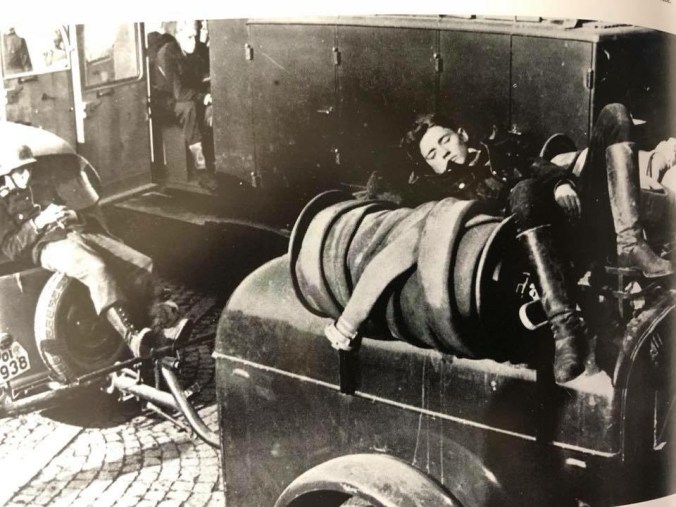
image1

Fritz (right) grabs some rest in between alarms. 

Our new assignment was to check shelters for victims, living or dead. I was allowed to put on my gas mask and accompany them into the buildings as we searched below ground level for any survivors. As we entered one large basement, our flashlight beams caught the faces of people sleeping as they sat on two wooden benches along the wall. I wondered why they didn’t wake up and asked Karl if we should shake them or pat them on the shoulder.

“Look at the faces,” Karl said, “See how they have a bit of red in their cheeks? They are dead. Carbon monoxide poisoning. It happens when the fire burning above them uses up all the available oxygen. They are the lucky ones. They just fall asleep. Far better than burning alive.”

As we walked up the stairs and out the doorway, Karl removed a piece of chalk from his pocket. His hand shook slightly as he scrawled “20 tot” on the brick façade near the door.

“Come on,” he said to me, “We’ve got two more blocks to go.”

This is a work of fiction. I wrote this piece as if a journalist did a feature on the fire station where the characters in my novel work. If a reporter spent a night with them, it might have happened this way.
Opening Day Revisited

Philco90Front

Dear Readers,

On Opening Day of the 2018 season, I wrote about my experience following multiple games here. As we are now in the month of October with playoff baseball in progress, I thought I’d revisit my experience.

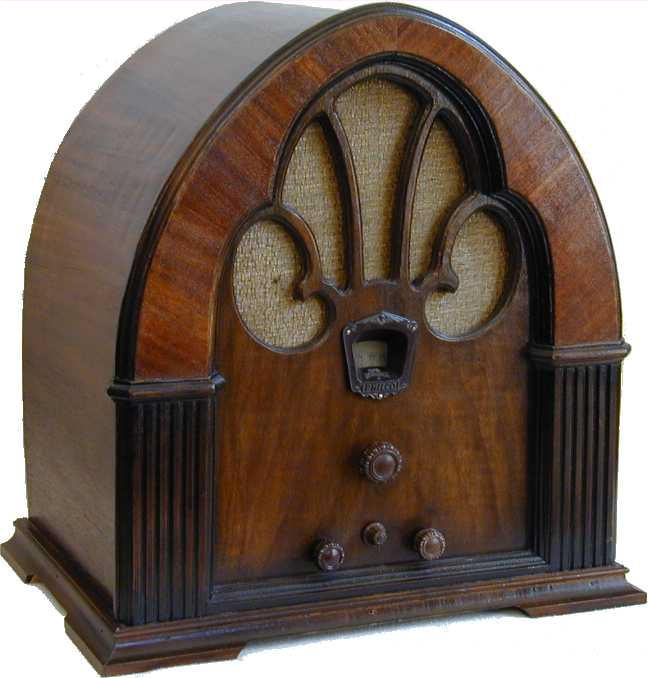
After watching the Red Sox blow a 4-0 lead to the Marlins to lose 6-4 on the first day of the season, I have to say that their completion of a 100+ win season came as something of a surprise. However, in their first game of the ALDS against the Yankees, they went up 5-0 only to give up four runs and make it a much closer game than it should have been. I listened to said game on the radio, as I always do. You could feel the energy of the Fenway crowd coming through the speaker on my phone. (I use the SiriusXM app and follow the Red Sox home feed.)

In May right after I finished teaching for the semester, I had surgery and spent another 8 days in the hospital. (That’s for a total of 6 weeks since late November if you are keeping track). Luckily, the hospital has excellent Wi-Fi coverage and so I was able to have one game going on the TV, one on my computer via my MLB subscription, all while listening to a game on my phone. Though much of the time I was in a morphine induced fog, it did provide an avenue of entertainment if not excitement.

During the long hot days of summer, I was more focused on recovering from my surgery than on anything else, especially during the month of June. Still, I managed to catch a few games a week. I taught a couple of classes the second half of the summer and would listen to afternoon games on the car radio during my “relaxing” hour drive home. August was an exciting month for the Red Sox, but they seemed to go flat in September which doesn’t bode well for the playoffs.

As much as it pains me to say, I think the Astros are still the team to beat in the American League, though the Yankees are hot too and might very well take the series from the Red Sox despite losing the first game. If this happens, it will be due to the combination of the Yankees hitters verses the Red Sox putrid bullpen. I’m still not sure why they didn’t address this known deficiency either during the last off season or before the trade deadline. But I digress.

So here’s to hoping for an exciting last month or so of the season. May we see great games, regardless of who comes out on top.

L.H.

A Literary Look at the Russian Soul

538589

Dear Readers,

The other day I came across this post from 2014 by Off The Shelf called “Ten Russian Novels to Read Before You Die”. My first thought was “Reading ten Russian novels will take you sixty years” as Russian literature is not known for its brevity, so yes, you’ll be dead by the time you finish. I minored in Literature/Creative Writing as an undergraduate student and one of my professors opined that you could throw away the first hundred pages of a Russian novel and still be able to follow the story. There is some truth to that, I suppose. I have a BA and an MA in History along with an MS in Criminal Justice, but if I had to get a PhD in something, it would not be history. There are quite a few reasons why that is that need not detain us here. I would, however, love to get a PhD in Russian literature. It will never happen, for a myriad of other reasons, but it is nice to dream about.

If you study Russian history, language, and culture, you often come across references to the “Russian soul” as an expression of Russian identity. The great works of Russian literature all tend to touch on various aspects of this soul. This might come across more in the original language than in the English translations. The Russian language is more nuanced and has more depth than English, making translation tricky. I spent years studying the Russian language and can read it fluently and speak it with some degree of usefulness. I’ve read the works I’ll discuss below in both Russian and English. Sometimes I think when it comes to foreign works of literature, it is best to go to the original language if you can.

I’m not going to give you a list of ten Russian books to read before you die. I’m simply going to tell you about my favorite three and why they are my favorites. You won’t find Pushkin on the list, nor Dostoevsky. Obviously, I’ve read them along with others such as Chekov, Bulgakov, and Grossman. I’m not saying the works below are the greatest works in the pantheon of Russian lit, merely that they are my favorites. What I like or dislike doesn’t always follow the path of critical acclaim or financial success. For example, I thought The Da Vinci Code was the most godawful book I’d ever read, yet look at how many copies it sold. Payback by the German author Gert Ledig is, in my opinion, one of the finest and most haunting novels written about World War Two and it is long out of print. So feel free to take anything and everything I say with a massive grain of salt. Hemingway I ain’t.

0_738bef43de4b64b1d109725537479742_1389547363

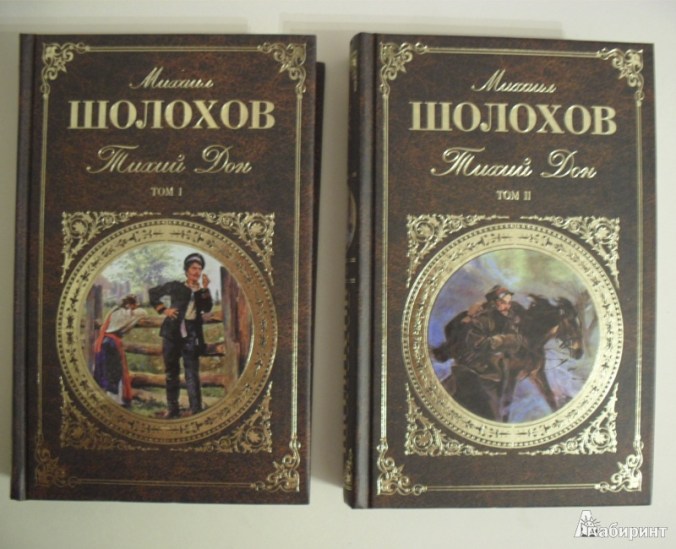
I will say that Mikhail Sholokhov’s masterpiece Тихий Дон (Quiet Flows the Don) and its sequal The Don Flows Home to the Sea make up the finest novel ever written in Russian or any other language, in my opinion. I have said this before and I will proclaim it until I read something better, which I doubt will ever happen. Consider this passage which opens the section which deals with the outbreak of World War One:

“The dry growth of the steppe was afire, and a sickly-smelling haze hung over the Donside slopes. At night, the clouds deepened over the Don, ominous peels of thunder were to be heard; but no rain came to refresh this parched earth, although the lightning tore the sky into jagged, lived fragments. Night after night, an owl screeched from the belfry. The cries surged terrifyingly over the village, and the owl flew from the belfry to the cemetery and groaned over the brown and grass grown mounds of the graves.”

At it’s most basic level, this is a simple story. A man loves two women and loses them both amidst the turmoil of war and revolution. But it is more, so much more than that. Тихий Дон is a sweeping epic of Cossack life following the fortunes of the Don Cossacks from the eve of World War One through the war, the Russian Revolution, and the Civil War which follows. It’s a tragedy which plays out on a giant canvas. Some scenes will leave you breathless, such as when Grishka saves the life of his lover Aksinia’s husband. To me, the most haunting scenes involve the old men in the Cossack villages. Their world is crumbling all around them and they cannot understand why. They try to cling to the old ways as their lives spin out of control.

If you only read one Russian novel, or one foreign novel, (or hell, one novel period), read this one. Just make sure you read both Quiet Flows the Don and The Don Flows Home to the Sea as they are really one story. Now, not only do the Russians write epic novels, they also film massive historical epics. Quiet Flows the Don has been put on a film a few times, including during the Soviet era, but I never much cared for those versions. In 2015, however, they released a 14 part adaptation of the book. You can watch it free here on YouTube, but it isn’t subtitled. If you’ve read the novels, you can still follow the story as it is faithful to the books, and even if you haven’t read the story, the themes are universal and you can still follow the basic plot. Trust me, you won’t be sorry to spend time watching it. If you want a little preview though, here is a music video of a song that appears in the series, Чёрный ворон – друг ты мой залётный (Black Raven: You Are My Friend). You can listen to the song and enjoy the breathtaking landscape and scenes from the series. Seriously, at the very least, give the song a listen and it’ll probably make you want to watch the show. I’ve watched it five times at last count. It’s the only movie or television series I’ve ever scene that has made me cry, more than once during the show, and every time I watch it. I freely admit to having a bit of a literary crush on Aksinia Astakhova. A literary crush is like a history crush, except it is on a fictional character rather than a historical figure……as in my wife’s obsession with Manfred von Richthofen…..

(Note there are two more books in the Don series; Virgin Soil Upturned and Harvest on the Don, but they are not as good as the first two)

Voina i mir 3

The Napoleonic Wars played out on a massive stage in Europe. When the Emperor invaded Russia, little did he know that not only would he suffer a major defeat, but his invasion would also give rise to one of the true classics in literature, Война и мир (War and Peace). Tolstoy was a master at his craft. In true Russian fashion, War and Peace takes a little while to build up steam. I know many people who have tried to read it but go so bogged down with the names and glacial slowness of the story for the first hundred pages or so that they gave up. I told them they’d be sorry for putting the book aside, but I don’t know if they are or not. This is one of those books that if you stick with it, you’ll be rewarded.

It is true that all the names and familial ties can be difficult to keep track of whilst you work your way through the book. It might not hurt to print out a handy character tree. Wikipedia has a list of characters and also provides a family tree of sorts which illustrates the various entangling relationships. Tolstoy served in the Russian Army during the Crimean War, and I think his own exposure to the hardships soldiers faced in the 19th Century helped him create such vivid images of Napoleonic warfare. Much of the book takes place away from the battlefield, but his battlefield scenes are some of the best ever written. Like Quiet Flows the Don, this novel has been adapted many times. The Russians had the best adaptation of it filmed in the 1960s. However, in 2016 the BBC released a marvelous version of their own which you can find on Amazon. It’s well worth watching.

Incidentally, Tolstoy had a distant relative named Aleksey Tolstoy who wrote during the Soviet era. His trilogy The Road to Calvary set in St. Petersburg during the Revolution has been made into a series and, to our good fortune, is available on Netflix! With subtitles if you don’t speak Russian. I’m working my way through it now and it is very good.

russian-zhivago-1957

Any discussion of Russian literature has to involve Boris Pasternak and his magnum opus, Doctor Zhivago. Like many, I dare say most, of you, my first exposure to it was through the great film from 1965. I watched it with my great-grandmother for the first time when I was around 8 years old (circa 1986) and was immediately captivated by the story. As I would later find out, the movie isn’t entirely faithful to the book, but it is still a cinematic masterpiece of its own. I read the novel for the first time in high school. A few years ago, I read it in the original language. The story of how Pasternak came to write it and how it was published is an epic tale in its own right!

One thing that I’ve found so interesting about this book is that Pasternak manages to make Zhivago a such a sympathetic character. Let’s be honest, he’s screwing around on his wife! Yet the reader still feels for him.  In a previous post I compared Doctor Zhivago with Gone With the Wind as they are similar. In Pasternak’s book, a man loves two women and loses them both as war and revolution sweep away the old world and usher in a new one. In Mitchell’s book, a women is in love with two men and loses them both as civil war sweeps away the old world and ushers in a new one. (You know, I can sum up these classics in one sentence, but I can’t seem to write a one sentence description of my own book. Amusing, that.)

To keep on the movie theme, the Russians made a twelve part adaptation of Doctor Zhivago that is a lot more faithful to the actual story than the 1965 film was. It’s available on Amazon here and comes with English subtitles. I’ve watched it a couple of times and it is good. Not Тихий Дон good, but still worthwhile.

Anastasia

Anastasia “helping” me work on edits to my novel.

So there you have it, Dear Readers. My favorite works of Russian literature. Thank you to all who read through to the end. I know this was a somewhat verbose piece of writing. And speaking of writing, one thing I have had to learn is to stop mentally comparing my own work to these classics. While working on my draft of So Others May Live, I’d get frustrated and almost give up because I’ll never be as good as Sholokov. I’ll never write anything on the scale of Quiet Flows the Don. Or War and Peace. Or Doctor Zhivago. And do you know what? That’s perfectly okay. There’s a reason why out of the bazillion books published in history, only a relatively small number are considered classics. I had to accept the fact that I needed to tell my story my own way, not Sholokov’s way. Which, come to think of it, is probably a good thing for my editor as I’m sure 324 pages of my writing, as rough as it can be, is easier to sort through than 1200 pages of my writing. wouldn’t even read 1200 pages of my own writing!

Until next time, comrades. Happy Reading.

(Update: Summer 2019….with the recent release of my novel, I now have time to read all these books for the hundredth time!) 

L.H.

As the World Turns….

helmet

Dear Readers,

It’s been a rough semester so far, but not necessarily in a bad way. I’m teaching six courses (five in person and one online). With a two hour roundtrip commute and office hours, meetings, etc, I’m pretty well wiped out when I get home. My evenings are spent laying on ice packs which keeps my back pain somewhat tolerable and watching TV with my cat, Anastasia. She prefers shows with cowboys and horses.

I’m also working on the edits to my novel So Others May Live. I got my content edits back a month or so ago and I’ve been going through them. I’m almost done with my first pass through, then I’ll shelve it for a month. After that, I’ll give it a top to bottom read through and make a few more changes. It goes back to the editor for the copyedit in late November. I’ll spend Christmas making corrections, then send it back for the final round in early January. Hopefully it’ll be ready to submit to a few small presses that I’ve identified which specialize in historical fiction. If I strike out there, then plan B will be to self publish.

The book is getting closer and closer to being a reality. Someday, perhaps sooner than you think, it’ll be ready for perusal. One things I’ve learned is that finishing a book is a marathon, not a sprint. I think by the end of the process it will have gone through seven or eight drafts.

L.H.

A Day In My Life

Dear Readers,

This post is going to be a little different than my standard fare. Over the past several years, I have never taken the time to write about the struggle that I face on a daily basis just to get by. So here is my medical odyssey in narrative form, and the impact it has on me now.

I suffered a serious spinal injury in December of 2012. For the next six months, I did injections, physical therapy, and even saw a chiropractor for a few months (he made things worse). Finally, I had to acknowledge the writing on the wall and retired from the fire service in August of 2013. I immediately started the fall semester teaching part time for three different colleges. I’d been teaching for one of them part time since 2004, so it made sense to keep on with it and it gave me something to do.

Over the next year or so, I continued with injections and began seeing a pain management specialist since I am not a good candidate for surgery given the extent of the damage. Going into the spring of 2015, I began to suffer some strange joint pains, extreme dry mouth, extreme fatigue, and I stopped being able to swallow solid food without choking. It took around six months, but I was diagnosed with something called Sjogren’s Syndrome. It is a somewhat rare auto-immune disease that typically only effects menopausal women, so as a male who was in my 30s at the time, I definitely didn’t fit the demographic. It isn’t curable and “treatment” is really only to help manage the symptoms.

I kept plugging away at life, despite everything. Then, in the late summer of 2016, I started getting a lot of pain/discomfort in one of my unmentionables. My doctor sent me to the Urgent Care place to get an ultrasound. They told me I had epididymitis even though it was not shown on the ultrasound. Anti-biotics didn’t make it any better, so my GP sent me off to see a surgeon. A CT scan indicated a hernia was the cause of the problem. So I had a bi-lateral laparoscopic inguinal hernia repair done in November of 2016. Recovery wasn’t too bad. I was able to walk a third of a mile the afternoon of the surgery. After a month, the surgeon released me back to normal activities.

My back injuries continued to give me problems, as they always do, and I remained unable to eat solid foods, but I was still trucking along. In November of 2017, I was offered a temporary full time position at a community college, which I accepted. The next week, my latest medical nightmare reared its head. On Thanksgiving Day, I developed severe stomach cramps which, as the day progressed, turned into projectile vomiting. Thinking I just had a stomach bug, I went to the ER expecting to be sent home soon. Wrong. A CT scan showed I had a bowel obstruction in my small intestine. The stuck an NG tube down my nose and drained two liters of backed up fluid from inside my stomach. They let me go home six days later as the blockage cleared, but without knowing what caused it, we didn’t know if it would come back or not.

As you can imagine, it did. The night before the start of classes at my new temporary full time job, the symptoms returned. Another ER trip showed it was another obstruction. I stayed there for 18 days and had a surgery around day 8. The recovery in the hospital was tough, but I made it out of bed to walk around as much as they’d let me.  They kept me pretty comfortable and weren’t stingy with the morphine. But I felt sick as a dog, even after the surgery. I got home on a Friday and started my semester on Monday. Throughout the month of February, I dealt with bouts of nausea and bloating which I assumed was just my insides calming back down. Finally at the end of that month, I felt almost normal again.

Three days later, on our tenth wedding anniversary, another obstruction developed and I spent another week in the hospital. I needed another surgery, but the doctor said I could try and wait until the end of the semester. While in the hospital, I had a phone interview for the permanent position at the college where I was teaching temporarily. Later I had an in person interview and ended up getting the job. The rest of the semester passed slowly with me panicking every time I had the slightest twinge in my stomach, but I made it to the surgery date.

The second surgery went fairly well. I was discharged after 8 days and went home to recover. It was slow, but steady. I felt well enough to teach a couple of classes during the Summer 2 semester. But I still worry that the obstruction will return one day. There’s really nothing I can do to prevent it, other than just stay as occupied as I can. As the summer drew to a close, my back injuries decided to flare up in a big way, which brings me to where I am today. So here is what a day in my life is like:

When I first wake up, for a brief, flitting moment, it’s as if I am the old me, before disease and pain ravaged my body. For a second or two, I feel no pain. Then it slowly starts to settle in and I’m reminded of what I’ve become. I log roll out of bed and stand up for a few minutes to let everything settle and to figure out where the pain will be coming from that day. I shuffle into the kitchen and start a cup of coffee while I eat a small bowl of cereal. Since my bowel surgeries, I can eat solid foods again, albeit in moderation. With breakfast finished, I take a muscle relaxer, grab my coffee, and shuffle outside where I sit and drink my cup for 30 minutes or so while I let my medication kick in.

If it is during the week, I then go inside, slowly get dressed, and drink my liquid vitamin mixed with orange juice. I pack a lunch, walk outside, get the heating pad adjusted in the car seat, and then set out for work. I have a 50 minute commute which my back does not allow me to do all at once, so I have to stop at the halfway point and get out and walk around. Once I make it to work, I’m usually okay as being in the classroom is a nice distraction and so I don’t notice the pain as much. But it hits me like a sledgehammer as soon as my last class gets out. I have to sit down in the classroom for ten minutes or so and collect my breath, steadying myself to make the hike out to the car and the drive home. Just like during the morning commute, I have to stop halfway to get out and stretch.

When I get home, I have just enough energy left to walk to the front porch where I have to sit and rest for twenty minutes or so before I go inside. I then eat my supper, check my emails, and do any other tasks that need to be done before I get in bed. At precisely 6pm, I take a hot shower for around 20 minutes or so to try and ease the stiffness before I settle in. At six thirty, I take another muscle relaxer and get in bed. I spend the next hour and forty minutes rotating ice packs (20 minutes on, 20 minutes off) while I watch TV with Anastasia, my cat, and read a book. At 8pm, I get up and take my pain medication (which I only take at night) and then sit on the front porch and talk to my wife while we listen to a baseball game on the radio for about an hour. At 9pm, I return to bed and repeat the icing until 10:30. I turn out the light at 10:30 and try to go to sleep. Some nights I sleep very well. Other nights I toss and turn until my alarm goes off at 6:15 and I start the routine all over again.

I no longer remember what it was like to not live in constant pain. I don’t remember what it was like to be able to jump in the car and go do whatever I wanted to do, without worrying about the drive or if it might cause me more pain. It has robbed me of my career. It has placed occasional strain on my marriage. It has taken away my ability to be “normal”. I’ve lost so much that I can’t even begin to list it all out. But at the same time, it has made me a stronger person since I have to deal with it on a second to second basis. It has helped me find happiness in a second career. And it has taught me to take whatever joy I can get out of the small things in life.

I finally had time to write a novel. I’ve gotten to work with some great colleagues at the colleges where I’ve taught. I’m even going to be on TV here in a couple of weeks. I don’t think any of this would be possible were it not for my injuries and accompanying health woes. Yes, life for me is a constant battle against pain and my own body, but it is a battle that I am, for the moment, winning. (Or at least, I’m not losing.) Everything happens for a reason, and this is my cross to bear. I may not be thriving, but I am surviving. One day I might know the reason why all this has come to pass, but I no longer question why it happened anymore. It took a few years, but I made my peace with it. My only goal now is to live as full a life as I can with the limitations I have on me. I can look back on my public safety career and say I have no regrets and I’d do it all over again, even knowing how it would turn out, and there’s a certain victory in that.

L.H.