Reaping the Whirlwind:A Firefighter’s View

Warning: Post Contains Graphic Images

e5f87a4197186c6bdb41af4dcb4bf355

Dear Readers,

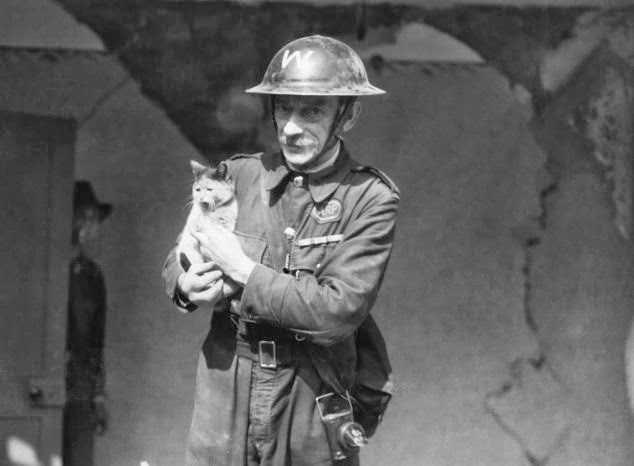
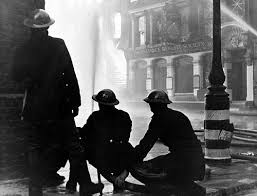
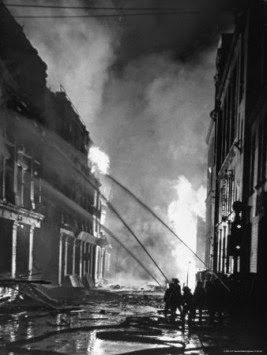
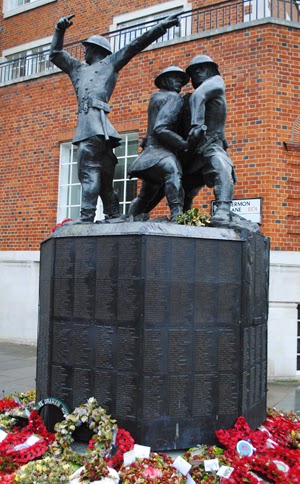
I attended graduate school to receive my Master’s Degree in History many years ago. 2001-2003 to be exact. I had been working as a firefighter for several years prior and continued to work while in school. In fact, I made Lieutenant during that time! A few years later, I went over to the dark side of the force and became a police officer and eventually a detective who worked arson cases. I say all that to say this: I’ve always been interested in Fire Service History, not just here in the States, but also abroad. In a previous post many moons back, I discussed the gallant efforts of the London Fire Brigade during the Blitz. Friends, their story of wartime firefighting is truly the stuff of legend. But what of the view from the other side of the fence? 10 times as many German civilians died in Allied bombing raids as British citizens died in German raids. What was it like for their firefighters? For their rescue workers?

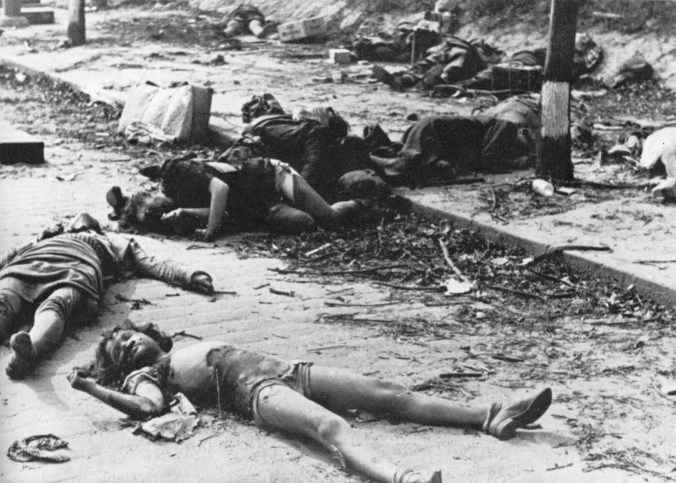
Precious little in the way of sources exist in the English language, probably due to a general lack of interest. Of course, you find passing references in plenty of places, but not much else. Truthfully, there isn’t a whole lot in the German language either. There is, however, one notable exception. After the war, Civil Defense authorities in the United States commissioned a report on the experiences of the Hamburg Fire Brigade during the week of Operation Gomorrah which included a firestorm that killed nearly 40,000 people. You can view the report here. In the appendix of the document, it contains the Hamburg Police President’s report on the raids as well as the Fire Brigades report. I will draw from that for the below paragraph.

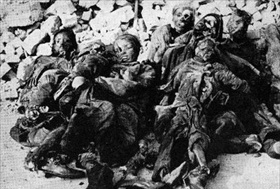
hamburg-bombing-victims

By the summer of 1943, Hamburg had a multilayered fire protection system. As a large city, it naturally had a professional fire brigade. However, you also had community volunteer fire brigades, Nazi Party volunteer fire brigades, industrial fire brigades (to protect important factories around the city), military rescue squads, and Luftschutz personnel who functioned sort of like civil defense volunteers or CERT teams today. During the height of the attacks, aid was sent from all over Germany including volunteer companies and professional brigades. However, each night, those units (except members of the Berlin Fire Brigade) were withdrawn from the city so the Hamburg and Berlin men bore the brunt of the response during the heaviest raids. By the end of the week, 55 Hamburg firefighters were dead, and scores more wounded, often seriously. The chief spoke of their suffering many symptoms brought on by nervous exhaustion after working for 36 hours straight with no food or water. For any of you who have fought a fire, you know how tough that must have been on them. Imagine going from fire to fire for 36 hours without a break and no way to hydrate. The Police President (whom the fire brigades reported to) wrote that aid provided by the volunteer brigades both in the city and from the surrounding area “was trifling” due to their lack of training and outdated equipment. What follows is a quote from page four of his report about what the aftermath of the raid was like:

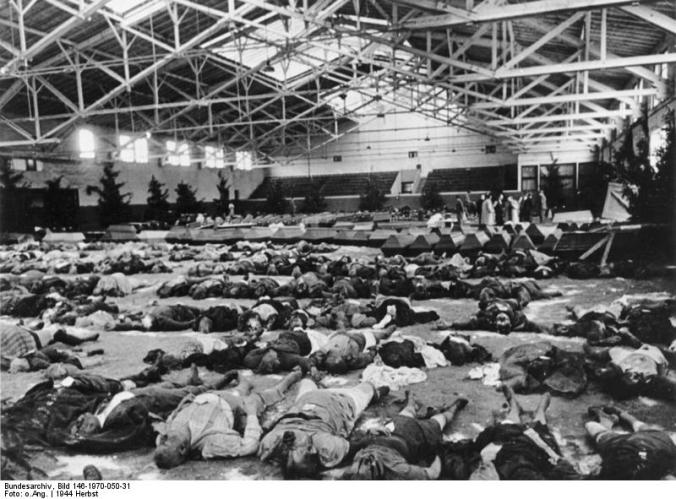
The streets were covered with hundreds of corpses. Mothers with their children, men, old people, burnt, charred, unscathed and clothed, naked and pale like wax dummies in a shop window, they lay in every position, quiet and peaceful, or tense with their death throes written in the expressions on their faces. The situation in the air raid shelters was the same and made an even more gruesome impression because, in some cases, it showed the last desperate struggle which had taken place against a merciless fate. Whereas in one place the occupants were sitting quietly on their chairs, peaceful and unscathed as if they were sleeping and had unsuspectingly been killed by carbon monoxide gas, elsewhere the existence of the fragments of bones and skulls showed how the occupants had sought to flee and find refuge from their prison tomb. Source

germany_hamburg_gomorrah_victims_in_air_raid_shelter_280x189

There is another great source (in German) which describes the multiple levels of Civil Defense in Germany. The specific chapter on the Luftschutz you can see here. My interest was never so much how they were structured but rather how they responded. What affect did continuous raids have on them? Whereas the Blitz in London last 9 months (with a second Blitz later on in the war from V-1 and V-2 rockets), German cities endured raids of varying intensity for years. Every German city of any consequence was bombed at least once. Some of the cities were as much as 80% destroyed by the end of the war. Increasingly, young women and teenage boys too young for service at the front found themselves drawn in the battle to save German cities from fires as the war dragged on.

d243d7f550a39c9c8762019d2e60f07d

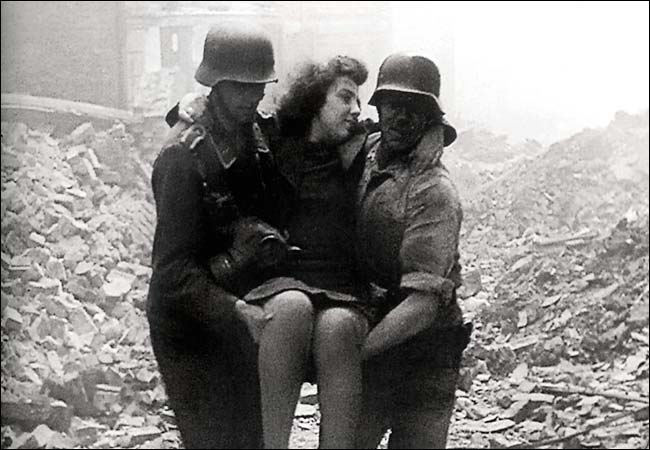
I’ve been fortunate to speak to dozens of people who lived through this era. Some served in the Germany Army, but my biggest area of interest was the civilian side of it. Therefore, I’ve spoken to teenage boys who crawled into rubble to search for trapped occupants, teenage girls of 18 or 19 who learned to fight fires caused by incendiaries, and military personnel who served in what would, in a modern fire department, be called a Heavy Rescue Squad. Some of the stories they told me were humorous. Most were tragic.

fm0514_frauen_im_luftschutz

They spoke of seeing firefighters cut down by shrapnel from high explosive bombs in the midst of trying to put out a fire. Of piles of dead bodies in the streets. Of the many ways bombs can kill you. They spoke of going into shelters and seeing women and child apparently sleeping, victims of carbon monoxide poisoning. Of shelters fulled of charred human remains who burned alive from the phosphorus incendiaries designed to penetrate into underground shelters and torch the occupants. One man told me of falling into what he thought was water, only to find it was liquified human fat. He was a young boy of 13 when that happened. They spoke of fear for the safety of their loved ones while they tried to save strangers. Of hours spent digging into the rubble of a building to reach trapped occupants, only to find them all dead. The lives of the occupants summarized by a simple chalk mark on the side of the building (20 Tot). The remains to be collected later.

Berlin, Opfer eines Luftangriffes

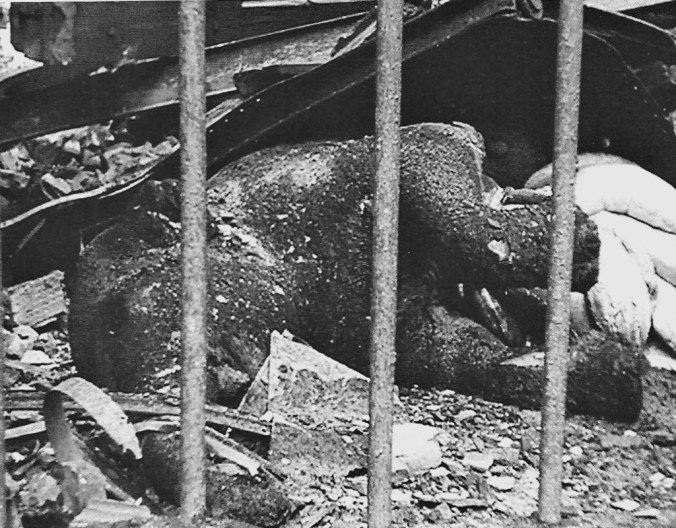
But, Dear Reader, to even discuss this invites criticism. Most will tell you they deserved their fate. I do not necessarily disagree with that. Some have called the British practice of area bombing and the deliberate targeting of non-combatants a war crime. I do not. Total War is a devastating thing. We’d do well to keep that in mind. War is not a video game. I do, however, feel sympathy for the children and the animals. Neither of them were responsible for what their government or the adults in their society did. Did a five year old child deserve to be burned alive, trapped below ground, because of what his government was doing? But they suffered just the same. The Berlin Zoo was hit during a heavy raid in November 1943 and many of the animals died. For the residents of Berlin, the dead animals led to a temporary increase in their meat ration.

8328671_orig

Dear Readers, I’m working on a book length project which compiles most of the research I’ve done off and on for twenty years. It gives a ground level view of the bombing raids Berlin suffered during the war and what it was like for the inhabitants and, most importantly, the Civil Defense and Rescue Workers. It is difficult for a few reasons. First of all, there is the language issue though thankfully I know enough German to get by. Second, I have the gnawing idea that no one cares about the subject, so why bother writing about it. Third, I have to walk a very, very thin tightrope. When describing the aftermath of a raid, if I appear too sympathetic, then I risk being called all sorts of names (Nazi sympathizer, etc, etc). But at the same time, as a historian, I also have an obligation to the truth. Therefore, my approach is to simply report the facts without judgement or observation. I just describe what happened and leave it at that. I think, perhaps, that is the best way to handle it. As I said above, I do not consider adult German civilians to be innocent victims of air raids. However, that does not somehow change the fact that firebombing raids were a horrific, horrific thing, no matter if justified or not. Maybe if we read graphic descriptions of what those raids were like, we as a society will strive to live in a world in which bombs are no longer necessary. History tells us human nature doesn’t change, so sadly, a world without bombs is not possible.

Here, Dear Reader, is but a small excerpt from a passage dealing with the raid on Berlin on the night of November 22-23, 1943. The heaviest in the war up to that point:

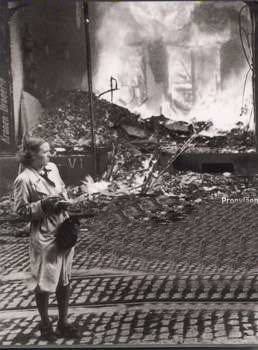
The heavy stench of smoke mingled with the sickly sweet odor of burned flesh filled the air. A young girl sits on a pile of rubble, clutching a stuffed bear under one arm and a kitten, eyes wide with terror, under the other. A group of teenage Luftschutz boys in blue-gray coveralls with helmets too big for their heads stand near the charred remains of two bodies, one a child. Cigarettes dangle from their mouths as they stare with vacant eyes too old for their young faces. When a military truck arrives, driven by a young woman in a similar uniform, they scrape the bodies off the pavement and toss them in the back. A group of firefighters spray a limp stream of water on the facade of a collapsed building as workers scurry back and forth across the pile of brick and concrete as if they were ants constructing a colony. The screams of the trapped occupants are muffled, but you can hear them from the street. Smoke curls upward from within the debris. Something inside is burning. A young boy in a Hitler Youth uniform stands in front of the hose stream to wet his clothes before he worms his way into a hole made in the rubble. No one takes any notice of the zebra, freed from the confines of his zoo home courtesy of a bomb, as it gallops down the street. Such is the nature of war.

berlin1943-4-woman-house-on-fire-air-raid

It is a difficult topic to write about, one that gives you nightmares. But I do think it is an important one. Since I’m a historian cross trained as a novelist, I take a bit of dramatic license with my descriptions, but all of them are born out by my research. Is this something even worth writing about? I don’t know. If it is worth it or not isn’t a question that I can answer. Only the reading public can. But what I do know is that it is an important topic, fraught with peril though it may be. So thank you for reading my post and excerpt. May we all learn something from the lessons the 1930s and 40s should have taught us.

Hutch


From Glory Days to Empty Nights: The Decline of the Sweet Science

history_louis_vs_schmelling_rematch_speech_sf_still_624x352

Friends,

Tomorrow marks the birthday of the late champ Muhammed Ali. He passed on to that great gym in the sky last June, so he can now spar with the likes of Jack Johnson. La Dolce Scienza has fallen a long way since the heady days of the 1920s and 30s, though it certainly showed flares of a comeback in the 1960s and the great era of Super Bouts in the 1980s and early 90s. Ask a random American today who the heavyweight champion of the world is, and you’ll probably get a blank stare. In fact, with so many sanctioning bodies, a pugilistic enthusiast may first inquire from which body said champion won the belt before they can answer. How far the sweet science of bruising, as it was called by Pierce Egan, the Shakespeare of the London prize ring, is a matter of great dismay to those who have witnessed its decline firsthand.

If Egan was its Shakespeare, then A.J. Liebling was its Herodotus. Liebling observed television was useful for “selling razor blades”, but little else. In the 1950s, he spoke of the deleterious effect this modern contraption would have on boxing specifically and society generally. I wonder what he’d say about the pay-per view fights of today. Just as boxing discovered television, so too did professional football. When the Giants took on the Colts in what is billed as the Greatest Game Ever Played, television audiences got to watch what they might have only heard on the radio before. And speaking of the radio, while other professional sports have maintained their radio ties, boxing has completely severed them. In April of 2015, Premiere Boxing Champions inked a deal with SiriusXM to carry some fights via satellite radio. To my knowledge, they’ve carried exactly one fight.

download

Part of boxing’s appeal in the radio era was because it reached a nationwide audience and was free of charge. All you had to have was a radio. Bert Sugar, the fedora wearing, cigar chomping Potentate of the Prize Ring, once wrote that to understand boxing, you had to understand its roots. This is true of just about anything, I suppose, but particularly boxing. I’ll now add the Hutch Corollary to the Sugar Thesis, that is to say, to understand its decline, you must understand not only its roots, but also its move away from said roots.

The Good Book doesn’t say money is the root of all evil. It says the love of money is the root of all evil. Therein, Dear Reader, lies the problem with sports in general, and no sport more than the Sweet Science. The first Joe Louis vs. Max Schmeling contest, which saw a Louis defeat, while a big fight, set up the most epic of all rematches. After some backroom chicanery, Louis matched up with Braddock, of Cinderella Man fame, next and won the world heavyweight championship. This set up the rematch between the Brown Bomber and a man seen as Hitler’s guy. The fact that Schmeling was not, in fact, a Nazi enthusiast and had, in fact, irritated them by refusing to fire his Jewish trainer, mattered little to journalists who have never let the truth stand in the way of a good story. Half the country tuned in on the radio to hear the legendary words “Schmeling is down……the count is five!” If you’d been in the interior of Africa, you’d have been able to listen on shortwave radio. In Germany, people packed movie theaters and listened as the radio feed was patched in through the sound system. Much of the world tuned in to hear the fight. Over 70,000 people filled Yankee Stadium to watch the fight which brought in the first million dollar gate in boxing history. Considering it was 1938, that says quite a bit. J. Edgar Hoover and Gary Cooper were present ringside to watch as well. It is, most certainly, the biggest sporting event in American History.

louisharlem21

But what if this fight were to take place today? It would be on pay-per view, of course. You’d have to pony up somewhere around $85 for the privilege of watching it. The main event would start somewhere around 9 or 10 pm. Sure, you could get some buddies to split the cost with you and have a fight party. But what of the working stiffs who are unable to take the time off for a frivolous reason such as a fight? What of those who lack sufficient funds for the purchase? Or those who don’t have cable television? They would be, to put it crudely, shit out of luck. After the fight, someone would post it on YouTube and you could find it there, at least until it got taken down. But by then you’d already know the outcome, having read it in the paper or heard about it from those lucky enough to watch it live. And that just isn’t the same.

Once upon a time, even in my childhood, you could watch good fights on television for free. Unfortunately, the slow inroads of pay-per view events also began their slow creep to the top of the sports realm. Whereas you can tune in on television or radio to watch your local sportsball teams play, if you have a satellite radio you can listen to the radio broadcasts from any team around the country, you cannot do the same for boxing. On occasion, you’ll have televised bouts on cable for the cost of nothing but your cable subscription, but title fights or big bouts are nonexistent outside of pay-per view or subscription services like DAZN. If you are old school like me, good luck finding any bouts on the radio.

mayweather_pacquiao_official_poster

The big buck associated with pay-per view have taken boxing away from the masses, which gave it popularity in the first place, and instead brought it into the living rooms of the casual fans. Such individuals complained after watching the Mayweather-Pacquiao fight about how “boring” it was. I suppose they expected every fight to end in a knockout. I further suppose they do not know the difference between boxing and fighting. Mayweather is perhaps the greatest defensive fighter of all time, yet the causal fans whined about how he “ran away” all night and should of stood there and fought. While it is true, Dear Reader, that in the ring you want to punch your opponent, it is also essential to avoid your opponents blows. But such a distinction was lost on those who are not students of the fight game.

With the rise of MMA and UFC, really nothing more than a glorified bar fight, boxing has competition which has surpassed it in some ways. Kids gravitate towards those sports rather than a boxing gym, which are getting harder and harder to find. Added to this, you have a growing chorus of voices which calls boxing a barbaric sport that should be banned. This view has been around almost as long as the sport, but it seems to grow louder with each passing decade. The same individuals who want to see boxing banned feel the same way about football, yet they eagerly sign their kids up for soccer. Girls’ soccer is second only to football (and a close second at that) in concussions per capita among high school sports. But I digress. A street fight is one thing, but a fight in the ring, with rules, is an honorable calling for those who choose to pursue it.

boxing-sweet-science-2

If boxing is to experience a rebirth, a return to its heydays of old, it must once again be brought to the masses. Broadcast major bouts on network television, for free. Make your money off of advertising, just as the Super Bowl does. Carry big fights live on the radio, though I imagine you’d have a hard time finding someone to call it since that type of play by play is a lost art. Tell those individuals who think boxing should be banned that, if they don’t like the sport, they are not required to participate in it. Simple as that. Will any of this happen? No, of course not. There is too much money to be made than to give up a chunk of it by making the sport free. However, I think boxing will find that over time, more and more fans in the United States will turn to other avenues since it just isn’t accessible enough. As more fans turn away, then so too do potential fighters. I’m sure you see where I’m going with this. Dear Readers, the Sweet Science is on life support and I’m not convinced it will survive to another generation.

And that, friends, would be a tragedy. I have happy memories of many of the fights I’ve seen in my day, including some great amateur bouts. I hope to be able to see many more, but I fear it will be the exception rather than the rule. And once, just once in my life I’d like to hear a fight live on the radio. I’d also like to be a millionaire. Both are equally unlikely. I’ll leave you with this. The boxing world Ali inhabited bears little resemblance to the one today. It’s a tragedy or a travesty or both. Though he left his legacy on the sport and on society, I think his societal legacy will last longer because his sport may not survive another thirty years. Then again, we can take some small hope in one great truth. Men like to punch each other. That hasn’t changed since Cain slew Abel. So maybe, just maybe, there’s hope after all.

Hutch

Boxiana: Or When the Ring Was King

220px-john_l_sullivan

Dear Readers,

If you were to poll a random cross sections of Americans and ask them what professional sport was the most popular in the nation prior to the shotgun marriage of television and football, I’d bet dollars to donuts that the respondents would answer “baseball” without hesitation, mental reservation or secret evasion of mind. While it is certainly true that the Overlords of the Outfield did indeed hold sway over the imaginations of the public in the post-war era, it is not the whole truth. By that, of course, I refer to the second great cataclysm to strike the world following close on the heels of the War to End All Wars. Before said war it was not the Bandits of the Bullpen who most captured the hearts and minds of the American people, but rather the Rajahs of the Ring. Yes, Dear Readers, I refer to the sport of boxing.

La dulce ciencia is perhaps the oldest sport known to man, a fighting companion, perhaps, to the oldest profession. No doubt cavemen engaged in fisticuffs as readily as some men do today. The Book of Genesis tells us how Cain slew Able, but it leaves out the method with which Able was dispatched. Given the fact that they were the third and fourth humans, respectively, one can only assume Cain slew his brother with his bare hands. The Good Book details frequent battles between opposing groups, often resulting in the vanquished being “smote hip and thigh”, whatever the hell that means. No less an authority than Homer, the blind bard of antiquity, spoke of the innate desire of one man to smash his face into the fist of another. Odysseus, of whom Homer sang praises, settled things with his fists when the need arose. Indeed, the Pantheon of Boxiana reads like a who’s who of famous writers. Hemingway, who spent time in the ring, Jack London, Joyce Carol Oates, and the great A.J. Liebling, all devoted time to chronicle the Sweet Science of Bruising in a manner worthy of Shakespeare. The question we must ask is why? What drew literary heavyweights to wax poetic (and sometimes wane) about their counterparts in the ring? Just how popular was the fight game in the past? Well, Dear Readers, I shall attempt to answer my own questions.

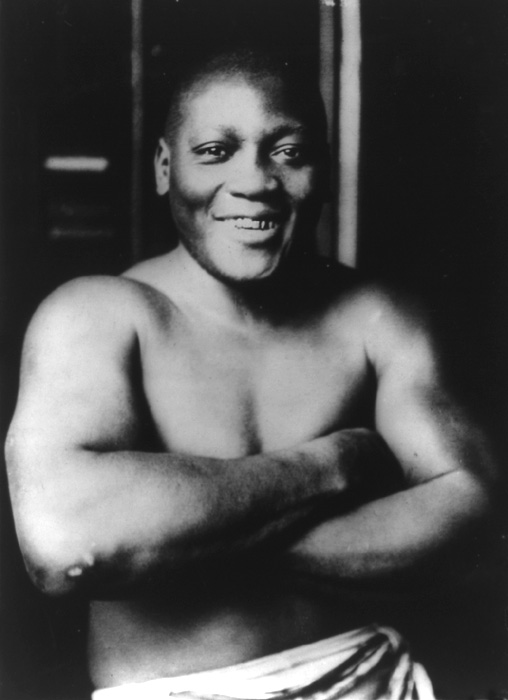
We need not venture all the way back to the 19th Century to explain the rise of pugilistic parade of boxers turned celebrities, though the Boston Strong Boy might take issue with such a dismissal. No, we should first turn our eyes to the island city of Galveston, which gave birth to the first superstar black athlete, who is a worth early example of the impact of a sport on our society. It took some doing, but eventually Jack Johnson, the Galveston Giant, convinced Tommy Burns to schedule a title fight. Burns had, earlier, defeated then champion James Jeffries. Burns and Johnson touched gloves in Australia in 1907. Fourteen rounds later, Burns was on the mat and Johnson was the champion. That a black man had beaten a white champion shocked the world, no matter how skilled said black boxer was.

jack_johnson1

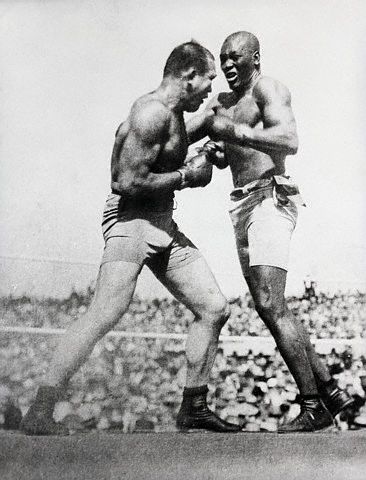
This set off a desperate search for a “Great White Hope”. White American fans of the fight game couldn’t stomach a black champion. Surely someone, anyone, could come forward and wrest the title from Johnson’s massive fists. A hope, both likely and unlikely, stepped forward. James Jeffries said he’d give it go, although he had thrown nary a punch in six years. The combatants met in Reno, Nevada. Johnson knocked Jeffries down twice before his corner threw in the towel to prevent him from having a knockout on his record. Jack London, sitting ringside to cover the bout, summed it up succinctly. “Once again Johnson has sent down to defeat the chosen representative of the white race, and this time, the greatest of them all.” The country reacted with shock, nay, horror!

What may have seemed like a simple boxing match was anything but. Riots swept across the United States, with dissatisfied white men storming black communities to set homes and businesses on fire. Some estimates state that around twenty-five people died and a few hundred more injured. Consider the significance, Dear Reader. Have we ever seen nationwide riots after the Patriots win (another) Super Bowl? To my knowledge, the Johnson v. Jeffries prizefight is the only sporting event in the United States to ever touch off nationwide rioting due to the outcome. But alas, Dear Reader that is exactly what happened when Johnson won.

Jack Johnson & Jim Jeffries Boxing

The saga of the Galveston Giant is a great one, but time and space prohibit me from giving it anything more than a light jab on the chin. Eventually, the world found its Great White Hope. In a fight scheduled for 45 rounds, Jess Willard sent Johnson to the canvas in the 26th. Boxing reigned supreme in the 1920s. No less an authority than A.J. Liebling, the Heroditus of the Prize Ring, noted that during a decade known for flappers and prohibition, Jack Dempsey got more headlines than Babe Ruth. And made more money too. It would take over twenty years for another black boxer to challenge the established order of the sports world at the time, but when he did so, he’d do it with, at least on the surface, the support of white America.

When Joe Louis, the Brown Bomber, stepped into the ring on June 22, 1938, he not only carried his own desire to avenge his earlier defeat to Max Schmeling, he also carried the hopes and best wishes of the United States. A couple of weeks before the fight, no less a person than Franklin Delano Roosevelt met with him and gave him sincere wishes for success. Schmeling likewise sallied forth to do battle with the hopes of a nation upon his broad shoulders. A second victory over Louis would be a propaganda coup for Hitler, who could point to it as an example of Aryan supremacy. The media cast this titanic battle as one between Democracy and Fascism, the Brown Bomber and Hitler’s man! Such makes for good copy, but the truth was that Schmeling was not an admirer of Adolf. The manner in which this fight was covered meant that, for the first time, white Americans felt comfortable cheering for a black boxer, even if they would not have wanted him to live next door or marry their daughter.

winback2_1024x768

On that fateful night, the men eyed each other from across the ring whilst millions tuned in around the world to hear the call. 70,000 lucky fans were able to watch what promised to be an epic battle between two noted pugilists. Some estimates have as many as 70 million Americans listening at home on their radios. What makes this shocking is that the population of the United States was around 129 million. That, Dear Readers, is over half of the country. Consider this, even the most watched Super Bowls don’t bring in that percentage. Around the world, people tuned in on shortwave radios as well to hear it live. If people hoped for a long fight, they would be disappointed. Louis dispatched Schmeling in just over two minutes. Had you been at home on this fateful night, you’d have heard the broadcaster say “Schmeling is down……the count is five!” This became one of the most recognizable radio calls for many years to come, indeed, among fans of the sweet science, it is known even to this day.

mtiwnja4njmzodg5nzg1mzu2

These are but a few examples of the hold la dulce ciencia had over the American public those many years ago. There are many reasons for boxing’s decline following the super bouts of the 1980s. But for those, like myself, who are fans of the sweet science of bruising, we can look back on a time in which the pugilistic art bouth captivated and repelled us, a time in which in divided us and brought us together, and a time in which it showed both racial division and unity. Some learned historians have called the 20th Century the American Century. If this is true, than at least during the first half, boxing was America’s Sport. Alas, the sport has fallen a mighty long way since June of 1938. It may well never recover.

But among the hardy few pugilists who trade jabs in the ring today, one constant has remained the same since bareknuckle brawler John L. Sullivan plied his trade. Boxing has always been a working class and/or immigrant sport. My own ethnic group, the Irish, became the first great bareknuckle champs in the United States. We gravitated towards the prize ring, perhaps due to the fact that we discovered a way to get paid for something we did for free on a typical weekend. In the 20th Century, we saw black fighters, Jewish fighters, and Italian fighters like the great Rocky Marciano. Today, the Hispanic community has strong ties to ring. While a Mexican-American kid laces up his gloves for the first time today, he or she is following a path blazed by other immigrants who, though they might have had a different shade of skin or language, shared the desire to fight their way to the top of a very difficult world.

micky-ward-v-arturo-gatti

I will leave you with this thought. One cannot separate the history of a sport from the history of a country. The two are as entwined as two lovers in a bed. To understand one, you must understand the other. To those who opine that in the grand scheme of things, sports are irrelevant, I only ask them to consider those killed in the riots following Johnson’s victory. Tell those murdered by mobs angered over the outcome of the bout that sports don’t matter. For those poor souls, the sport was life or death.

Don’t drop your guard and remember to stick and move.

Hutch

Beware the Axeman! A Diabolical Fiend Ushers in Jazz Age New Orleans

slide411

Friends,

Americans are drawn to crime like moths to a flame. Whole societies obsess over serial killers and unsolved murders. We even have serial killer “groupies”. (Yes, I’ve met a few.) As much as we are repulsed by seemingly random acts of violence, we are fascinated by it as well. I don’t know why this is. Perhaps humans all have voyeuristic tendencies? Crime interests people. I learned early on in my public safety career to never tell strangers what I did for a living. They would immediately ask “What is the worst thing you’ve ever seen.” This is akin to making me relive your worst nightmare. So never ask that question!

If you look through newspapers and other means of popular culture from yesteryear, one thing you will notice is that crimes fascinated people 100 years ago just as they do today. Just as crimes like the O.J. Simpson case and little ole Casey Anthony draw huge media attention and consequently captivate American audiences, so too did the Mary Rodgers case from the 1840s, the Lindbergh Case from the 1930s, and the list goes on and on. We have a mistaken belief, it seems, that back in “the good old days” one needn’t fear being murdered or assaulted. Everyone went to church all the time and did nothing but good deeds. That, my Dear Readers, is a load of bullsh!t. People were just as…….fudged…….up back in the day as they are now. Human nature hasn’t changed.

neworleans001

So let us now turn our attention to New Orleans, Louisiana. The year is 1918. The month is May. In France, thousands of US soldiers are pouring into the country every day to bolster British and French troops. Soon they will help thwart Germany’s last attempt to win the war. Congress passes the Sedition Act which, among other things, makes it illegal to criticize the war effort. New influenza cases continue to pop up, the first of a deadly pandemic that will eventually kill millions. New Orleans is a city in transition. Once the home of Storyville, a thriving redlight district among the most notorious (and profitable) in the world, the city is now dealing with the after effects of its closure. The US Military considered it a bad influence on soldiers and thus pressured the city into shutting down what residents called “The District”. The mayor of New Orleans, Martin Berhman, said “You can make it [prostitution] illegal. You can’t make it unpopular.” True enough. Now The District is home to restaurants and jazz clubs, more music than sex. And of course, it being Louisiana and all, The District was also home to numerous low gambling dives.

On the night of May 22nd, 1918, a foul villain entered the home of a married couple, both Italian immigrants, named Joseph and Catherine Maggio. The two were attacked in their beds in the most horrendous of ways. The assailant slit their throats with a straight razor. The damage done to Mrs. Maggio was so severe that her head was almost completely severed. When finished with his heinous task, our killer then bashed them repeatedly in the head with an ax. Mercifully, Catherine expired quickly, as far as the police could tell but Joseph was still among the living when he was discovered by his brothers. One of the brothers, Andrew, quickly became the prime suspect as the razor blade was found to belong to him. He owned a nearby barber shop and an employee reported seeing him remove the blade. Plus, despite the killer smashing down a door, Andrew claimed to hear nothing of the attack itself and was only awakened by strange gurgling noises coming from the bedroom of our victims. Not a thing was found missing from the home, thus the motive had to be murder. Murder most foul! Young Andrew said he arrived home in a highly intoxicated state due to his imminent departure to join the Navy. Having once been a young college student myself, I can sympathize with his “state” on the night of the attacks!

axeman-jpg-w300h322

Dear Readers, if I may impart a bit of wisdom to you, it is generally not a good idea for married people to have affairs. If you have ever watched a Lifetime Movie, you will know what I speak is true. One month after the murder of the Maggios, our fiend struck again. A “gentleman” named Louis Besumer was attacked whilst in bed with his mistress, a woman named Harriet Lowe. They were discovered the following morning when a grocer arrived with a delivery. Both were unconscious but still alive, bleeding from wounds to the head. The police managed to revive them long enough to get statements. According to Besumer, they were “asleep” when they were attacked. Perhaps. Or perhaps they were caught in, shall we say, the act. Lowe stated that a mulatto man attacked them but given the injuries that she had suffered and the fact that the attack took place in the dark, her statement is questionable. However, our esteemed NOPD considered it good enough to arrest the first available black man, who happened to have been previously in the employ of Besumer. And now things take a turn for the strange. Ms. Lowe at first claimed to be the wife of Mr. Besumer but this fact did not stand up to careful scrutiny. Though she slipped in and out of consciousness over the next few months, the police were able to speak with her numerous times. Before she died, she declared that Besumer himself was the killer! Given the fact that the murder weapon did belong to him, the police charged him with the deed. He was found not guilty after a jury deliberated for ten minutes! Her veracity was no doubt challenged due to the fact that she also accused Besumer of being a German spy. This was also not proven, of course. Chiefly because it probably wasn’t true. Hopefully none of you have ever had a jealous partner accuse you of being a serial killer!

Our fiend then took a break. But only for a short while. On August 5th, Mrs. Schneider opened her eyes and found a man hovering over her in the dark. As she no doubt adjusted to the shock, he began to smash her in the face. The victim was discovered when her husband arrived home from work after midnight. The police surmised that a lamp was the weapon here, not an axe, which may be the reason why Mrs. Schneider survived. In a shocking twist, our victim was eight months pregnant at the time! She gave birth two days later to a healthy child. Mrs. Schneider was not able to tell the police anything of use regarding the attack. So the police arrested another handy subject only to have to release him a short time later!

axeman

Naturally by this point the media was having a field day with their coverage of the series of baffling and seemingly random attacks. And our villain was about to escalate his behavior. Five days after Mrs. Schneider met the Axeman, he struck again. This time his victim was an elderly man named Joseph Romano. Hearing a commotion, his two nieces entered the room and saw our fiend as he made his escape. They described him as a dark-skinned, heavy man, wearing a dark suit and a slouch hat. (At least he had style!) Sadly, Mr. Romano left this world a few days later due to the severe head trauma he sustained in this latest bloodbath. And now, Dear Readers, panic gripped the city. People called the police to report shadowy men hiding behind every lamppost. Some reported finding axes left in their backyards! A retired detective stated that he felt these murders were connected to others which had happened in 1911. That did nothing to quell public fears. He hypothesized that our fiendish killer may have be a Jeckyl and Hyde wherein he would appear outwardly normal until moved to kill. This, of course, caused people to look very carefully at their neighbors. Is your neighbor just odd or are they a killer?

After the murder of Mr. Romano, the Axeman took a break. Or did he? It is possible that he moved on to other areas for a while to help avoid detection. Perhaps Baton Rouge or Mobile appealed to him and he visited for a while. With his axe. The city breathed a sigh of relief as it looked as though our fiend was finished with the Big Easy. But no. He had other plans for New Orleans. On the night of March 10th, Across the river from New Orleans lies the town of Gretna. That dark night neighbors awoke to screams coming from a house. They ran over to investigate and found a tragic scene. A husband and wife had been attacked while in their beds. The mother held a two year old girl in her arms who was sadly deceased, killed by a blow to the neck. The parents would survive. Mrs. Cortmiglia accused a local man and his son of attacking her family. Her husband denied this most strongly. The accused man was in too poor a physical condition to have done it. His son was too big to have crawled through the missing door panel whereby the killer gained access. None of this concerned the police. Both were arrested and convicted. The 18 year old son was sentenced to swing from the gallows while his father received a life term. After the trial, Mr. Cortmiglia divorced his wife, no doubt angry that she falsely accused two men of murder. A year later, she recounted her story and the two men were released. But an innocent man very nearly went to the gallows for a crime he did not commit.

axeman_map_new_orleans_march_1919

Our Axeman had a sense of humor. Three nights after the attack on the Cortmiglia family, he sent a letter to the newspapers. “From Hell” it said, no doubt a tip of the slouch hat to Jack the Ripper! I will now give you a brief quote:

Undoubtedly, you Orleanians think of me as a most horrible murderer, which I am, but I could be much worse if I wanted to. If I wished, I could pay a visit to your city every night. At will I could slay thousands of your best citizens, for I am in close relationship with the Angel of Death.

Now, to be exact, at 12:15 (earthly time) on next Tuesday night, I am going to pass over New Orleans. In my infinite mercy, I am going to make a little proposition to you people. Here it is:

I am very fond of jazz music, and I swear by all the devils in the nether regions that every person shall be spared in whose home a jazz band is in full swing at the time I have just mentioned. If everyone has a jazz band going, well, then, so much the better for you people. One thing is certain and that is that some of your people who do not jazz it on Tuesday night (if there be any) will get the axe.

Well, as I am cold and crave the warmth of my native Tartarus and it is about time I leave your earthly home, I will cease my discourse. Hoping that thou wilt publish this, that it may go well with thee, I have been, am and will be the worst spirit that ever existed either in fact or realm of fancy.

The Axeman

Needless to say, Dear Readers, the citizens of New Orleans certainly did jazz it up that night. The Axeman was true to his word. Nary a murder was committed. No one got the ax. He took another break from axing the citizens of New Orleans, only to strike again on August 10th. Our victim survived, but was unable to give any information about the attacker. Six weeks later, a 19 year old woman who lived alone was brutally attacked whilst in her bed. Neighbors found her in a pool of her own blood, sans several teeth, with a nasty head wound. Alas, an ax was found in her front yard. Thankfully young Miss Laumann did not succumb to her wounds, but the police received no additional information as she was unable to recall the details of the dastardly attack. After another long pause, the killer struck for the last time (that we know of) on October 27th when he murdered Mr. Pepitone in the usual brutal fashion. Sadly, the victims wife who interrupted the killer in the midst of his foul deed could not give a good description to the police.

And so the Axeman faded into history and memory, though he is not well known outside of New Orleans, at least until he showed up as a character in a season of American Horror Story. The police never had much to go on. But the larger lesson here is that the good people of New Orleans refused to bow down to him, even when he was in the midst of his brutal spree. Indeed, a musician even penned a special song for him called “The Axeman’s Jazz (Don’t Scare Me Poppa). It was published in the months when the Dastardly Villian held sway over the birthplace of jazz. You can listen to one version of it here. Did the Axeman die? Was he arrested for another crime? Or did he simply take his horror show on the road? We’ll never know.

Hutch

Sleeping With the Enemy: Or Beware the Honey Trap!

anna-chapman-102110-m-425x500

Anya Chapman, Russian Spy Redhead + Foreign Accent = Me Spilling the Beans

This post is rated PG-13 for Adult Situations and Sophomoric Humor.

Friends,

Let me start off by saying that the title of my post has nothing to do with the fact that I am a Southern boy married to a Yankee. Second, be warned that adult situations and the occasional juvenile humor will follow. For those with delicate ears, or actually eyes, maybe you should go visit the Disney website. I’m sure they have something that will be suit your needs. Though from what I’ve heard, some folks say they drop some pretty perverted images in their movies. History, when studied as it should be, is raw, vile, obscene, heroic, cowardly, and sometimes, yes, perverted. If we try to censor the more salacious bits from the narrative then we do a great disservice to the study of the past. History can be offensive and if you have any sense of decency then parts of it should be offensive. Luckily I am not a historian. I am merely a Half-A$$ Historian which means that I can tell lurid tales all day if I want. Today is one of those days. Actually, I just want to see how many hits a post will get by having a hot redheaded Russian lady as the lead picture. I jest, but only partially.

My inspiration for this post came when I stumbled across this article from across the pond. British government and military employees were being warned to be wary of the honey trap. This term can mean a couple of different things. One definition actual does involve bees and honey. The hip hop definition of a honey trap is a woman who is employed by another woman to test the loyalty of said woman’s boyfriend. The honey trap approaches and flirts with him to see if he responds, then reports back to his girlfriend. I have never fallen victim to this kind of honey trap. But only because no girlfriend of mine has ever employed one. Now I am married to a redhead who would neuter me with a rusty spoon if said honey trap were to approach me, so I guess I’m safe. The third type of honey trap is the one which will command our attention today. This involves a female agent provocateur approaching a man, usually a military or government person, and getting “friendly” with him. She then gains access to his home or apartment, his car, cell phone, etc. Said femme fatale then either gets him to divulge sensitive information or snoops around and finds it on her own. If you have watched a single James Bond film, I think you understand this concept pretty well. Advertisers say that sex sells. I believe everything I see on TV, so I guess perhaps it does. But sex is supposed to be fun. Not a weapon. Right? Wrong!

image004

The Honey Trap (also known as Honeypot) is as old as mankind, which we shall see later. It really became widespread during the good old days of the Cold War. The KGB and the Stasi (East German) were really, really good at setting honey traps. In fact, there was a KGB school just for female agents to train them in these…….techniques. Now to be fair, the Western Allies including the US no doubt did the same but not on as wide a scale. Incidentally, the KGB code word for a honeypot was……wait for it….. “swallow”. The KGB also used male agents as honeytraps to use on men who might be susceptible to that. They called them “fruit flies”. While most reports of honey trap/pot operations read like dime store novels with steamy rendezvous in hotel rooms, automobiles, or desk tops, it is an effective intelligence weapon. Deception and Intelligence are an important part of warfare and have been for as long as we have made organized war on our fellow man. Sometimes we get it right. Other times we get it wrong. But when intelligence fails, it is often in a spectacular way. (Think 9/11) Since this is a history blog, I shall now give you some famous honey traps/pots from history!

eve

The First Redheaded Temptress!

1. Eve

Yes, the very first woman was a honey trap. Think about it. God said don’t eat the apple. Eve ate the apple. Then she “convinced” Adam to eat it. Do you really think she just handed Adam the apple and said “Here, first guy, eat this apple that God said not to eat. It will be fun.” I rather doubt it happened that way, assuming it happened, of course. I’m pretty sure she promised him something in return and the author of Genesis wisely left that out lest thousands of years of children in Sunday School learned about sex. (Not counting those, like me, who got in trouble for giggling whilst reading Song of Solomon during the service.) Also notice the color of Eve’s hair? In the Middle Ages, the Catholic Church often portrayed Eve as having been a redhead. If you’d like, check out my other post on famous redheads here. I guess that belief is why they considered red hair to be the Mark of the Devil and persecuted redheads for being witches. As I am married to one (a redhead, not a witch), I’m 50/50 on the whole Mark of the Devil thing.

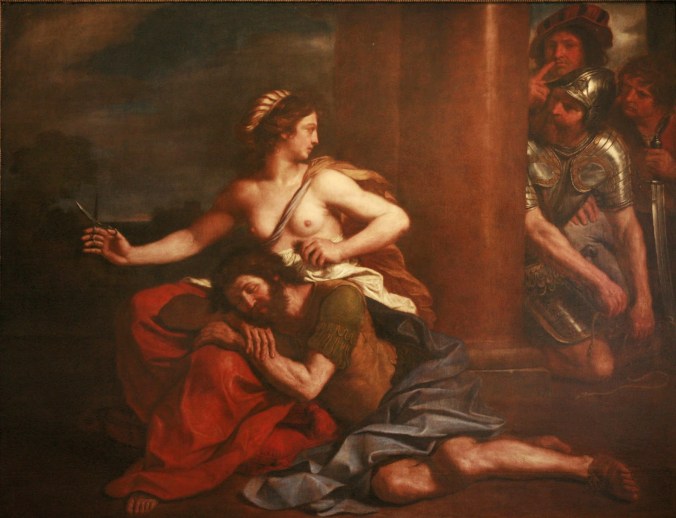
samson_and_delilah_mg_0034

Hey there Delilah, what’s it like in the Valley of Sorek?

2. Deliliah

And you thought the Bible was just boring old religious stuff! Not so! The KGB probably used it as a honey trap instruction manual. So there was a guy named Samson who had a lot of strength because he never cut his hair. After smoting Philistines hip and thigh, he met a young lady in the Valley of Sorek named Delilah. I’m sure he walked up to her and said “Hey There Delilah” (sorry, couldn’t resist!). Anyway, after much back and forth, she “convinced” him to tell her what the secret of his strength was. She did and so while he was sleeping (probably worn out after the “convincing”), Philistines entered the room and cut off his hair. I guess he must have been a heavy sleeper. Anyway, I vaguely remember them blinding him but then he knocked down a temple or something. Guess I should have been paying more attention in church and not reading Song of Solomon. And notice that she too has red hair! I’m telling you, men couldn’t even resist redheads in the Bible!

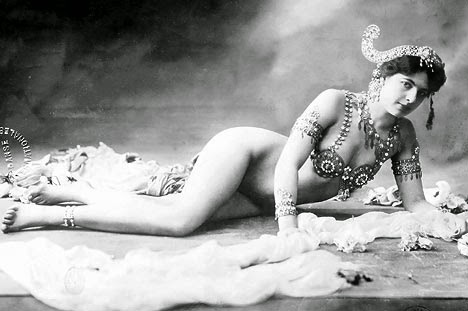
mata_hari_15

How lewd!

3. Mata Hari

And now we take a great leap into the 20th Century with the Dutch born circus rider turned exotic dancer turned spy, Mata Hari. She was quite the popular dancer in gay ole Paree prior to the start of the First World War. When it did start, she made use of her status as a citizen of a neutral country to travel freely. It is not really known how involved she was in all of the intelligence operations prior to her capture. She did tell British Authorities that she was working for the French after they took her in for questioning. A few weeks before sending the Zimmerman Telegram, the Germans sent another one in which they named Mata Hari as one of their agents. She was “particularly” helpful. Mmmmhmmmm. I’m sure she was! Alas it was intercepted by the French and she was promptly arrested and charged with that most serious of charges, espionage. They didn’t really have much evidence, but she was convicted nonetheless. A short time later she was executed by firing squad. Hey, it beats getting impaled or burned at the stake, right? Decades later, German documents would be declassified and show that the French were right in their assessment. She was a spy. That said, they did not have the evidence at the time they convicted and executed her. But then again, they were French!

the_death_of_cleopatra_arthur

Queen of denial.

4. Cleopatra

While perhaps not a true “honey tap/pot”, Cleopatra certainly used her considerable “talents” to get what she wanted from both Caesar and Mark Antony. In order to meet Caesar and entice him to help her in her struggle for control of Egypt, she had herself smuggled into his room rolled up inside of a carpet! He unrolled the carpet and there she was! What a nice surprise. Caesar was obviously impressed. So impressed that he took her home with him and put her up in a nice villa in the countryside. He carried on a protracted affair with her despite having a wife at home. If you’d like an added creepy factor, she was 21 and he was 52! When Caesar had a bad day at the Senate Forum, she returned home to Egypt. But later during the Roman Civil War (one of many), she also “impressed” Mark Antony! Friends, Romans, Countrymen, lend me your…….. She “convinced” him to have her sister killed. Long story short, her misdeeds came back to haunt her. Legend has it that she committed suicide by getting a poisonous snake to bite her. Not my choice for a way to go, but then again, the legend is probably false.

article-2146236-0b7df51300000578-461_233x695

“Hello comrade!”

5. Anya Chapman

She is the beautiful young lady picture on the Maxim cover above. Now, given her recent activities, I won’t go into much detail since it was on the news several years ago. But I will give you some links. Here is a great British article called How to Set a Honey Trap. It was alleged by the British that she may have been close to luring one of Obama’s cabinet members, but we don’t know who. Upon her return to Russia, Putin was alleged to have had an affair with her. If so, I’d like to shake his hand. But that’s probably not true. Still, the story of her spy ring which operated in the United States and the UK is very interesting. It’s something you’d expect in 1985, not 2009.

So see, Dear Readers, the use of sex as an intelligence weapon is nothing new. They did it in the Bible! Does the GRU, SVR, and FSB still employ honey traps? Well, I’ll let you be the judge of that. There is a lesson to be learned from this. If you are a man who has a Top Secret/SCI Security Clearance or you are a prominent business executive and you look like Elmer Fudd, beware the hot lady with a foreign accent. She is not after you because she has a cartoon character fetish. In other words:

trap

My name is Lee Hutch and I am a Half A$$ Historian who is convinced, given my wife’s red hair and attractive looks, that she is nothing more than a German Honey Trap. Or a Prussian Drillmaster. One or the other.

us2008

“You vill tell me ze secrets, ja?”

Some Small Victory For Humanity

Horace Mann once said “Be ashamed to die until you’ve won some small victory for humanity.” I think most people who teach can relate to this statement in some way. I taught my first college course in the fall of 2004. Here we are over a decade later and a lot has changed. I think I do a better job now, but I’m no expert. I’m not Jaime Escalante or the Freedom Writer lady. No, I’m just a washed up ex cop with a serious physical injury and a body racked by an incurable disease. Some days are better than others both in and out of the classroom.

I suppose on some level, all of us who teach wonder if it is worth it. After all, how useful is history really to a person who is a math or science major? Students come to class and go through the motions. As professors, so do we. I’ve been stuck in a rut the past couple of years. I’m a part time faculty member who wears the Scarlet “A” of being an adjunct. I’ve given up hope of full time employment. It’ll never happen. I left one institution because of the increased rules and regulations that singled out adjuncts for “special treatment” such as forcing us to sign a civility oath (seriously). I barely make enough money to pay the bills and many of my medical bills go unpaid. So why do I do it?

Honestly, I don’t know anymore. But sometimes I think back over the course of my teaching career. I don’t always remember names, but I can remember faces. I think back on all the fun times I’ve had in the classroom. I’ve had classes I loved and fortunately only a couple that I’d rather have run backwards naked through a cornfield than to have taught. I think about all the students I’ve had pass in and out of my classroom doors and thus, my life. I wonder where they are now and what they are doing. I hope they all go on to make their mark on the world.

When I was a police officer, I got used to instant gratification. Saw bad guy. Arrested same. Someone committed a crime. I arrested them. End of story. Teaching isn’t like that. You never truly know (and indeed, may never know) how much of a difference (if any) you make. The impact might be years down the road. All you can do is hope for the best. It isn’t simply teaching. Sometimes a friendly word to a troubled student or allowing them to vent about some problem in their life is what makes the difference, not the causes of the Civil War. I always say I teach students, not a subject, because some of the biggest lessons deal with life rather than Warren G. Harding’s underwear preference.

And sometimes, I learn from my students. In fact, I learn as much from them as they do from me. Not about history, of course, but about myself. Yes, they teach me about myself. They force me to evaluate what I do and why, how I do things, and how to teach when I’m so racked with pain that I’d rather be in bed. For this I’m eternally grateful to them all. Being in a classroom allows me to forget for a while my own issues. The semesters pass with the speed of lightning these days. One turns into another in the blink of an eye. It seems just as though you truly get to know your students, they are gone only to be replaced with a new batch.

Have I won some small victory for humanity? No, I don’t think I have. But I’m not ashamed to die either. Then again, I don’t know what qualifies as a small victory for humanity. Maybe I have. But I do know this. All the students who have touched my life over the years can rest assured that they have made a difference to me. If the true measure of a person is whether or not you are better off for having known a person, then I can say without question that I am certainly better off for having known them all. I sincerely hope they can say the same about me.

P.S.: Any teacher who ever doubts what they are doing must watch the Twilight Zone episode entitled “The Changing of the Guard”. It aired in Season 3 and Season 1-3 and 5 are currently on Netflix, so I recommend you watch it ASAP before Netflix removes it, as they seem to do with all their good programming these days.

L.H.

10436153_528868657243424_9036523030583541501_n

Literal Ghosts of the Past

Dear Readers,

I have steadfastly refused to write (or even talk much) about the experiences I shall relate herein for the simple reason that some, okay most, may deem me ready for a straight jacket. When I named the blog “Ghosts of the Past”, this type of ghost was not really what I intended to discuss in a post. I believe there are three worlds; the physical world we inhabit, the afterlife (whatever you want to believe it is), and the spirit world in which spirits can move between the physical world and the afterlife. Sort of like Purgatory. For whatever reason, some spirits get trapped in the spirit world and can’t get out. Those are the ones we would refer to as “ghosts”. In the following paragraphs, I will relate every experience I’ve had with those from this other world.

When I was a teenager, we visited Shiloh National Military Park, the site of a brutal two day Civil War battle in April of 1862. More Americans died on those two days than all our previous wars combined. I was 17 years old at the time. While walking around the battlefield, at one particular spot I suddenly developed a crushing headache. I moved a few feet and it went away. So, finding this odd, I returned to the original spot and so did the headache. Again, it lessened when I moved away. A few years later I started delving into my family history and discovered that my great-great-great grandmother’s brother was killed at Shiloh. As his regiment advanced towards the fray, they received a volley from a line of Yankee infantry. He was struck in the head and died instantly. His age? 17. The spot where I developed the headache is where his regiment was when they came under fire. Now the Confederate dead were simply buried in mass graves. Five of the sites are marked at the park today. When I was able to, I returned to the park and left flowers at the grave site closest to where he fell. Along with the flowers, I left a note which told him that the family now knew where he was buried. As I stood there with my eyes closed, I felt a hand squeeze my shoulder and the whispered words “Thank You.” After this, I visited the spot where he died and this time……no headache.

I worked as a law enforcement park ranger for the state for a while. I lived at a state historic sight which was the location of a bloody battle. My residence was located near where the cavalry camped the night before the battle. One year, on the night before the anniversary of the battle, my girlfriend (now wife) and I were watching TV. Suddenly, it sounded like a herd of horses were galloping through the yard. I quickly opened the door and, of course, found nothing. Later that night while we were in bed, we heard the sound again, louder this time. I flung open the door and found nothing. My girlfriend was not a believer in ghosts until that night. Now she is. Admittedly, I wasn’t much of one either until that night. There is nothing else that can explain what we heard.

One foggy night as I patrolled the park after closing time, I spotted the outline of a man standing in the fog. All the gates to the park were closed. I put my spotlight on him but the light seemed to travel through him. I got out of my truck and yelled over to him and told him the park was closed. He turned towards me and I noticed he was dressed in 19th Century clothing. We stood and looked at each other for what seemed like an hour, then he tipped his hat and disappeared into the fog. I marked the spot in the road where I was when I saw him and returned to it the next day. The location where the man had stood was over a body of water, so either he was the spirit of a soldier who fought (or maybe died there) or it was Jesus. Unless Jesus is a reenactor, I’ll go with the former.

My wife and I once stayed at Myrtles Plantation in St. Francisville, LA. We stayed upstairs in the main house. All night long I heard footsteps coming up the stairs but they stopped about halfway up. My wife, who could sleep through the Second Coming, heard nothing. We stayed in a different room the second night but heard or saw nothing out of the ordinary. But that was certainly an enjoyable trip.

I spent 16 years as a Civil War reenactor. While sitting at my campfire at an event one night, a man approached out of the darkness and asked if he could warm himself by the fire. “Of course”, I said. He sat down and I passed him my flash of whiskey. We talked for over an hour. The funny thing is that he was “in character” or what we called a “first person” impersonation where you act as though you were actually a Civil War soldier. So I followed suit. We discussed the war, our families, what we wanted to do when it was over. He told me his name and his unit. After a while he thanked me and walked off into the darkness. The following day I asked around about what reenacting unit the guy belonged to as I intended to compliment him on his first person impression. No one knew who he was or had ever heard of someone by that name. Was I visited by an actual Civil War soldier? Perhaps. One thing I can say, as it may be pertinent, is that I was not intoxicated at the time either.

I don’t live in a haunted house, though it is an older home. And even if it was haunted, I have five cats to protect me, along with a sexy redheaded wife with an ass that just won’t quit who can also protect me. All of the above items are true. I have neither embellished, nor subtracted, from what happened. Believe them or not, the choice is yours, but I know they are true.

L.H.

_0qb1uo

The Redhead, my sexy good luck charm!

The Forgotten Great War: World War One in Africa

bundesarchiv_bild_105-doa3056_deutsch-ostafrika_askarikompanie

German colonial troops in East Africa

Friends,

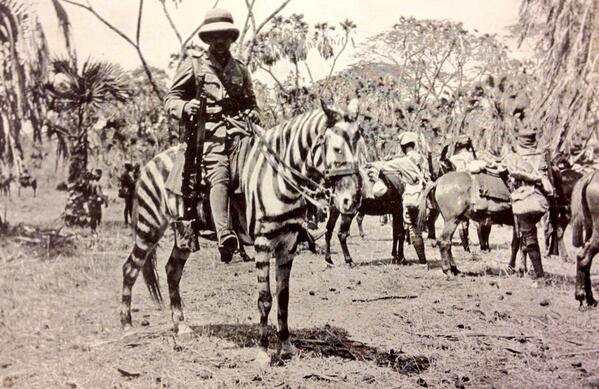
I often say that in some ways, World War One is a largely forgotten war here in the United States. Our troops were only in combat for the final nine moths or so of the war and our casualties, though high for such a short time, were nowhere near as high as the European powers. However, it was a world war and as such there were other theaters. Imagine: cavalry riding zebras instead of horses, columns of men marching through the jungles or plains, gunboats steaming up and down the great African lakes. That sounds like something from a Tarzan movie! But it all really happened. I wish I could dive into the subject and tell you all sorts of tales of midnight raids and pitched gunboat battles while soldiers and sailors dodge crocodiles, snakes, and hippopotami, but time and space prevent me from hitting this subject with anything more than a glancing blow. I can’t fully tackle this subject, but I can give it a flesh wound.

World War One was in many ways a colonial war. Competition for overseas colonies was a big contributing factor to the growing antagonism between Germany and England. When Germany unified in 1871, they set out to become an overseas power since they equated, just like the United States would do, colonies with economic and military power. The problem for the Germans is that much of the world was already spoken for. The British got into the game early and established themselves as the dominant colonial power. Remember the old adage: “The sun never sets on the British empire”. (It is, of course, because God doesn’t trust the British in the dark.) The resulting “Scramble for Africa” in the late 19th Century resulted in Germany carving out a piece of the only real continent with any territory up for grabs. When it came to imperialism, native peoples were never consulted as to their wishes, of course. The Europeans came to Africa to “civilize” them and to “Christianize (ie: Protestantize) them. This was done without regard to existing tribal cultures. But that’s always been the dark side of imperialism.

sengaleseinthesudan

Sengalese troops in the Sudan.

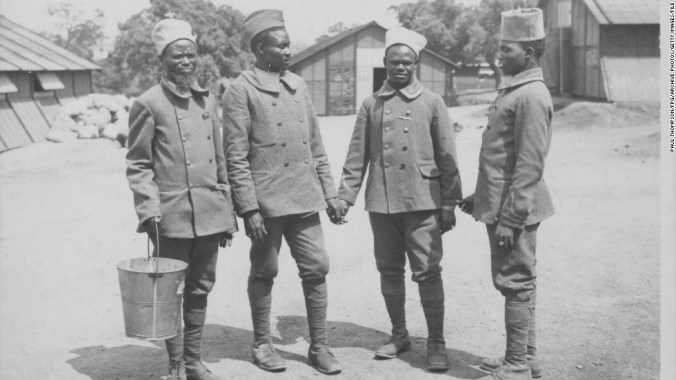
In his masterful work (seriously…..it is history that reads like an adventure novel), Byron Farwell notes that though Irishman Earnest Thomas is credited as firing the first British shots of World War One, that is, in fact, incorrect. The first shot was fired by an unknown black soldier in a British uniform in Togoland a week earlier. While a marker notes the spot where Thomas fired his shot, no marker commemorates the actual spot where the first British shot of the war was fired. In other words, Africa was in the war from the beginning. Both sides used African troops and the British also used other colonial troops from India during their campaigns. There were several full scale military operations that took place. The warring powers considered this theater important enough to devote substantial resources to it. There are some really great pictures out there of black soldiers wearing German uniforms, Indian troops marching through the jungles, men on zebras, etc. I was always a fan of the old Tarzan movies (mainly because Maureen O’Sullivan (Jane) was not only hot but she had a great Irish name.

The main German commander in East Africa was General Paul von Lettow-Vorbeck. He was, quite possibly, Germany’s most able commander of the entire war. With his invasion of British territory, he was the only German commander to invade sovereign British soil. The thing is, he never really lost! He only surrendered upon being informed of the armistice. His operations are considered one of the best (and most successful) examples of guerrilla warfare in history. After the war, he returned to Germany to a hero’s welcome. In the 1930s, Hitler offered him an ambassadorship. The General’s response was fairly blunt. He is alleged to have said “Go f—k yourself.” In the 1960s, a reporter asked his nephew if he really said that to Hitler. The nephew replied “Yes, but I don’t think he put it quite so nicely.”

paulvonletowvoersbeck

Paul von Lettow-Vorbeck: The Lion of Africa

The human cost of the Great War in Africa is difficult to gauge. Since both sides used colonial troops and also civilian carriers, their record keeping was not up to the same standards as elsewhere. It is estimated that over a million Africans died, not just from the war itself, but from starvation and disease that often accompanies large scale conflict. The war laid waste to large parts of German East Africa and also some of the British territories as well, just as it did in France and Belgium. In our current centennial celebrations relating to World War One, we must remember to think of the brave African troops who fought on both sides in far away and forgotten campaigns.

germanatrocities

German troops hanging out with executed “thieves”.

bvuhmfkigaax3ly-1

Beware the Zebra Cavalry! (Actually a horse disguised as a zebra.)

And friends, if you will allow me a moment to editorialize, I would like to point out that there is still a war raging in Africa. The Great Congo War (also known as the African World War) has been ongoing (off and on) since 1998. MILLIONS have died in the Eastern Congo and the world has paid no attention to it. If this had been happening in a country full of white people……well, it would never have been allowed to happen in the first place. Though Africa was far from peaceful before the Europeans showed up (tribes fought tribes on a regular basis), the decolonization process in Africa has been very rough in some areas, though it has gone well in others. Remember, it was in the same Congo which sees so much violence today that the Belgians waged what can only be called a genocidal campaign in the late 19th and early 20th Century. Our government cares so much about ISIS yet pays no attention to Boko Haram in Nigeria other than passing references. We stepped in to stop ethnic cleansing in the former Yugoslavia, but cared little about the slaughter that took place in Rwanda. Africa and all her people matter, regardless of what the Western Governments might think.

Here are some GREAT books on World War One in Africa.

The Great War in Africa by Byron Farwell

World War One: The African Front by Edward Paice

Hell, CNN even wrote an article here.

Check out the World War 1 in Africa Project here. (It has a great story about a WW1 German gunboat that is now being used as a ferry!)

And last but not least, if you want to raise your awareness of colonialism in Africa in general, take a look at The Scramble for Africa by Thomas Pakenham. For a great look at the current “world war” in Africa, read Africa’s World War by Gerard Prunier.

O’er the Hills and Far Away: With the Devil’s Own in the Peninsular War

battle_of_badajoz

Here’s fourteen shillings on the drum
For those who’ll volunteer to come
‘List and fight the foe today
Over the hills and far away
O’er the hills and o’er the main
Through Flanders, Portugal, and Spain
King George commands and we obey
Over the hills and far away
Friends,
In the interest of full disclosure, I must start by saying that my family has a combative streak. My ancestors have fought in wars the world over for freedom or for pay. As with many Irish families, it didn’t necessarily matter in which army they were serving. I have a fifth great-grandfather who fought with Wellington at Waterloo and another in Napoleon’s Grand Army. Yet another fifth great-grandfather is the subject of this tale. His father served in the 18th Regiment of Foot, aka: The Royal Irish Regiment during the American Revolution and as part of the grenadier company, made the long march to Lexington, Concord, and back on that April morning which started the American Revolution. A few months later he fought in the Battle of Bunker Hill. Sometime thereafter, he was discharged due to injury and made his way home to Ireland where he married and gave birth to a son. At the age of 17, said son enlisted in the 88th Regiment of Foot, better known as the Connaught Rangers. Or as The Devil’s Own. The regiment came into existence in 1793 and had its recruiting base in the west of Ireland. From Buenos Aires to Salamanca, from India to The Crimea, and from The Transvaal to the Somme, the men who served in this gallant regiment sold their lives dearly in battle and earned the reputation as one of the crack regiments in the world during their day.
After a little visit to Argentina which saw them spend six months aboard ships before finally being sent into battle, they arrived in Portugal in 1809. This was in the midst of the Napoleonic Wars and as such, it involved numerous shifting alliances and much confusion at times. The British allied themselves with the Portuguese and anti-Napoleon Spanish troops whereas the French enjoyed the support of some Spanish allies. It was a nasty war as the Spanish waged a fierce partisan campaign against the French who often exacted a heavy retribution. The British troops were commanded by Arthur Wellesley, who thanks to his eventual defeat of the French in Spain, would be known as the Duke of Wellington when he met Napoleon at Waterloo and sent him packing. But it is doubtful that he would have received his title had it not been for the help of The Devil’s Own!
The 88th took part in the advance into Spain from Portugal moving forward in absolutely miserable conditions. Mistakes were common on Napoleonic battlefields, often with serious results. The night before the the actual battle began, Rufane Donkin’s brigade, which included the 88th, were detailed along with a cavalry brigade to cover Wellington’s army as it moved into position. The cavalry brigade, mistaking the orders they received, pulled back and left Donkin’s brigade exposed. They were attacked by the French and suffered 400 casualties before being forced to pull back. For many of the men in the 88th, this was their first action and they acquitted themselves gallantly. The following morning, the battle commenced in earnest. At a crucial point of the battle, The Guards Brigade drove off a French attack and charged headlong after them. They ran into a very strong French second line and suffered heavy casualties. As they streamed to the rear, General Wellesley personally placed the 48th Regiment of Foot in line to fill the gap in the lines. With the support of the 3rd Division, including the 88th, they broke the French lines and Wellesley had his victory. And he was also named Viscount Wellington of Talavera. Both sides suffered heavily in this contest with the British losing over 6,000 men killed, wounded, or missing.
battle-of-talavera-28th-july-1809-william-heath
So fall in lads behind the drum
With colors blazing like the sun
Along the road to come what may
Over the hills and far away
The 88th had only begun to add luster to their name. The following year they repulsed a French attack at bayonet point, earning a reputation for hard fighting. (And also ill discipline!) In 1811, they 88th played a central role in the Battle of Fuentes de Onoro. At a crucial point in the battle, with the tide swinging towards the French, Wellington ordered a counterattack. The 88th led the attack and checked the French advance. But then the French launched their own counterattack with bayonets as they were short on ammunition. The 88th and her sister regiments held fast and broke the French effort, causing them to retreat. Thus the last French Army in Portugal met its demise. Napoleon was not pleased! Greater glory awaited them at the city of Badajoz.
The town had twice been unsuccessfully put under siege. It had strong defenses, very strong. So on this third attempt, the British soldiers dug approach trenches to protect themselves and also the artillery they planned to employ. World War One soldiers would have been familiar with what they were doing. Heavy artillery arrived and battered three breaches in the outer wall. Wellington now planned an assault. As the defenders knew the British would try for the breaches, they covered that area with artillery and plenty of riflemen. When the attack began, soldiers reaching the holes in the walls were slaughtered by French defenders. The bodies were piled so high in the breaches that soldiers had a difficult time trying to climb over them to get inside the city. In the meantime, the 3rd Division, including the 88th, launched a diversionary attack on the walls themselves. Armed with scaling ladders, the men of the 88th suffered heavy casualties themselves. But slowly they made their way into the city, drawing attention away from the breaches and allowing the assault regiments to enter the town. The scene the following day resembled more a massacre than a battle. Blood ran down into the trenches outside the city and filled it to ankle depth. As often happens during sieges throughout history, the soldiers vented their fury over the attack on the townspeople in an orgy of looting, murder, and rapine. Several officers were murdered as they tried to restore order, which took close to three days. But the 88th helped carry the day and by this time they were considered one of Wellington’s crack units.And Spain was not finished with them yet.
devils0002
If I should fall to rise no more
As many comrades did before
Ask the fife and drums to play
Over the hills and far away
At Salamanca, the 88th served in the Third Division commanded by General Pakenham who would later be killed at the Battle of New Orleans. They were one of the first divisions engaged that day, carrying home their attack on the advancing French troops with the bayonet. By blunting the French advance, the rest of the Army was able to attack a French force that was strung out along a ridge and not fully concentrated. It is said that Wellington won this battle in 40 minutes. With the gallant 88th Regiment of Foot as one of the pivotal regiments in this engagement, it is of little doubt why Wellington was so successful. This was the last major engagement of the Peninsular War that the 88th participated in, but as a regiment that came into being as the Napoleonic Wars began, they wasted no time in adding battle honors to their name. This tradition would continue until the regiment was formally decommissioned in 1922 as its recruiting grounds would be in the Irish Free State and now Republic of Ireland.
For many Irishmen, like my family, who took the King’s shilling, it was more a matter of economic survival than a desire to serve King and Country. In fact, the son and grandson of my fifth-great grandfather who served in all the aforementioned engagements were both active members of the Fenian Brotherhood. Surely they dreamed of a united Ireland, but those dreams wouldn’t feed a family. I don’t know if signing up was a difficult decision for them or not. Or indeed if they even went willingly. But what I do know is this. No matter what name they go by; the 88th Regiment of Foot, the Connaught Rangers, or The Devil’s Own, these intrepid Irishman made their mark on battlefields the world over, fighting for every cause but their own.
img118
O’er the hills and o’er the main
Through Flanders, Portugal, and Spain
King George commands and we obey
Over the hills and far away
L.H.
Source for the lyrics is here.

Why History?

frabz-history-major-what-my-friends-think-i-do-what-my-mom-thinks-i-do-991ed7

Anyone who has a history degree will be asked numerous times in their life why they majored in a subject seen by many as quaint and irrelevant. I’ll resist the temptation to wax poetic (or maybe wane) about they myriad of skills one masters in pursuit of such a degree that would be invaluable in many career choices. Did my two history degrees make me a better detective? I like to think so. If anything, I was comfortable writing and much of police work, unlike the television shows, takes place in front of a computer writing endless reports that may never be read. But I digress. That is certainly not the reason I majored in history. What follows is:

First of all, I suck at math. Terribly. Anything more complex than simple addition and subtraction (and perhaps division and multiplication) is beyond the capabilities of my oft rattled brains. When I was a child of 6, I checked out my first book from the library in my hometown. I cannot recall the name, but it had a red cover and was about the Civil War. As I gaze around my 900 square foot house filled with 2,000 book and five cats, I tend to blame that book. Growing up, I suffered from a speech impediment which caused painful shyness. This drove me to seek comfort between the covers of a book. Thankfully, my parents encouraged my reading.

I never saw history as being about dead people. I fully believe the spirits of those who’ve gone before are never far away, not in a ghost hunter way, but rather in an inspirational way. Students in my classes are taught to view these figures as living, breathing people with the same hopes, fears, and dreams that we have. Though our time periods change, human emotion doesn’t. Did love feel somehow different 200 years ago? Did fear? Or hunger? The past is, quite simply, the greatest reality show ever made.

As I teach survey courses, I do not expect to convince my students to suddenly love history and major in it. What I do sincerely hope is that they at least take away an appreciation for it, that’s all. I wouldn’t say I’m a great teacher and probably not even a very good one. What I am, however, is a decent storyteller. While many professors focus on all of the “isms” that go along with history, I prefer to focus on the people. The lives they led, the deaths they died, and the dreams they fulfilled or lost. For as Kipling said, “I have eaten your bread and salt. I’ve drunk your water and wine. The lives ye led I have watched beside and the deaths ye died were mine.”

I like to think I did not choose history, but rather history chose me.

i-dont-care-what-you-say-ancient-fucking-aliens